
Taza Chocolate - Stay True to the Craft. Outlast the Competition
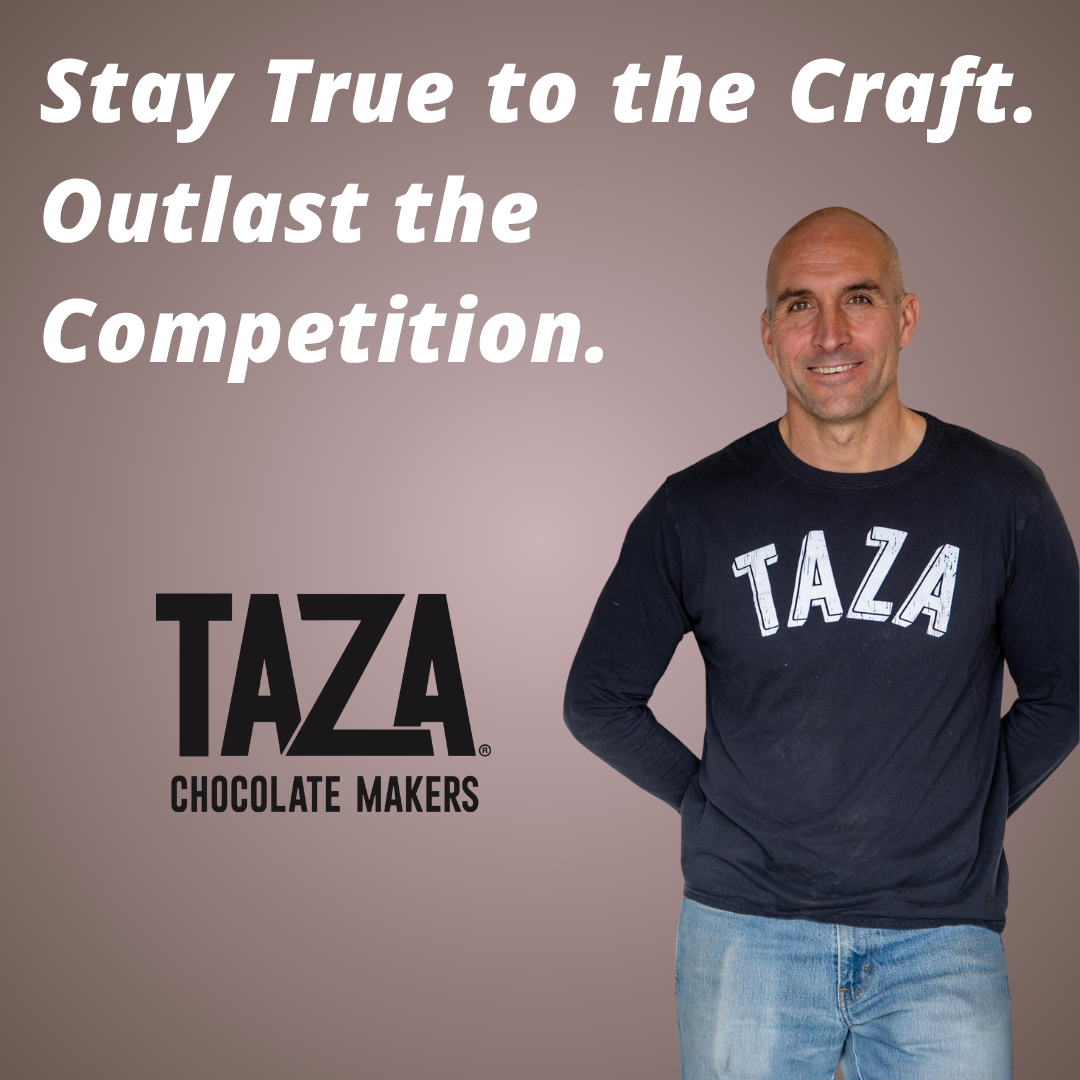
A flood destroyed the factory, the FDA shut them down, and the company had almost no cash and then something remarkable happened. Ramon Vela sits down with Alex Whitmore, Founder & CEO of Taza Chocolate, for a deeply human conversation about twenty-plus years of stone-ground, mission-driven chocolate making in Somerville, Massachusetts...

 Apple Podcasts
 Spotify
 Castro
 RSS Feed
 A flood destroyed the factory, the FDA shut them down, and the company had almost no cash and then something remarkable happened.
Ramon Vela sits down with Alex Whitmore, Founder & CEO of Taza Chocolate, for a deeply human conversation about twenty-plus years of stone-ground, mission-driven chocolate making in Somerville, Massachusetts.
From a transformative trip to Oaxaca to pioneering direct trade relationships with cocoa farmers in Haiti and the Dominican Republic, Alex's story is one of the most compelling in the specialty food world.
* The flood that almost ended everything. Just a few years into building Taza, a freak thunderstorm flooded the factory, destroyed inventory, and triggered an FDA shutdown. What happened next surprised even Alex: suppliers, customers, landlord, and community all showed up. That moment taught him that business is deeply human at its core.
* A trip to Oaxaca that changed everything. The name Taza comes from "taza de chocolate," a traditional Mexican drinking chocolate. After visiting stone mills in southern Mexico in his twenties, Alex came home and built the only company in America making chocolate on traditional Mexicano stone mills — and that founding commitment still defines every bar made today.
* Direct trade before it was a trend. Taza built relationships directly with cocoa farmers, paying above fair trade prices and publishing an annual transparency report. When the global cocoa crisis hit and prices spiked, those long-standing farmer relationships became a genuine competitive and operational lifeline.
* Twenty years of staying independent. Taza raised only $120,000 at the start and never chased outside capital. Alex walks through what two decades of bootstrapping in an intensely competitive specialty food category actually teaches you about patience, resilience, and staying true to your craft.
* Start with the Wicked Dark. Taza's number one seller is a 95% dark chocolate bar made with cocoa beans from the Dominican Republic and Haiti. Alex also points new fans to the Mexican Style Chocolate Discs, the product that best captures who Taza has always been.
Join us in listening to this episode for a rich and genuinely moving conversation about craft, community, and what it means to build a brand with deep roots and unshakeable values over two decades.
Whether you are a chocolate lover, a founder, or someone who just needs a reminder of why the mission matters, this one will stay with you.
Visit: https://www.tazachocolate.com/
If you enjoyed this episode, please leave The Story of a Brand Show a rating and review.
Plus, don’t forget to follow us on Apple and Spotify.
Your support helps us bring you more content like this!
*
Today’s Sponsors:
Saral - The Influencer OS: https://www.getsaral.com/demo
SARAL is the all-in-one influencer platform that finds brand-aligned creators, automates outreach, and manages everything in one place. Request a live demo today. Let the SARAL team know you're a The Story of a Brand Show podcast listener to get an extended free trial! Visit the link above.
Ramon Vela (00:00)
Hey everyone,
Welcome to the Star of our Brand Show, where we share the unique entrepreneurial journeys of a thousand plus consumer brand founders. We tap into their doubts, their failures, their wins, and their inspirations that come with building a consumer brand, especially in extremely competitive times. So whether you own a brand or work for one or you're a consumer, you'll learn from our guests as they share
the building blocks of their brand's evolution. And who knows, you may even discover a few products that become your favorites.
but before we do,
Welcome back everyone. This is going to be a great show. I have with me Alex Whitmore, who is the founder and CEO of Taza Chocolate. Welcome to the show.
Alex (00:45)
Ramon, thanks so much for having me. It's a honor to be here.
Ramon Vela (00:48)
Well, we really appreciate you making time. I know you're busy. You're a founder, you're building a business, and and I'm sure you've got a million things to do. So we appreciate that you're gonna take a few minutes to share with our audience who you are, w what Taza Chocolate is, and and why people should should really look into this brand. So before we do.
I have sort of a signature question that I I've asked probably over 600 founders now. We've been doing this for eight years, and about halfway through, I started asking this question, and I've asked it of everyone from Chomps to True Classics to Olipop and to a whole bunch of others. And and I really feel it's important. one of the things that I've noticed from a from the consumer side of of the show is that people sometimes, when they see a product online or on the shelf, they just think,
You know, it's just some faithless corporation. And I really feel that I want on this show, when we feature a brand, I want people to know that there's real people behind these brands that we feature. So one way of doing that is by asking this following question, which is a gratitude question. And the question is, Alex, if please share a moment or memory when someone did something for you that just made you feel grateful.
Because it meant that they believed in you, your vision or your potential.
Alex (02:10)
Yeah, great question. you know, we're a small family owned business, and we've been around for over twenty years now. and it was just a few years after we started the company, when we had just gotten enough confidence in what we were doing that we decided to invest all the money that we had that and we did we didn't raise much. We had a we we raised a total of I think a hundred and twenty thousand dollars at the time.
And we poured all that money into building out a brand new manufacturing environment. So you know, we had we we got these cocoa mills, we were we we built all these walls and air-conditioned spaces, and we were we were building this whole factory out. We had a little warehouse area. and it was in this the first floor of a building in Somerville, Massachusetts. is about, I think at the time it was about 10,000 square feet of space. And we had just
started operating in it and it was July, it was sometime in late July, and there was a freak thunderstorm, midsummer downpour rain, where it's just catastrophic rain, just more rain than anyone was used to in the area here. And and they hadn't managed the you know, the floodgates correctly or something. the groundwater management system failed for whatever reason. And our entire building got flooded.
with like a with like a foot of water, which if you're a food manufacturer, you know that's a big problem. we were instantly shut down by the FDA. You know, it was it was a catastrophe. And we had just invested in all of the space. So we had to go and remediate it all, cut away all the drywall. And we did, I mean we were hand to mouth. We were just making sales and then trying to use that revenue to, you know, to to to purchase ingredients and and do all the things we need to do. And now
Ramon Vela (03:37)
Well.
Alex (04:06)
We were faced with a situation where we just we couldn't operate, we couldn't make chocolate, a lot of our inventory had been destroyed in the flood. and and we had to invest a whole bunch of money that we didn't have into remediating the space and making it safe for manufacturing again. And I thought, gosh, you know, this is the end. You know, we we were at our one of our most tender moments from a cash standpoint. We were a brand new business. We were only like four years old at the time.
And or five years old and and and it was it was horrif it was horrifying. And I I I raced into the plant waiting around trying to fix everything, trying to get the pump the water out and figure out what to do next. And and i that was it was a disaster. And and what happens next astounded me. I I had no
Ramon Vela (04:59)
Hmm.
Alex (05:01)
I I was so into the business and to what we were trying to make that I I I hadn't like looked around and recognized the all the relationships and the people around us and the community around us that we had kind of cultivated over those first few years as we were operating. But our whole community rallied around us. Our suppliers, they were like, let us know what you need, we can extend terms. Our landlord came, they're like, We what what can we do to help? How can we fix the situation?
Our customers, they're the we had no idea we were so well loved and supported by the community already, even at that young phase, that they were they were there to support us. And and we actually were able to sell Taza dollars. We basically, you know, it's like you've you buy this Tazid buck now is like a coupon that they could use later to buy product from us when we were able to start manufacturing again. so all of these things
made me realize when we were fairly new, new business, the value of all of those relationships and all those people that were there for us during our hard moment. And over the years, I've I've really tried to pay that forward with other companies have who have gone through crisis moments, whether it's, you know, when we had Hurricane Sandy eliminate all the co the destroyed the cocoa warehouses in New Jersey.
There were all these crises in over the years and we all tried to help each other out and just recognizing that sense of community with your customers, with your vendors, and and and just the pe your neighbors. that was that was the the first time I realized how human business really is and how important it is for your staff, your team. We have a team of thirty-five people, many of whom have been with us for years and years.
every single one of those people is just such an important part of the fabric that is part that is any business.
Ramon Vela (07:02)
Wow. that's an amazing story. And you know, and the thing is so many so many folks who are listening to this who have a business or or even a small business realize that, you know, there are moments like that where you're gonna face a crisis and you've you think to yourself, like, wow, how am I gonna get through this or how are we gonna get through this or how are we gonna move forward and so forth. And to have people who are there to help you and so forth, it goes really to the heart of the
question that I ask about about being grateful because there are sometimes people who you may not even realize how much they support you or that they're thinking about you or that or that they're even willing to help you when things go bad. And you know the mistake that a lot of entrepreneurs do when they when they go through hard times or when they hit a crisis, they they they feel like you know that you they hesitate asking their partners
For help, right? Like they hesitate, like asking for extended terms, or they hesitate and they don't realize that one sometimes, a lot of times when they ask, especially if if you've been building a a good relationship with them, that people are more than happy to help, right? Like they don't want to see you go under. They don't want to see you you know, your business go down. So so thank you for sharing that. And and for me, that that story that you just gave just also just kind of brought a brought another question.
in into mind. And that is what is what do you think? So you were around for five years at by that by this point. You had invested all this money into the manufacturing plant and so forth. I'm just curious, what are the actionable things that you feel that you've done you did in the la in the previous five years that built that kind of belief, that kind of s you know,
support of your business from all these different people from co consumers to employees to manufacture the suppliers and so forth. What what did you do? What did you do right, I guess?
Alex (09:08)
Well, we've made a lot of mistakes over the years. hundreds and hundreds, maybe thousands and thousands. but the thing that's really kept us here, that's kept us alive and vibrant and excited to go to work every day and and
And really kept us alive as the industry has evolved so many times since we began over 20 years ago, is is just our core value of wanting to be proud to go to work every day. and and and I think, you know, we have a mission. We're we we decided to be kind of a more mission-driven organization very early on, and that's to make and share stone ground chocolate that's seriously good and fair for all. and so I think, you know, if we
Focus on that both as we think about our product development, as we think about our team and the people that that you know work with us every day. I think the thing that's most valuable to me just over the last five years is just the focus on making sure the team is is good, you know, that the team is taken care of, they're feeling happy, they're feeling engaged, they're feeling seen and and and that they're you know, they're they're
They have a they have a good reason and an excitement to go to work every day and that they're proud of what they do. You know, we don't want to do anything that we're like, that's that's a little sketchy or that that might not be fair in in the marketplace or something like that. So, you know, like, you know, like I we were supported very early on by everyone in the community, including our staff, especially our staff who was there slogging through the flood trying to help us clean everything up, not knowing if they were gonna get a paycheck.
You know, all all of that, I think, is just, you know, that's what keeps us going. That's what keeps us successful today. You know, we're chocolate makers. We make chocolate from cocoa beans, and that's a really hard thing to do. It's very equipment intensive. It requires a lot of relationships with suppliers, you know, suppliers, often in very far-flowing parts of the world. and and and then make bringing that all together and making a product that's truly unique and delicious.
in what is a very competitive category, chocolate candy, is very hard. and we it takes a big, you know, a a lot of teamwork and a lot of resources and relationships to do so. So really investing in those and having people see that you really mean what you say and that you do what you say you're gonna do, that's that's what keeps it together for us.
Ramon Vela (11:26)
Mm-hmm.
Well, I I love that. And and for everyone out there, if you want to take a look at what we're talking about and what we will be talking about, you can go to tazzachocolat.com. Tazachocolate dot com, two words all together, taza T A Z A, and then the word chocolate dot com. So tazachocolate dot com is the website. Go check it out. so I love that and
And I see that you're driven by this mission. And that mission kind of helps you to align what you're doing and how you're doing it and so forth, and how you treat your employer employees to your consumers to your suppliers, et cetera. but on the other hand, you know, you kind of mentioned it a second ago, you're in a very competitive market, not just in the fact that that you have all sorts of competitive.
Competitors, but the other difficulty, I should say, is with ingredients. So, I mean, you're dependent on on this commodity that goes up and down and up and down and so forth. And then, you know, right now, of course, we have inflation ticking up and geopolitical wars and all that other stuff going on. and so you are still sort of having to, you know, manage this.
The purchasing of this commodity, how is that affecting the company right now? And how are you dealing with it?
Alex (13:17)
Yeah, great.
Great question. it's it's well, it's very complex, and the last few years have been especially challenging because of the cocoa crisis, which is a whole subject in and into it and unto itself. and you know I think we have we have a very unique need because of our mission. We really wanted
Be proud of what we do. We we want to make sure that everything we're making is truly delicious. And when we were very young company, it was very hard to find really high quality cocoa beans that also kind of met our standards. And we decided very early on to become a certified organic company. and one of one of the the impacts of that is makes it makes it very hard to find both the certification of organic and the quality that you're looking for in the same
raw ingredients. in some ingredients that's pretty pretty easy. but with with cocoa, it's not. Well it wasn't when we started at least. And so what we had to do was we had to go to lots of different countries. This was entailed a lot of you know boots on the ground travel, a lot of adventuring around to various countries, including the Dominican Republic, Haiti, Belize, Guatemala, Mexico, Bolivia.
and and ecuador many others ghana and and we we really tried to find the quality we were looking for the flavor profile we were looking for and also help the the producers become organic or or if they were already organic work with them maybe on the quality side of things and and so that over the years the many years we've been doing this allowed us to really build some strong long-term partnerships with these with these suppliers
And and boy did that pay dividends over the last few years with the cocoa crisis and tariffs and the challenges with the organic certifications that have been happening recently. all of those things, you know, because we had these really long standing relationships as end users of the commodity that was being traded, we we we persevered really well, I think, during that challenging time. and you know, a lot of people don't
Don't necessarily think about it this way, but you know, cacao is a commodity, yes. But what we're buying is actually a very specific item. It's a spec it's a specialty product. It's not the commodity grade product. So we pay a much higher premium than the the normal premiums above the market price to get the ingredient that we're looking for. and that's something I'm really proud of, but it's also it's also just a fact of life for us.
Ramon Vela (16:09)
Wow. And that's I think, you know, when I ask these questions, you know, we we have an interesting audience that where we talk a lot about entrepreneurship, but you know, there's also the consumer element, right? There's a lot of people who discover products by listening to our show. And and I I I'm a big believer in that even if the one person listening is really, you know, potentially a consumer, I think they need to know this kind of stuff. Like what you just told me right now, you know.
From from just a general business term idea, I would just, you know, think, you're you're you're dealing with this commodity. But what you just said right now that it's not just a commodity product, you're actually you're actually trying to purchase and find a more premium item than the just a commodity. And that makes it even harder. And personally, I think that consumers need to know this kind of stuff. not just on from the business side, but just consumers need to know like, wow, like this is the commitment that you've made.
not only being a certified organic company, but also that you're committed to particular ingredients that make Taza what it is, right? Like, and so I think that's really important. and I think that probably, you know, my my original question about what did you do right in those first five years, I think maybe that's part that's part of the equation, right? That that you have decided to
to be committed to a higher standard of ingredients for your products that make Taza delicious and why people keep coming back, right?
Alex (17:46)
Yeah, absolutely. And it's kept us focused in a way that I think has been really helpful. It's kept us a little small, a niche, because we're very focused just on certified organic and just on really premium quality. but you know, if you've if you've never had our chocolate before, you gotta try it because it's different from all the other chocolate bars that you see on that wall of chocolate in the grocery store. It's got this knock your socks off, rustic, gritty texture, really powerful flavor.
That you won't find in other products. And the reason for that is we minimally process cacao beans, really delicious, certified organic, fermented cacao beans. And doing that is is really hard. doing it well is is especially hard. and then it's a niche audience that wants that, right? So and that focus has kept us, I think, alive in
And and kept us from being distracted by, chocolate sweetened with stevia and monk fruit or chocolate sweetened or chocolate made into bark or chocolate, you know, all these different trends that have happened. we've just kind of stayed focused on what we do really well and not get got pulled into those kind kind of flash in the pan trends that you might see on the shelf. just by s just by following our core mission of to making a
Really good quality, simple, minimally processed product with excellent ingredients.
Ramon Vela (19:11)
Well, I love that. And you know, have you noticed or have you s seen that even though it's a it may have been a niche audience, have you noticed that that niche audience has grown? Because the one trend or the couple of trends, I guess, that are happening on the consumer side, which is people want to be more healthier, right? So they're looking for healthier products, less processed foods. and it feels like
would fit into that market, but also I I feel like that market's beginning to grow. Like more there's more and more people thinking about those things. Have you noticed that the that niche market is beginning to grow?
Alex (19:53)
Absolutely. I mean, that's we see we've seen growth since inception, really. in in is in the most recent years, a lot of direct to consumer growth. So right through our website, sales directly to consumers. but yeah, I mean absolutely people are always I think they're always gonna be it's a very venerable quality in a brand, just focusing on good ingredients minimally processed. but it's also definitely a market trend.
especially amongst the natural consumer in in the US market.
Ramon Vela (20:26)
Yeah. Well, you know, like I think people, you know, they they're not just all thinking about themselves or thinking about their children, they think about their loved ones and they just want, you know, if I'm gonna eat healthy, I want my family to eat healthy, et cetera. So it's starting to extend. one thing I read, whether it was on your website or in my notes about radical transparency. So the kind of things that we're talking about here, are those the things that you're talking about with in turn with your consumers in terms of pricing and whatnot?
Alex (20:55)
Yeah, so transparency is one of our values. We really are are proud of what we do. So we wanna shout loud and proud and and be really open about it because it's it we think it's really cool. and some of the things that I'm really passionate about that I think are really cool don't necessarily like resonate with the consumer, especially in the point of sale moment, but but but but others do, and and and that's great.
And and I, you know, I think when I s at the b earlier on in the conversation, we just want to be proud to go to work every day and proud of the products that we make. you know, I think that our consumers who are very loyal and have been with us for a long time, they know that. and they really support support us. Personally, I am passionate about transparency in the cocoa supply chain. and that's that gets to be a very boring subject for most people very quickly.
But for for me, I feel like I was really able and still am able to have an impact in a really big industry as a very small player in that industry, just by being radically transparent with everything we do and showing you that you can do that, or showing other companies, or showing the press, showing the consumer that, you can be a chocolate company and and be successful and be around for a long time and be completely transparent about where you're buying your.
Cacao beans, where how much you're paying for your cacao beans, how much you're buying from from which producers. which when we started, that was like no one did that. Everyone was very secretive about where their cacao was coming from or what they were paying or any of that. And and we've been around a long time. We've been publishing transparency reports on our website that outline where we're buying our cocoa, how much we're paying for it, how much we're buying of it. We've been doing that.
Ramon Vela (22:30)
Yeah.
Alex (22:47)
For years and years and years and you can actually go to our our website and go to our direct trade page and see our catalog of direct trade transparency reports that go all the way back to twenty eleven.
Ramon Vela (23:00)
Wow. let's talk a little bit about, you know, how the product is made. but actually before we do that, let me ask you a couple of finish off this sort of entrepreneurial section of the interview. what has been so you you said earlier about you've made a lot of mistakes. You've made you know, you've obviously you've gone through different crises. you've had to battle this whole
you know, the purchasing of those premium ingredients and so forth. what have been you know your top three or four lessons that you learned from an entrepreneurial standpoint? So imagine if you and I'm sure you this has happened to you, you know, you I mean, because you have this longevity in the market that and that longevity has to come with some lessons learned. I'm sure people, whether you're at a
you know, business meeting or a business or a public function in in Massachusetts somewhere, someone's gonna come up to you and say, hey, you know, I l I love what you've built. I wanna build something like that. You know, what advice would you give? And so what advice would you give?
Alex (24:16)
Well, I think the first piece of advice I I already gave, I guess, just talking about how important your how how much business really is just a a fabric of of people that are linked together around a common goal. and and everyone kinda has their part. You know, business is just people, it's just relationships.
and especially with a small with with a food business where you you know, food has to be farmed, you know, food ha you know, and then there's people who have to create that take that farm food and create it into something that someone can eat. and and that's that's very fundamental, right? And and and and and kind of obvious when you think about it. But it it really is important to remember that r those relationships are so critical. But I I think that, you know, in terms of
In terms of advice, I guess I I d I hate giving advice, but I I think
Ramon Vela (25:14)
Mm-hmm.
Well, let me tell you this.
if you were to go back in a time machine and tell your younger self something, whether it's like, hey, make sure you do this or make sure you avoid this,
Or maybe someone comes up to you at a business event and says, Hey man, I love what you've built with Haza. I want to build something like that. Any words of advice?
Alex (25:38)
So yeah, I mean, you're gonna build a business, it's gonna be amazing, it's gonna be a roller coaster, right? And and it's there's gonna be a lot of hard things, there's gonna be a lot of exciting times. the thing that really allows someone to be successful is perseverance. You have to be able to persevere through what looks like the end of days, really. I mean, there's so many times that we've basically been like, we're out of money.
We're gonna go under in like we're our our last paychecks are gonna be are gonna bounce in two weeks kind of thing. or whatever. You know, there's a pandemic, global pandemic, who could have seen that coming? Or there's a, you know, coca, there's a commodity crisis, or there's a hurricane, or there's a flood, or whatever something always happens. There's a media crisis and your company looks like the worst thing in the world to everyone and it's very public.
Ramon Vela (26:20)
Mm-hmm.
Alex (26:34)
All these things can happen to any brand at any time without warning. And you have to be able to persevere through those moments. And they will come. So I think just knowing that there's going to be really dark days and that that's okay. And that you know, you might lose sleep over it, but after 20 years, those dark days come and you don't you lose a little less sleep each time. And I think you learn that it's like, okay, this is really hard.
Ramon Vela (26:59)
Yeah.
Alex (27:03)
But we're gonna make it through and we're gonna figure it out together as a team. And sometimes that takes a whole community. And sometimes that just takes your your staff or maybe, you know, someone to help you out, one of your suppliers or whatever it is. But there's always gonna be crises and that perseverance is absolutely essential to being a successful entrepreneur.
Ramon Vela (27:27)
Mm-hmm. Yeah. And you know, it I love this answer because it's very real and and but but I also think like we can break this down a little bit because what you what you're saying though is that and it's a complex answer in many ways because you have to do the things that you talked about earlier, which is build a relationship, you know, with people and treat people well and build that team, have a mission that people can
rally around, but it's also more than that because undoubtedly you're going to face crises, ups and downs and so forth. And some of them are gonna feel unsurmountable. Like you said, like COVID, right? Who's who could ever have planned for COVID, right? We hadn't had a a national or global pandemic since like the early nineteen hundreds. And so what's really important is just is how you think about the situation.
Which is, you know what, this is a problem, but it's not but it's, you know, it it's solvable. And it's solvable because we're gonna go out and we're gonna talk to our employees, we're gonna talk to other people, we're gonna listen, we're gonna ask advice, we're going to reach out, we're going to, you know, be transparent. And so I kind of feel like all the things we've already talked about, like the it this is that this one answer is really kind of bringing all those things into
into into you know into its own thing because you need to do all those things in order to make it through these crises and like you said remember that hey you're going to make it you know because it's difficult and when you hit a crisis like the flood thing and when you were telling me your the story about the about the flooding I was thinking like wow like how does how does someone invest all that money
Alex (29:07)
Great.
Ramon Vela (29:25)
And then I can just imagine you walking into the the manufacturing plant and stepping into that foot of water. I mean, that's devastating. I mean, you do realize that most people would have just said, that's it. Like I'm done. Like there's like there's no way we're gonna get through this. Like we've we've just sunk all this money in and like we're done. Like that's it. I I I'm going bankrupt, right? Like I'm just I'm
I'm letting it go. I mean, you do realize that ninety nine percent of most people would have just said that. Right. I hope you feel like I hope you realize that. What you and your team have done with very incredible, you know. So yeah.
Alex (30:00)
Yeah, well.
Yeah, well it you know,
it takes a whole it takes a whole team, right? I I couldn't have done it myself. You know, I it it took a whole team of people and a lot of people who believed in us for us to get through. yeah. But that I mean, but put the perseverance, that attitude of like we can we can make it through, that's that's the thing that you just gotta hold on to. You can't ever give up. and if you do, that's okay, but then you won't have the business anymore. You know.
Ramon Vela (30:34)
Yeah. Yeah. It's a tricky thing. You know, whenever I talk to entrepreneurs, it's a tricky thing because, you know, on the w and so nuanced, like you can make the decision for people, but on the one hand, if you don't give up, if if you give up, you won't have the business. All right. You won't have you won't achieve the results. Even if you're facing incredible odds. But if you do give up, you know what I mean?
Sometimes that might be the best thing, right? Like sometimes this is a known win situation, but you never know which one it's gonna be, right? Like you never know what it's gonna be like. Cause I know people, I I early on in the in our years of interviewing people, I interviewed I can't remember the the name of the company, but it was an e-commerce tool that we had. It was a partner of ours. We interviewed them and he told me that they were about to close the doors, they had two weeks left of money.
Alex (31:09)
Yeah.
Ramon Vela (31:32)
They he brought everyone into the room. They had like twelve or fifteen people. He told them that they had run out of money. They had two weeks left. but he had an idea. He had this one thing that he thought maybe might, you know, help. and he's he asked them if they wouldn't mind staying, you know, but if someone if the people want to leave, they're they're more than welcome to. And he understood. He said everyone left, but two people. And they made this change. They ch you know, is akin to like
changing the packaging or something like that. But for in software and they changed something and and that made the difference. And then that was like five years before I had inter interviewed them and now they were, you know, multi-million dollar company and so forth. And but but again, you never know what the future holds. So it's like you have to have this perseverance. and it's such a it's such a crazy, you know, it's such a crazy world like
Alex (32:30)
Yeah.
Well, there's a flip side to it too, and that a lot of people don't talk about when you're thinking about entrepreneurship or brand building or whatever it is. And that is you can get stuck, meaning you can build something and then not be able to get out from under it because you borrow money, you have all this, you know, you have to you owe these investors or whatever it is, right?
Ramon Vela (32:31)
You know.
Alex (32:55)
And so you all of a sudden are the person who made all these promises that you have to keep, right? To get this brand or this business off the ground. And then you have to operate it. And sometimes that is just too much for a person to handle. And honestly, I've I've felt that way myself many times. I've met many, many people who are entrepreneurs of very successful, like 20, 30, 40 million dollar businesses.
and they're in they they ha they got into a crisis moment where they're having a cash flow problem or whatever it is, and they just they wish wanna get out from under it, but they can't. They can't walk away because they have personally guaranteed the debt or they've borrowed this money for or they've raised this money from an investor and they they have too many obligations. And so you're stuck as an operator to operate the business until you can get it to a place where maybe you can sell it or at least pay back most of the money.
Ramon Vela (33:53)
Mm-hmm.
Alex (33:55)
so people don't talk about that, but in entrepreneurship, building businesses in the food industry or consumer products, whatever it is, you can get stuck under the weight of your business for years. And it can it can completely drive your life in a direction that you don't necessarily want to wanna go. So that's like something that is little spoken of, but is very real.
Ramon Vela (34:16)
Yeah, no, I I understand that. And I I I hear those stories a lot around especially when they take a lot of investor money. They feel like, hey, I have no choice but to like to move forward. especially in the V when they've when they've you know investor money and or VC, whichever. no, I appreciate all that. So let's let's get talking about the the the the manufacturing of it, right? And the ingredient a little more a little bit more about the ingredients.
and let me start it off by by asking you this one question because I normally ask it either either at the end or at this point, but I think we can we can talk about it and then maybe we can work backwards and then you can tell us about the process. If if you were to able to to let our audience know something about Taza Chocolate that you are very proud of.
But is just not really talked about on your social media, your websites and your packaging. What would it be? Is there anything out there that maybe you and your team do in the back end and the behind the scenes that just no one sees and no one knows? And you just think like, well, you know, it's just it's not cool or or, you know, vi TikTok good, you know, so maybe we just don't talk about
Alex (35:37)
Yeah.
Well, we're we're chocolate makers. So we make chocolate from the raw agricultural ingredients in our factory in Somerville, Massachusetts. So we actually bring in raw cacao beans, we roast them, we winnow them, we grind them into a paste that's called cocoa liquor. nothing to do with booze, that's just what the industry term is. And that
Ramon Vela (35:59)
Mm-hmm.
Alex (36:01)
Ground up cocoa paste, much like grinding peanuts into peanut butter. When you grind cocoa beans, they become like a flowing paste because it's a very oily seed. It's like 54% oil. cocoa butter is the is the oil in cocoa beans. So when you you then we take that paste, we'll mix in cane sugar or coconut sugar or whatever it is, and and we'll refine that using sometimes stone mills if we're making traditional Mexican-style chocolate, roller.
roller mills if we're using if we're making a a more refined product, and then even ball mills if we're we're making like a glassy, smooth, like European style chocolate. and then we'll take that mass and we'll temper it and deposit it into chocolate molds and and we'll wrap that and package it up into boxes and and and and that's that's kind of our whole process. It takes about three days for a cocoa bean to become a finished chocolate bar in our plant, give or take.
But we're always, you know, every every room is operating every day. And that's something that is an incredibly complex thing that if you're just standing in a grocery store looking at the chocolate aisle, you don't think about if you're not if you're not aware of where chocolate comes from, which is really it starts in a tree, right? It it's cocoa beans growing in a fruit, this big pod and and then that has to get fermented and dried and
bagged and shipped and then we have to process and we have to grind it, you know, roast it and winnow it and grind it. Do all those steps. People never think about that. but but as a chocolate maker I think about it all day long. And so does our whole team, you know, who who are responsible for procuring all the ingredients and and and making it into a packaged consumer product. so that's that's like I think the most the most wild thing is is most people have never seen that process and and it's a magical process.
Ramon Vela (37:36)
Mm-hmm.
Well, I love that. and for everyone out there, if you want to take a look at what we're talking about, you can go to tazzachoclate.com. Tazachoclotcom. Taza is T A Z A. And then the second word is chocolate all together. Tazachocolate dot com is the website. And yeah, I mean, I love the website, I love the colors.
I'm on the website right now and I can see the packaging. I love the packaging. I don't know how to call it how to refer to it, but it feels it feels artisanal, I think.
Alex (38:29)
Yeah.
Yeah, well
it is. I mean, it is a an artisanal product. We're a small family-owned business. We employ 35 people. And what's really cool is all of the packaging is designed in-house by our co-founder, Kathleen Fulton, who's also my wife. she does all of our package design and has since the beginning of the company for over 20 years now. so we're really proud of it.
Ramon Vela (38:55)
Mm-hmm.
Alex (39:06)
I think it's it's something that's very different looking in the marketplace. And we we we we're we're constantly trying to innovate or make it better. we have a we have a very iterative process. We'd we'd rather just make something and then just s hone it down and and start to make it better. And so this is what you're seeing on our website today is a is is after many years of iterations of lots of products and package designs and package formats and all that.
Ramon Vela (39:33)
Yeah. Well the the package that I was referring to are the the the round ones with with the packaging and those look very artisanal to me. But you've got other things too. you've got the you've got the crunch, you've got the bundles, you've got the mini bars and so forth. And I love how you on your website, and for everyone out there again, it's tazachocolat.com, you know, you have about pages, you talk about
And I love this video of the manufacturing. You've got this really cool video playing about what is stone ground chocolate. And so, you know, you kind of explain it there about your process. And then you also talk about the farmers, you know, the putting the farmers first, which is again I love the website and especially websites that do that. and then you have like the Mexican chocolate, which I grew up eating Mexican chocolate.
And I love Mexican chocolate because it always feels so real. Like I feel like I'm eating real chocolate. Like it's a it's a it's a different taste than most people you know, get. But you know, I love the fact that you know, you go into coffee shops now and you see more people, you know, adding using Mexican chocolate because it gives it a certain flavor. So yeah, it looks delicious what you guys have here as well. And
Alex (40:37)
Yeah.
Thank you.
Ramon Vela (40:56)
Yeah. And and I'm gonna ask you a quite quick question, but let me just make sure the audience knows. So we talked a little bit about the certified organic and and but I also want you to know that there's they've got all sorts of different certifications. They've got gluten-free, they've got dairy-free, soy-free, vegan, they got direct trade certifications, organic non-GMO, they've got USDA organic and so forth.
And just a reminder of the audience that these are all certifications that are are not only difficult to to get, but they're also you gotta keep keep them up in order to continue to use them. So these are commitments that companies make that they're not cheap. Like you've got to pay for these, you gotta put you know, put in time and effort, you gotta meet their guidelines and so forth. So the fact that you have these certifications, I think, is a great sign from a consumer standpoint.
Alex (41:51)
Example is okay.
Ramon Vela (41:54)
that
you're willing to make the commitment to meet particular guidelines. So thank you for that. so one thing I wanna mention, you know, as people, if they're if they're looking at your website right now and they're thinking about what you've just said about the ingredients and and the stone ground chocolate and everything else, where do you start? Like where would you recommend someone starting, like if they're listening to this and they're thinking like, wow, that sounds pretty cool. What
Alex (42:01)
Yeah.
huh.
Ramon Vela (42:23)
Where do you want them to start? Like w what product?
Alex (42:27)
Yeah, so our number one selling item is our Wicked Dark chocolate bar. It's a ninety-five percent dark organic chocolate made primarily with cocoa beans from the Dominican Republic and Haiti. and it has a very intense cacao flavor with just a little bit of sugar and a really intense texture, and it's just an amazing experience. It's really it it it kind of exemplifies who we are as a chocolate company.
as a chocolate maker. but also our one of our oldest products is our our our are our Mexican style chocolate discs. So a lot of Taza was inspired actually by a trip I took to southern Mexico to Oaxaca.
I think it was like twenty two, twenty-three years ago now. I was in my twenties. I was super I was between jobs, I was super eager and excited to find some some kind of business that I could start. I was working for another entrepreneur at the time who was she was very inspirational to me. And I I I decided I wanted to start a a chocolate company. And I took a trip to Mexico and was completely blown away by their food. I mean
The food in southern Mexico is my favorite cuisine in the world. they have this amazing milling culture where they mill sauces, they they mill chilies into into these chili pastes, they mill rice to make atoles, they they and they mill chocolate, of course, to make to make taza de chocolate, which a cup of chocolate. and and chocolate, our whole business, the name taza comes from the Mexican.
tasa de chocolate, which is you know a hot chocolate. It's it's it's a chocolate that you would drink. And so it's a call out to the roots of chocolate as a beverage. and and so if you don't try our Mexican style chocolate discs, you're missing out. so this is kind of my version of a traditional Mexican style chocolate. Instead of using cacao lavado, which they would do in southern Mexico, we use a fermented cacao.
I love the flavor that the fermentation brings to the cacao. And that is really highlighted in the Mexican style chocolates that we make. So we have our most popular is the vanilla Mexican style chocolate. We also have salted almonds where we actually grind almonds that we roast in-house right into the chocolate mass. So it has a very soft texture and a nice little saltiness to it. it's very sweet as well. and then we have our cacao pro, which is just a straight expression, just
Cow beans and cane sugar, and that's it. so, and these are all made on traditional Mexicano embalado revolving stone mills, just like they do in Oaxaca. So it's it's definitely a point of pride for me. It's it was, it's, it's kind of shows who we are and who we've been for the last 20 years as a as a chocolate maker. And you got to try it.
Ramon Vela (45:28)
Well, I mean it sounds delicious and I love the whole process of the the stone ground. and just for everyone out there, you know, I'm on the website right now. They have a shop button and you can look at all the different products and there's they've got the Raspberry Crunch, the Oaxacken sampler, the four bar bundle. They've got an orange dark chocolate. and that sound I've never even had anything like that before. So that sounds that sounds really interesting. Orange and chocolate.
They've got the mini bar, chocolate mini bar, they've got chocolate covered almonds, they've got the bean town four-bar bundle, they've got chocolate-covered espresso beans, they've got cacao crunch, they've got chocolate-covered cashews and chocolate-covered hazelnuts and and a lot of other peppermints as well. they've got quinoa crunch. So there's gonna really a lot of interesting flavors.
And then of course the wicked dark chocolate, which, you know, when you when you say that I thought, Okay, yeah, he's definitely from Massachusetts. yeah, I used to I
Alex (46:34)
So actually our sell
one of our sales managers at the time when we when we developed that product, his name is Micah. he was he's one of our best sales guys over the years and he came up with that name. He's like, Let's name it Wicked Doc.
Ramon Vela (46:48)
Mm-hmm. yeah,
I mean I in a previous life I used to work for for a technology company back in the nineties. And the the company I worked for had an office in Massachusetts in in Worcester, I guess that's you know. yeah. And so I remember them trying to teach me how to how to speak the the the local language, you know, Wicked and Worcester, because I used to say Worcester, Worcester's, you know.
Alex (47:05)
What's the yeah?
Ramon Vela (47:16)
So yeah, they taught me how to do all that. So yeah, I could tell when she said that, that's a Massachusetts thing. But I love that. beyond that, you know, you can go and you learn about the about page and everything else if you're on the website. You can talk you learn about their process, their direct trade, their shipping information, all that other good stuff. so let me ask you the I guess the the biggest question is where do you want people to go? Like where is this available?
Alex (47:41)
Yeah, sure. So best place, obviously, you've already mentioned, which is our website, tazachhocolate.com. You can order it. there's if you if you meet a certain order minimum, there's free shipping. you can find on Amazon. and then we're national at Whole Foods in the specialty department. We're usually over by the cheese section, specialty cheeses or specialty chocolates. you can buy a lot of our Mexican discs at Whole Foods Markets. if you're in the northeast here,
Market Basket, Big Y, Roche Brothers, Stop and Shop, Shaw's, and then our Wicked Dark Chocolate Covered Nuts are available at Sprouts, Farmers Markets, and a lot of other national retailers. But I I love supporting the local small retailers, the the the infra and NCG accounts, you know, co-op food stores, all the independents that have supported.
Ramon Vela (48:29)
Mm-hmm.
Alex (48:37)
so much over the years. yeah, look aro look around any natural organic food shop in near you and and if they don't have it, ask to carry it. we we'd be grateful.
Ramon Vela (48:51)
Well, that's fantastic. So thank you so much for all of this and for your time today. I want to be respectful of your time. so I'm gonna make sure that we have the links to everything he just mentioned, to the website, to social media, et cetera, and so forth, on our podcast description, which you'll be able to find on Spotify, Apple, and pretty much anywhere you listen to podcasts. simply type in the story of a brand show and you should be able to find it. And then any l last things you wanna leave with the audience?
Alex (49:21)
I I just would love to say thanks so much for having me, Ramon. It's it's it's I I can't imagine all the amazing stories you've heard over the years of doing this podcast and and how much you mu you much you must know about entrepreneurship and and the consumer packaged goods industry. So thank you. It's it's truly an honor.
Ramon Vela (49:41)
Yeah, well, thank you. I I again I I know how difficult it is to be a founder and I know how how much how time consuming it is. So the fact that you're talking about it, you know, here on the show talking about it, sharing your story about your entrepreneurial journey, but also about the brand and your products. I think it really helps for consumers to know a little bit about what goes on behind the scenes, but also who's behind these companies and how passionate they are and how much they care about.
know what they're doing about their communities, about their consumers, etc. So thank you for all of that. I really appreciate it. everyone out there, we have just had Alex Whitmore, who is the founder and CEO of Taza Chocolate. You can go again and go to the website, tazachhocolate.com. We're gonna have all those links, as I mentioned before, on our podcast description. And beyond that, everyone, as I always say, stay safe, stay sane, stay healthy.
and one last thing. We've all been going through a lot of stuff the last few years and the world feels a little crazy right now. So let's just do ourselves a favor and just try to be a little kinder to each other at the supermarket, on the freeways, on the streets, whatever. Let's just be a little kinder and I know we can make this human experience a better one. Beyond that, thank you from the bottom of my heart for listening to another episode of the story of a brand.
