Repurpose - Designing a Better Future With Plants, Not Plastic
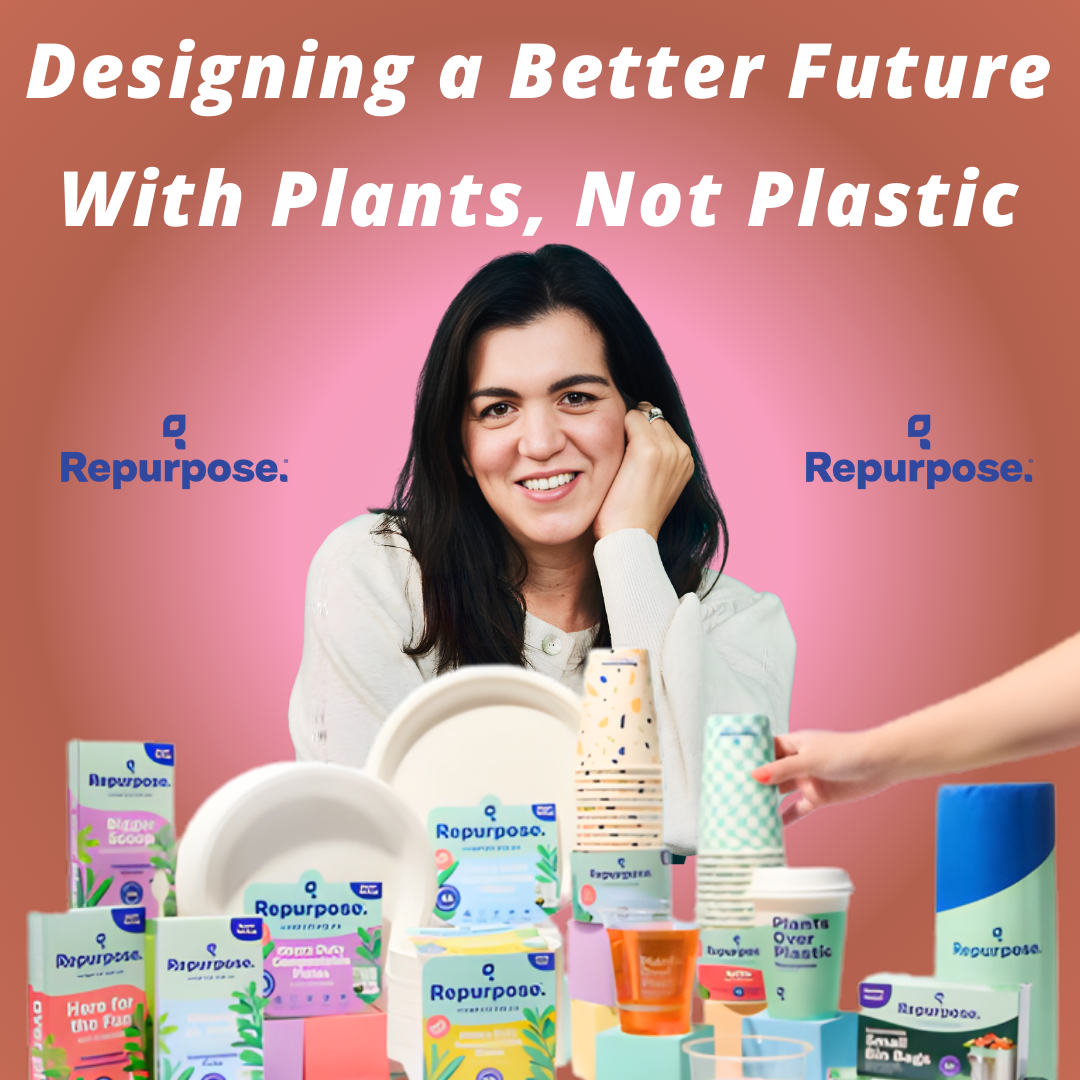
In this episode, I sit down with Lauren Gropper, CEO & Co-Founder of Repurpose, whose purpose-driven mission truly inspired me. From surviving a life-changing moped accident to questioning why we use forever-lasting materials for five-minute products, she shares how her passion for sustainability has become a movement to redesign everyday essentials from plants rather than plastic...


In this episode, I sit down with Lauren Gropper, CEO & Co-Founder of Repurpose, whose purpose-driven mission truly inspired me.
From surviving a life-changing moped accident to questioning why we use forever-lasting materials for five-minute products, she shares how her passion for sustainability has turned into a movement to redesign everyday essentials from plants rather than plastic.
What I loved most about this conversation is how honest she is about the realities of building sustainable products — the cost, the manufacturing challenges, the misconceptions, and the grit it takes to keep going.
Her story is a reminder that with the right design, intention, and team, we can create healthier products for our homes and the planet.
Key Moments From the Episode:
* A near-fatal accident that reshaped her purpose and commitment to impact.
* The flawed logic behind single-use plastics and the question that sparked a new approach.
* How everyday products can be made from sugarcane fiber, cassava, corn, and bamboo.
* The hard truth about sustainable manufacturing and why affordability is still a hurdle.
* Tracking impact: over 700 million pieces of plastic replaced.
If you care about better materials, planet-friendly innovation, or the real journey behind building a sustainable brand, join me, Ramon Vela, in listening to the episode. You’ll enjoy this conversation.
For more on Repurpose, visit: https://repurpose.com/
If you enjoyed this episode, please leave The Story of a Brand Show a rating and review.
Plus, don’t forget to follow us on Apple and Spotify.
Your support helps us bring you more content like this!
*
Today’s Sponsors:
Saral - The Influencer OS: https://www.getsaral.com/demo
SARAL is the all-in-one influencer platform that finds brand-aligned creators, automates outreach, and manages everything in one place. Request a live demo today. Let the SARAL team know you're a The Story of a Brand Show podcast listener to get an extended free trial! Visit the link above.
Ramon Vela (00:02.178)
Welcome back everyone. I have a great show for you today. I have someone who has a really interesting personal story. I love the topic, can't wait to get started and dive in. So please let's welcome Lauren.
who is co-founder and CEO of Repurpose. Welcome to the show.
Lauren (00:36.344)
Thanks for having me.
Ramon Vela (00:38.988)
Well, I appreciate you making time for us. You're busy. You've got a lot of stuff going on. And so I appreciate it. I love this topic. I love sustainability and the environment and so forth. And it's a really tough, it's a really tough thing to tackle. And so there's a, I'm sure there's a lot of challenges that you faced and I have some questions about it too, because I've had some, companies on who are also around sustainability and it's just a tough market.
Not so much that people don't want these things, but it's just, you know, it's a tough thing to do. And so let's first start off with my favorite question. It's my signature question. And it's a question about gratitude. I mentioned this and I talk about gratitude because one, I'm a big believer in gratitude. I've had some very difficult moments in my life in 2008. And the reason why I started this podcast was
I had a business that I ran for about 10 years and I had employees and everything else. And I had just a really bad financial cratering of the business back in the 2008 recession. And I made a lot of mistakes and it all came to head in that one moment. And it took me a few years to pull out of that. And during that time I got in, I was very depressed. I got into self-medicating. It was just a bad moment. And so gratitude.
and a meditation practice is what helped me through that dark moment. So I love to talk about gratitude. The other reason why I like to bring up gratitude is that, or bring up this question, is that a lot of times consumers, and it's not their fault, there's just so much stuff out there, there's so many products, there's so much noise and advertisements and everything else, that consumers sometimes don't, when they see a product online or on the shelf,
they don't really think that, this is like, there's real people behind us. They just think some faceless corporation. And what I like to do on this show is I like to bring it down to a very human level, person level. And I want to get to know who we're talking to, who we're interviewing. And I want the audience to know that there's real people who care deeply about their product, about their community, about their environment. I want them to know there's real people. And one great way of doing that,
Ramon Vela (03:00.192)
is understanding what people, what they're grateful for. And so this is the main reason why I asked this. So with all of that said, Lauren, can you share a moment or a memory when someone did something for you that just made you feel grateful because it meant that they believed in you, your vision or your potential?
Lauren (03:20.948)
Yeah, I mean, I can I say a couple of different ones. They kind of go together. I think first and foremost, my parents, my parents have been super supportive of me, of everything I do. They've always been there for me and they're just incredible people. So I think I have to give them a shout out. And then our first investors, I think, in repurpose where, you know,
Ramon Vela (03:24.185)
Sure. Yeah.
Lauren (03:51.149)
They really, my parents were one of those. I invested as well, but one of our initial investors who has been so supportive along the way and has been with us both in the hard times and in the great times, his name is Shlomo Silverman and he's incredible. And his son as well, who is our co-founder. Just incredible people. We would not be here today if not for them.
for sure. They've been supporters through thick and thin.
Ramon Vela (04:26.625)
Wow. I love that. you know, the main thing for me when I hear a response like that is to let the audience know that at that stage when someone invests in you, and also obviously who wants to co-found with you, but when an investor looks at it, something like this, because it's such an early stage and it's just an idea,
What they're really investing in is not so much the plan and of course that's important and it has to be a good plan and good idea and so forth but the reality is there's really nothing there to bet on other than the idea and most importantly you You know and the co-founders the investors are betting that you will execute on that plan That's what they're investing in really
and so it, when you put it from, when you look at it from that perspective, that's a huge signal. That's a huge, like, like faith that you're going to do with what you want to do and what you hope to do with the business plan. So yeah, it's great to have people who believe in you. And that's a great, like I said, that's a great way of showing it. So. Fantastic. so, okay. So there is.
Lauren (05:43.722)
Absolutely.
Ramon Vela (05:48.75)
Uh, there's so many things that we can talk about and you've got these great products and I was just online and by the way, to everyone out there, the website is repurposed.com and we'll talk about the products. We'll talk about all of that in a second, but, um, you have such an interesting personal story. And so I would love to get, I'm sure you've, you've told her a million times, but I think it's really interesting, uh, what you went through. and so.
Let's first talk about that. So let's back up a little bit. You've been doing sustainability and sustainable design and a lot of that. Talk a little bit about that, but also talk about some of the personal side of it.
Lauren (06:33.122)
Sure. I think I grew up in Vancouver, Canada. I grew up around and immersed in nature. So I think, you know, it was just, I was always very passionate about the environment from a very young age, like, I don't know, from 12 years old or something like that.
it's not like my family was super environmental at all. Actually. I just think, I don't know. It just was something that was important to me from early on. And I was kind of a bit of like a crunchy hippie a bit in school, you know, in high school that was actually kind of trendy to be like that too, back then. and then I continued to study, study that in college. I studied geography and environmental studies.
Ramon Vela (07:07.063)
you
Lauren (07:14.648)
They didn't have like full on sustainability programs back then when I went to college. So that was sort of the closest thing. And then like most sort of like kids super into the environment, I really wanted to change the world and thought I could and had big dreams. I'd actually worked for the United Nations Environment Program. I had done sort of a Canadian Peace Corps type program in Costa Rica. I was just so obsessed with how can I, you know,
How can I do something with impact? I then wanted to travel and see more of the world before kind of like diving into full career mode. And I got into a pretty bad moped accident in Thailand where I was in a collision, a head-on collision with a bus and the moped and myself, and I wasn't wearing a helmet. And so I am very lucky to be alive.
Ramon Vela (07:58.445)
Mm-hmm.
Lauren (08:12.899)
broke my jaw, I lost actually most of my teeth, so these are fake. But it was one of those moments, and one of those accidents where you sort of take stock of your life and you think about what you want to do. And I was young at the time, I think I was 25 when that happened. So I had an opportunity to really rethink and it actually just cemented.
Ramon Vela (08:17.9)
Thank
Lauren (08:39.415)
the fact more that I wanted to do something in impact and sustainability. Like I just became even more passionate actually as a result of that. And I had to have a number of surgeries. So it actually gave me time to really like research and think about, know, would there be maybe, I go back to school and do more? Like, what could I do? And that's when I learned about sustainable design and the programs available. And that's how I ended up doing what I'm doing.
Ramon Vela (08:47.372)
Mm-hmm.
Lauren (09:05.783)
Not doing, which led to what I'm doing today, but which led to a career in sustainable design and architecture. So it was a life-changing event in so many respects.
Ramon Vela (09:12.577)
Mm-hmm.
Ramon Vela (09:17.069)
And I think that's important. That's an important part of the puzzle because I think, and correct me if I'm wrong, but sustainable design, I know a lot of companies play lip service to it and a lot of people play lip service to it, but the feet on the ground is that I think there's been growth and spurts, right? Like sometimes there's a lot of change and then sometimes it's really slow and then.
you know, depending, I guess, on who's in charge or whatnot. It's just sometimes it just, could be very, and it could be very frustrating. mean, I've talked to some people and it could be very frustrating. And so I think that that part of the puzzle that cemented your commitment to it, I think was important because I think, you know,
And I don't know, maybe back then people were saying like, well, you know, gotta make sure you got a good job. And I'm sure your parents wanted you to be secure and all of this and, you know, sustainability is not necessarily like an art degree or anything like that. But at the same time though, it is like, I'm sure people would have said, well, you know, like we should get into the commercial side of it or whatnot. But I think that having that example and that idea and that experience, mean,
I think it's probably was very helpful to you from a cementing of the idea within you that like, hey, this is really important and this is what I want to put my life towards. I overreaching there?
Lauren (10:49.569)
No, I absolutely think it did. mean, I did sort of feel at the same time, like I want to have a current impact, but I want to be able to, you know, make a living, you know, do something that could allow me to, to be successful financially as well. I mean, which I think actually led to starting the business because, I had worked in sustainable design. So I was working with mostly commercial real estate.
developers, architects, contractors to kind of rethink how conventional building is done and make it more sustainable and work on commercial buildings that would then be, know, unquote green buildings. Which is really interesting work and really cool from a number of different perspectives. But then that really led me to thinking, well, you
what business, what impact can I have further? Like how do I amplify this even beyond what I'm doing? That seed was planted while I was doing that work. And it was only because, you know, I had the opportunity to come to where I live now, Los Angeles, to do kind of sustainable design work with film and television studios that that's when, and I was around a lot of entrepreneurial people at the time in Los Angeles that really got me thinking about, how, you know,
Maybe I could start a business. Maybe I could take all these ideas that I have and turn one of them into an actual business that was centered on sustainability. it's all these little seeds that were planted along the way that of led me to where we are today.
Ramon Vela (12:18.433)
Mm-hmm.
Ramon Vela (12:30.285)
There's something you said a second ago that you wanted to be successful financially. then you said that's what led me to the life of an entrepreneur, which is kind of funny in a way because most people think the financial reward, but when they're in there, they realize like, okay, it's going to be a few years before I can see anything.
Lauren (12:44.857)
Well, it's ironic.
Lauren (12:54.297)
Easy.
Ramon Vela (12:57.997)
But you know what, but that's where that commitment comes in. Because in entrepreneurship, I feel like you have to have a strong why because there's a lot of time and energy and moments where you feel like giving up, where you feel frustrated, where there's challenges, where there's manufacturing challenges, where it feels like everyone is going against you and you need those people, your parents and others that kind of like...
give you a kind word or encouraging word, it really is difficult. And you need that why. And I think, back to that moment, I think all of those things, I think probably contributed to keeping you going, right?
Lauren (13:42.851)
I think you absolutely need the why, but I think I had a lot of naivete. Like in what we were talking about with the, you know, being financially successful, I tend to be quite a positive person. And so I always have looked at kind of like, like this will happen and the stream will come true and I will be financially successful as a result of it without thinking of like the million things that actually can happen along the way to take you down. And,
Ramon Vela (13:47.266)
Hmm?
Ramon Vela (14:09.418)
Yeah.
Lauren (14:12.531)
But I think entrepreneurs have that in a way, like you are a little bit blind to those realities that are there. And the why is that thing, that engine that kind of like pushes you forward. But I do think having a dose of naivete is actually kind of helpful. It's a certain system that has that combination that allows the dream to become a reality.
Ramon Vela (14:19.202)
Mm-hmm.
Ramon Vela (14:30.955)
Yeah.
Ramon Vela (14:42.805)
Yeah. I mean, I've, I've heard this on the show before, you know, where someone will say, had I known what it would have been like, I may not have been, I may not have started it. Yeah. I had a woman also, it just reminded me, I think the name of the company was Bev. She sold the company already, but it was like a wine in a, in a can, an aluminum can and.
Lauren (14:54.135)
Yeah, exactly.
Ramon Vela (15:10.823)
She, I asked her like, what would you, what would you tell your younger self, know, type of thing, you know, like now that you know what you know, what would you tell yourself? And she, she thought about it for second. She said, I, I don't, I wouldn't say anything or I wouldn't ask her anything. I would ask, or I wouldn't tell her anything. I would ask her to remind me why, why I'm doing it because back then she was naive and she was full of, know, like she was so confident that everything was going to turn out great.
Lauren (15:31.993)
That's all.
Ramon Vela (15:41.246)
yeah, so yeah, it's really funny. so, okay. So you decided to start the business and what was the initial idea? So like, if you would, if you would go back to how you described it to your parents or how you described it to this investor or to your co-founder or whatnot, like what, what was the idea that you had? I'm sure it's evolved or since then and so forth, but what was the initial idea?
Lauren (16:12.451)
Well, the initial idea really came from my work on the film and TV sets. It really occurred to me that we were trying to design very sustainable sets, but at the same time, we were using a lot of plastic all day, every day. And the same thing was kind of happening with green buildings. You build a very green building, but then once it was operational, did so much, generate so much waste through it and a lot of plastic waste.
So on set we were using, you know, we would eat out of salad bowls that were plastic, we would use plastic forks, we would drink out of plastic bottles all day every day. It occurred to me that, you know, there's just a design flaw. The idea really came from my design background because why are we using plastic, which is petroleum that's drilled out of the ground? It's actually a material that's designed to last forever. Why are we using a material that's designed to last forever?
for a disposable product that we use for five minutes. It never made sense to me from a design perspective. So I felt like we could use design to solve this problem. What if we just used better design, meaning a better type of material to make these products, then disposable would not necessarily have to be bad because if you're using great materials that aren't harmful, there's no problem using them, in theory.
Ramon Vela (17:21.367)
Mm-hmm.
Ramon Vela (17:37.005)
Mm-hmm.
Lauren (17:38.149)
so that was kind of the idea. was really like, it was a design idea. And then the thought was, okay, well, if, you know, d- a design problem is one thing, a business is another. What if you could actually create a line of products that were sort of better for you, better for the planet, made of something safe, healthy, degradable? that would be amazing because then we could, you know-
everyone would switch. Why wouldn't the world switch to these better material? So that was the idea. And to create a brand. I really love brand and brands and brand stories and I love products and product design. And I was just really interested in creating great products with a great brand that delivered kind of an unmet need. know, could we...
Ramon Vela (18:11.724)
Mm-hmm.
Lauren (18:35.094)
I was seeing around me at the time this huge shift in consumer behavior, which this was the time that people were switching to organic food, using organic baby food, using more natural cleaning products. It was all around, except that for some reason we were still using all these disposable plastics, single use products that are horrible for the environment, horrible for our health.
And it just occurred to me that why do we have to accept that? Why can't we do better? Why can't we design better products? Why can't we be part of this movement? And that's really how Repurpose was born.
Ramon Vela (19:09.196)
Mm-hmm.
Ramon Vela (19:17.229)
You know, I recently had a conversation with Christopher Wu from Paper Culture. He started his business because of sustainability as well. that was, think, one of his premises was the design component of it, which was why couldn't you have a great product, a great design and have it being sustainable?
Lauren (19:25.497)
Okay.
Ramon Vela (19:44.93)
You know, so there's no sacrifice. There's no, you know, a lot of times people will see a better for you product or a sustainable product and think, well, it's, it's not as good as what I normally get. Like, even if it is, it's in their minds and they think, it's, know, or maybe it's just not as durable or whatever it is. And so like that was what drove him, which was like, you can have them both. Like you, you don't have to choose. Like it could just be.
as good so then you don't have to make a choice and then eventually every product is going to be sustainable. Did you face those type of those challenges as well?
Lauren (20:22.553)
Absolutely. think in our category, especially the first iterations of these products that, you know, we didn't make, but we thought we could make better, weren't necessarily the best quality, weren't necessarily the most durable. So if someone had tried something in the category generally before coming to our brand, they have these preconceived notions that it's just, like you said, it just doesn't work or it's not as durable or what have you.
And we really set out to make a better product, to make a product that you don't have to sacrifice any of the quality, any of the durability, any of the product experience because it's sustainable. And I think that's why we've been successful. That's why we've been around for 15 years, because we continue to prove that you don't have to sacrifice. You don't have to sacrifice convenience. You don't have to sacrifice quality, any of those things to use our products.
Ramon Vela (21:01.186)
Mm-hmm.
Ramon Vela (21:16.885)
Yeah. And then the other challenge I've seen is manufacturing because manufacturing for those out there, manufacturing has really been designed to create the lowest cost per unit. so with that, and it's the same, think, in many industries, whether it's food and beverage and supplements or whatever it is, it's always whatever
you could do to save costs, which is important, of course. But because of that, they have the materials that they use, they have the chemicals that they use, they have the ingredients that they use and so forth. And so they have everything ready and set a certain way. So if you come in and want to do something different, or if you have a different way of doing stuff, and you want to create a different type of product,
then it's really challenging. So did you face those type of manufacturing challenges as well?
Lauren (22:20.193)
yeah, absolutely. It's really hard to do what we do and to do it and to deliver it at a price that is competitive with conventional, right? Because the conventional plastic products and conventional paper products, they have massive scale. These are massive companies and we're a tiny little company trying to compete with them. And when we approach a retailer, for example,
Ramon Vela (22:29.687)
Hmm.
Lauren (22:43.117)
They won't accept a price that is way above conventional. They won't put it on the shelf because they know that it won't sell. So we have to come in at a very competitive price, which means our manufacturing has to be very dialed in, very dialed in in terms of our process, our materials, how we deliver the final product that gives the end user a great experience, but one that they're not paying a crazy amount for.
Ramon Vela (22:56.493)
Mm-mm.
Ramon Vela (23:10.295)
Mm-hmm.
Lauren (23:10.827)
Sustainability just, it does cost more. just does. The materials cost more, period.
Ramon Vela (23:14.274)
Hmm.
Ramon Vela (23:18.009)
And how have you, what have you done to solve some of those? I know that some companies, some better for you companies and sustainable companies have decided to like go into manufacturing, like they do their own manufacturing. And that's one way, but it's really expensive and it's capital intensive and it's really challenging. What route did you go in? How did you help solve some of those issues?
Lauren (23:42.101)
I, we've had amazing partners that are actually based in Taiwan, basically from day one. and they are just incredible in, in the finesse of manufacturing and the, the just professional, the professionalism, the expertise, just, they, they have done an amazing job in working with us to deliver just best in class products at a price that's competitive.
And we've had such a focus on that really since the very beginning. And we knew that if that falters, we don't have a company. So it's been a huge sort of focus for us. They've been a great partner for us. It's been a huge key to our success.
Ramon Vela (24:24.171)
Mm-hmm.
Ramon Vela (24:34.945)
Yeah, and you know, one of the things that I think about in this arena is that if you can solve for some of those things like finding a great partner and others, the challenge of course is that the world around you doesn't change, right? And so we see this like in fashion, right? With fast fashion for many years.
these products were made very cheaply, they don't last very long. And a lot of this fast fashion apparel ends up in landfills. And so you have to contend with a consumer mindset that thinks, oh, well, I'm looking for the cheapest price and they're going to get cheap product and that product doesn't last very well. so then it ends up kind of...
you know, being recycled or not being able to be reused again and whatnot. So there's a real challenge like getting the consumer educated and understanding that while they might save a few bucks, the harm and the repercussions are just so much greater than that.
And so I think education is a big part of it. And I noticed, you know, we were talking a little bit about this a second ago, but I noticed when I went on the website and by the way, everyone it's repurposed.com is the website. There's, there's a, an image there of Brie Larson and her partner and there, it's so these collabs and these, know, these attention getting, you know, projects and educating customers. think it's just huge. mean, it's, mean, I,
I'm kind of speaking for you at this point, you please share to us what this challenge has been and how you're going about educating this community.
Lauren (26:14.669)
No, I'll get it.
Lauren (26:23.607)
Yeah, I think awareness is key for this because and I think awareness on a number of levels. One, awareness from an environmental standpoint of kind of what the difference in our product is and how we make it. We make all of our products from plants, so our products are non-toxic. And I think that's the other piece that people don't realize and actually care lot about is are there microplastics in these products? How do I avoid microplastics in my home?
you know, our products don't contain microplastics or won't break down into microplastics and don't have toxins like forever chemicals called PFAS. So that's been huge. Just trying to get that word out because for whatever reason, I think people do care a lot more about kind of their home, their family, their health, and like what's going to happen out there at the landfill or the environment. They're less compelled to change their habits. So I think
really giving people the information that they deserve around what's in conventional products versus what's in our products is huge. so being able to partner up with an incredible team, like an actress, Brie Larson and her partner Courtney McBroom, they were launching a book called Party People. And we are partnering with them to create products for party people that, you know, meet their requirements that they had. They don't want to have a party with a bunch of
toxic single use plastic. They wanted to use products like ours, so we did an amazing collab and that's fantastic to get the word out and create awareness around what we're doing. So we love doing work like that. It's been an amazing experience.
Ramon Vela (28:02.572)
Yeah. And you said something I think is really, really important, not just to this conversation, but just in general, know, educating people that, you know, saving a few bucks is not worth the larger ramifications of the environment and all, and everything that entails, right? Because we've, people have heard it over and over again,
climate change and it's warming and icebergs melting and this. it's because it's gone too far. Yeah. People feel like it's just like, there's nothing they can do. It's just so overwhelming. There's nothing, but it's almost like by, and I know this is not just you, but by talking about their own personal health and the microplastics and those forever chemicals and those toxins.
Lauren (28:37.625)
How's the llama? Still rocking. Yeah.
Ramon Vela (28:58.7)
when you bring it down to a very personal level, if you're a mother, if you're a father, if you've got kids, if you're thinking about your own health, that's important. I I think in some ways that's part of cracking the code a little bit to getting people aware and saying, if you won't do it for the over environment because it's just so large and it's hard to bring it to a personal level.
Lauren (29:11.991)
I won't.
Ramon Vela (29:26.07)
This is a great way to do it on a personal level. I I think this is great. I mean, love that this has happened.
Lauren (29:33.059)
I just think that's where people actually start to care and start to make the changes. And I don't think a lot of people know. I don't think a lot of people know what Forever Chemicals are. I don't think they realize that it's in their conventional toilet paper or it's in a lot of the products that they use day to day in their kitchens. So the awareness on that level is key because I do believe that once people are aware of that, they will switch. Maybe some won't. Many will.
Ramon Vela (30:03.999)
Well, you know, the interesting thing to me is that I think it has got into the environment or got into the mind share of the consumers. know that I, although I've made this change a while ago, I have always been, you know, like when I drink water, I have a water.
like a container that I use, right? And I always use it and I wash it and I don't like to use bottles, so forth. And that's me, but I was recently in a grammar school or a middle school and I noticed that the schools themselves are creating not just the water fountains, but they're also installing the larger fountains where you can put your bottle underneath and.
Lauren (30:54.548)
Absolutely.
Ramon Vela (30:55.564)
the water do that. And so I noticed that a lot of children were carrying their own bottles. And I thought, wow, it's like when I was a kid, like we just like use plastic like there was no tomorrow. You know, like we didn't care in the 80s. Oh, yeah, or, you know, we didn't drink water at all. But I remember and I and it also, I remember because I'm in Los Angeles too, although I'm outside of Los Angeles. I remember
Lauren (31:07.993)
They didn't taste water at all.
Ramon Vela (31:25.236)
was my kids going to some event. I don't remember what it was, but it was a huge event around like the, it used to be the forum, or not the forum, but the one in downtown LA. I don't remember what it's called now, but it's a big auditorium and so forth. And there was some big event and I remember walking afterwards and it was already emptied out and we were kind of there afterwards. It was kind of emptied out and we were walking by a bunch of trash cans and the trash cans were
overflowing with plastic. I think it was a marathon or something like that. They were just overflowing with plastics, right? And I was just thinking like, wow, it's like, there's so much plastic there. you know, uh, anyway, it's like a product like yours, whether it's the plastic or the, you know, um, you know, you know, the cups or anything else that people use, uh, disposable things.
It'd be so much smarter if we had like products like yours. That's, mean, I thought about that and you know, I'm glad that you with your North Star and your why we're committed enough to like take it to the next level because we need something like this. We need, I mean, we need to avoid those types of situations. That's more of a common question.
Lauren (32:42.605)
I really believe we need it and just it's, I do come back to that on the hard days. I do come back to that when it's like, my gosh, could it get any harder? And I wanna quit. So it does, that is that North Star that I think keeps me going, keeps the team going, keeps us all kind of like, yeah, we're marching ahead even though we're in kind of a storm right now.
Ramon Vela (32:58.762)
Hmm.
Ramon Vela (33:11.712)
Yeah. Well, to that point, talk to us a little bit about the entrepreneurial side and the management side of it. I've noticed that when a company, leader in a company has whatever, however you want to describe it, like a mission or a conviction that is oversized, right?
Lauren (33:12.247)
Yeah.
Ramon Vela (33:40.089)
You have this, like if you have a small North star, it could be limiting. But when you have this huge, I want to ding the universe type of, know, like Steve Jobs quote, ding the universe kind of conviction or mission, it really feeds you and your employees and your people because they feel like this is not just a business. is like, this is, this is a mission, a mission.
Lauren (34:07.725)
Totally. Yes.
Ramon Vela (34:08.874)
you know, that people care. So talk to us a little bit about that. Like how do you instill that with others? Do you talk to your vendors about it? Do you talk to your partners about it? Walk us through that a little bit.
Lauren (34:19.801)
Yeah, I think it's just inherent in everything that we do. I think we share this vision, this mission whenever we get together. We're actually a remote company now, but we talk about it all the time. actually, we do a lot of sort of like impact metrics. So we measure, you know, what we're actually saving in terms of trees. We've replaced, for example, over 700 million pieces of plastic since we started with our products.
And everybody knows that. everybody's really, you know, I think they're really motivated by that to do more. We actually use the amount of sort of greenhouse gas avoided and we translate that into, you know, what does that mean in terms of weight and pounds of like airplanes and elephants and stuff like that? Or how much waste we've diverted? What does that mean? And like, how do they picture that? How many football fields is that? That kind of thing. We try to make it sort of.
Ramon Vela (35:11.958)
Hmm.
Lauren (35:16.097)
understandable and give people a visual that they can really understand. my gosh, that's how much we've actually saved or diverted or what have you. I think it's motivating. For me, it's motivating. I think for them it is too. So it's something that's key to everything that we do. We talk about it all the time. And I think that's why people work at Repurpose. That's why they want to be part of it.
Ramon Vela (35:39.181)
Yeah, I've often found with companies like that, they don't find it, they don't, well, I mean, maybe this is, I don't know. I've just heard it that companies with a very strong mission don't find it hard to find employees who, because there's a lot of people who seek meaning in their lives and want to do something that's not just about making money.
but also about changing the world. And I think that definitely helps. So, what could, or share with us, I wanna talk about the product, because you've got a lot of stuff to talk about there. But before we do, let's talk a little bit about entrepreneurship side and your advice. So, you didn't start off as an entrepreneur, or you didn't study to be an entrepreneur, and then you became an entrepreneur.
And you've gone through these challenges, you know, people wise, leadership wise, know, operations wise, et cetera, and so forth. You know, if there's someone out there, if there is a, I don't know, I don't know what age you are when you finish college, what 21, 22 year old and whatnot. If you're, if they're in their mid twenties or whatever, and they want to change the world and they want, they have a mission or they have a conviction that
they want to incorporate into their lives and they want to start a business, know, what would you share with them? mean, besides the naivete, I mean, but what would you share with them? Is there any like strategies or anything that you can prepare them for or watch out for or anything like that?
Lauren (37:28.057)
I mean, I guess I would say with anyone embarking on any kind of new profession or something that, you know, is difficult to do, just give it a real shot, you know, give it your 150%, you know, give it a fair shot, give it that time to really just dedicate yourself to it, make the sacrifices, give it a go, and take it as far as you can.
You know, I think everyone will hit a point where they sort of, they realize, okay, this is going somewhere or maybe it's not. And that's when you say, okay, I gave it, I gave it a fair shot. I did my best. I worked as hard as I could to make this happen. And maybe now's not the time where it's not going to work for whatever reason, but it leads you to your next thing and you've learned a ton. And, know, hopefully you haven't lost your shirt over it, but you've, you've given it an honest go. Yeah. I would say just really go for it and commit.
Come in 100%.
Ramon Vela (38:29.292)
And are there any, based on the challenges that you face, like is there any specific strategies that you would employ, whether it's like on leadership or on operations?
Lauren (38:46.189)
I think going in, I didn't realize kind of the amount of time and money it would take to get to where we are. And I think really this is sort of a kind of a sad truth, but a truth that like, it's not necessarily the smartest or most capable entrepreneur that makes it or is successful. It's the one that can really.
raise the most money and bring in the most supporters has the biggest chance of survival. You know, that's if you are well capitalized, you have more time to achieve your vision. You know, you have the resources to create awareness. You have the resources to do partnerships or hire great people or whatever. So I would always say raise as much as you can raise more than you can and realize it's going to take longer than you think.
Ramon Vela (39:19.212)
Mm-hmm.
Ramon Vela (39:27.66)
Hmm.
Ramon Vela (39:43.318)
Mm-hmm.
Lauren (39:44.781)
But that gives you the keys at least to have more time to achieve your vision, to bring on great people, to bring on great partners, to make great products or to make a great service, to make a great technology and create something original and unique. You need to have a right to win. There's a lot of me too's out there and it's better if you can be unique.
Ramon Vela (40:02.74)
Mm-hmm. Yeah.
Ramon Vela (40:13.164)
And one of things that fascinates me is the growth cycle or just the evolution, I should say, the evolution of a founder. And so many founders don't have
Lauren (40:29.592)
Yeah.
Ramon Vela (40:33.876)
Like they don't study to be founders. don't, they, many of them don't have management degrees or business degrees and whatnot. I mean, it's just, it's over and over again. Like I've, I've, if I had a nickel, whatever that saying is, if I had a nickel for every time, you know, I read about someone who tells me, I didn't know anything about anything, what I was doing in the beginning, you know, and now, now they're successful and so forth. But there's so many times where people say that, and this is a challenging thing that you're doing. So I'm wondering.
Lauren (40:51.571)
Yeah. Yeah.
Ramon Vela (41:03.766)
How have you and what activities, what things have you done to help you evolve from a founder into the CEO and into like scaling this business? Is there anything that you've done to help you kind of in that evolution?
Lauren (41:23.021)
Yeah, I mean, first and foremost, I think it's all about team. Like, who do you have around you? Who do you have in key positions? Because as you grow, you know, in the beginning, you're the founder or co-founders, you guys are doing everything. You're wearing a million hats, you're doing all the things. But at some point, it just gets to be too, you you cannot physically do it all. And you have to delegate and...
It's like, are those first key hires? Who are those people that come along the journey with you in the very early days that are willing to just do the crazy work? And it's those key people that have made a huge difference for us, for repurpose, that are still with us today. Our first employee, she's been with us for 14 years. mean, Sarah, incredible. I mean, our team is just made up of...
Ramon Vela (42:10.528)
He
Lauren (42:16.427)
amazing people and I think it's you know you don't know when you're hiring necessarily but you know the sooner you can kind of like if something's not working fix it replace the
It's just team is everything. Team is everything. So we have a shout out to our team, our entire team. You know, everybody is awesome and has gotten us to where we are today. So I've taken courses along the way. I'm part of sort of peer groups and leadership groups and I do all those things just to kind of make myself better and make myself a better leader. But
Ramon Vela (42:35.424)
Mm-hmm.
Ramon Vela (42:46.347)
Yeah.
Lauren (42:59.061)
It really is kind of who's the team around you? Who do you surround yourself with? Because that is, I think that's absolutely just everything.
Ramon Vela (43:08.864)
Yeah. Well, I agree. And it's a difficult evolution because there's this, it's a, you need to evolve. You need to continue to grow. you need to be able to continue scaling the business and so forth and growing the business hopefully. and, and, and it's a very, you have this team, but it's also at the same time, very, lonely,
A journey that you definitely have people around you. And so it's lonely. So those, like those peer groups and everything, I think is important because, you know, you have people who have been there, done that, or who can share, or maybe they're going through the same thing. And at least you have somebody that you can talk to and you have a co-founder of course too, but you know, it is a lonely, it is a lonely thing because at some point you really don't want to be telling your employees everything that's, know, everything that's in your head. I mean, it's just a reality, right? I, you know, like you, you know, you're, if you're in the.
Lauren (43:47.459)
huge.
Ramon Vela (44:09.739)
You're not going to tell your kids everything that's going on or like your concerns or whatnot But you know you want to share and when it's appropriate and this and that and so yeah, it could be very lonely But it's also very rewarding and that's why people do it and that's why it is tough But it's at the same time. It's great I like I can like even though like I had a very terrible experience in my life with this business and I did to be years to unwind it and
settle things and pay off things and liquidate things to pay off stuff and just really go through the hardship. I, at one point I said, I'm never going to like do this again. Like I've just never, I don't want to do this again. I don't want to be responsible for other people. don't want anything like that. And then like four or five years later, I was like starting another company again. So it's like, you know, you know, it is what it is. so, all right, so let's talk. I'm sorry. What was that?
Lauren (45:01.602)
in the book.
I said it's in your blood.
Ramon Vela (45:06.345)
Yeah. Well, I think it gets addictive, right? Like, I don't know if you've thought about what you're going to be doing, like if there's ever a next point, but it can become addictive a little bit. know, that building, especially that building phase is addictive. You know, it's, it's fun and it's, know, and it's, you know, I know a lot of CEO, the founders who kind of like love that building phase. don't really want to do the operation side very much, but they, they, they, it's very nostalgic for them, like the building phase.
Lauren (45:17.145)
Yeah.
Lauren (45:36.247)
Totally.
Ramon Vela (45:36.812)
So, okay, so with all of that, let's make sure we talk a little bit about the products and make sure people know where to go. So if you want to take a look at what we've been talking about and what we're going to be talking about, you can go to repurpose.com. Repurpose.com is the website. So walk us through, so someone's listening to this and they really like what you've had to say. They love this mission that you're on.
They may have already heard about some of your products and or they've heard of Brie Larson. So that makes them interested in what you're doing Where does someone start with their journey with repurpose?
Lauren (46:16.119)
I think we have a number of different kinds of products, so I can walk through kind of the different kinds and we try to appeal to everybody with different kinds of products. I think where we sit is we want to make it easy, we want to make sustainability easy for everybody, we want to make it easy for people to swap, they don't have to change their behavior at all, they're just choosing a better product that's better for the planet and better for their own health and the health of their family.
So we make alternatives to conventional single use disposal products like your standard paper plates, your plastic cups, your plastic cutlery. We actually make plates.
from a product that would be thrown away. So we make plates by using the sort of scraps from the sugar industry. So the sugar industry uses sugar cane to make sugar, but they use the juice of the cane. And then the cane itself is typically discarded. It's either burned or thrown away. We take the cane and we grind that up and that becomes our plates and our bowls. So it's called upcycled materials. We're using a waste product to make something new.
so we're not using virgin trees or anything like that. And then at the end of its life, it's compostable. So it will degrade into nothing, into soil. And there are no harsh chemicals, there are no toxins, there are no forever chemicals. So it's both a healthy product and a great product for the environment. Our cups, for example, are made from, it's a resin that's derived from the starch in corn.
Ramon Vela (47:34.687)
Mm-hmm.
Lauren (47:54.362)
and the starch in cassava, which is a root vegetable. And it's those starches at the very, at the basic molecular level that then becomes the basis, the building blocks to make our cups and our cutlery. So it looks and feels like plastic exactly, but it's not, it's plants and then it's also compostable within 90 days. So it's a pretty incredible product. It's just, it's hard to say all that on a package, you know? So we focus on the fact that it's plant-based, it's non-toxic.
Ramon Vela (48:20.138)
Yeah.
Lauren (48:24.749)
We also make compostable trash bags and bin liners that you can use all around your house. And we also do bamboo toilet paper and paper towel. Bamboo is an amazing material because it's renewable. So when you cut it down, it grows like a weed again. There's no forever chemicals in our toilet paper where there is in conventional toilet paper. It's septic safe, all those things. It's also very soft.
So bamboo is soft. I don't know if you've ever tried bamboo sheets or bamboo clothing, but it's ultra soft. So our toilet paper feels like your fluffy, soft toilet paper. It's not like sandpaper, kind of like that recycled stuff. It's not like that at all. Super soft, super durable, and great for your butt and your health. Yeah.
Ramon Vela (49:06.751)
Mm-hmm.
Ramon Vela (49:13.227)
Yeah, love that. I covered a brand called Etiquette. And they do, I think, like bed sheets and things like that out of bamboo and so forth. Yeah, it's really great stuff. And so I'm on the website right now, which is repurpose.com. And you've got kitchen and bath, you've got drinkware, you've got tableware, you've got partyware.
Lauren (49:21.785)
Okay, yeah.
Yes.
Ramon Vela (49:43.23)
And like, for instance, like the tableware, know a lot of people like to use paper products on an everyday use. If you've got a large family and you want to save on, you know, washing dishes all the time and so forth. that's definitely a, definitely a great, a great category that people can take a look into. And, and then of course, you know, you've got the kitchen bag. So you're definitely what I love about what you just said a second ago and with all these different categories that you have.
is you said something like, you've made it very easy so that you don't have to necessarily change any behavior, which I think is huge. I think it's important because if you have something that's different for them and they've got to relearn it and figure out how to use it and so forth, the adoption rate goes lower. But if you just have the same product, going back to what we talked about earlier, which is great design,
great utility and it just works the way that you're normally used to. I think that's the ticket. I mean, that's the way to make it good. Yeah, and you have, just to repeat again what you said and just for the audience, when you go to the website, repurpose.com, you'll see all of this, but it's plant-based, compostable.
upcycle the renewable, no PFAS added. We talked a little bit about those chemicals, about the non-toxic and of course strong and durable, like the kitchen stuff. Like for me, I can see myself using the tableware as well as the garbage, the kitchen, what do call it? Like the kitchen garbage cans. Those, like I've often looked at those and think like, man, there's so much plastic here and we reuse this a lot.
this is actually, think, a great way to, a great thing for people to use, especially if it's something that they're using all the time. Like if you never really use some of this stuff, then you think, okay, well, it's okay if I don't think about the environment. But if you're doing something like kitchen and you've got this trash can and you're constantly changing it every day, every other day, whatever, then,
Ramon Vela (52:00.704)
This I think is just a really, this is a lifesaver and this is something that I think is great for the environment, but also is durable and great to use. And the small bags too, by the way, like I know a lot of people use the small bags. Yeah, so you've got so many different categories and then you've got beneath these navigation buttons where tableware, drinkware, kitchen and bath and other collections, you've got them all like sizes and other things for them to know.
Anything else you want them to know and to be aware of and is there any promotions coming up because we've got the holidays, we've got Black Friday, we've got Christmas and all of that coming up. Anything that you want them to be aware of.
Lauren (52:40.845)
Yes, come check us out in the holiday season. We'll have tons of promotions running. come to our website repurpose.com and we'll search you out.
Ramon Vela (52:50.795)
And then I had this other question in terms of you also have subscribe and save So so you have obviously a way for them to make this even more accessible which is if you they subscribe For instance like those kitchen bags. Those are things that you know, you're gonna need every day or yeah, you're gonna use every day You're gonna use it every month. So this is subscription makes a lot of sense Is there is there anything?
Is there anything in terms of the promotion with, we talked a little bit about that with Brie Larson, is there anything that they should be aware of? Like is there some new products coming out or some collab type products that would be coming out?
Lauren (53:35.425)
Yeah, we did a collab product, which is awesome for the holidays, which is, do these like stemless wine cups. So they're great for holiday entertaining. They look like, you know, just a wine glass without the stem. And we've got this super cool design on it that we did in collaboration with Bre and Courtney. And they're for sale on our website. And they're beautiful, perfect for the holidays. So that's something we'll be promoting for sure.
Ramon Vela (54:02.601)
Yeah, and and by the way like holiday stuff like you're gonna be having parties. So this is definitely something That you should be you should be aware of this episode may not be out by Thanksgiving time, but if it is This is again. This is something that you definitely want to know Because these are great because you're probably gonna have people over and you're gonna want to save yourself time and effort in terms of washing dishes and and also this is a great way for you to
to be good to Earth and as well as to yourself. Is there anything in terms of where people buy or do want them just to go to the website?
Lauren (54:44.924)
I think it's probably best to just go to the website or Amazon. Amazon is great too.
Ramon Vela (54:50.343)
Okay, great. So this has been fantastic. I am a big believer in environment. I always try to do my best on that. I know I'm not perfect, but I love to promote these type of products. Like I said, I've had, of course you're on here, but I've also had a paper culture, which is also sustainable. And I've had some others around the environment. Cause I just think, you know, there's,
We've come to a point where there's a lot of really great products. Like you don't have to sacrifice design and utility anymore. There's lots of really great products, whether it's in the bedroom, whether it's in the kitchen, whether it's, you know, like all the things that you provide or greeting cards and anything like that. I mean, we have a world where a lot of this stuff is, is now available and it's, and it's becoming more affordable and accessible to people. So.
I definitely, if you guys, if anyone listening out there is interested, I would highly recommend you go to repurpose.com, sign up for the newsletter. That way you keep up to date on all their promotions and events and collaborations and so forth. And then make sure to follow them on their social media accounts as well. Any words that you want to leave with the audience?
Lauren (56:07.299)
Huh, just thank you for supporting our company. We're really a team of really dedicated folks just trying to do our best. Most of us, a lot of us on the team are moms as well and just want to do well by our families and our kids. And yeah, thanks for listening.
Ramon Vela (56:30.367)
Well, I appreciate you making time for us. And by the way, the Instagram account is at, it's just Repurpose. So go to Instagram.com Repurpose. And you can also go to just the website, repurpose.com. And I'm sure you can click on any of their social media accounts and follow them. Follow them, sign up for the newsletter. This holiday season, try something different.
I'm sure you're out there. You probably do care about the environment. You care about the microplastics. You care about all those toxins and you want to do better for your life, for your family, for your friends, for your loved ones, for your parents, whatever it is. This is a great product and I think it meets our tagline, which is products worth buying, brands we're supporting, and I definitely want to support them. I think you should too. Beyond that, everyone, we're going to have that link to our podcast in our podcast description. We'll have their
social media, have their website and everything else. And you can find that on Spotify, Apple, pretty much anywhere you listen to podcasts, simply type in the story of a brand show and you should be able to find it. This is gonna be our 1,360 episodes, somewhere around there. I know it's a lot. So go check it out and after you're done checking this episode out, then you can go check out any of our other episodes out there. But again,
Lauren (57:42.413)
Right?
Ramon Vela (57:52.277)
Go to the website, repurpose.com, sign up for the newsletter, best way to keep up to date. And again, thank you, Lauren, for your time and all this great advice you gave us. Everyone out there, thank you. Everyone out there, like I said, we just had Lauren Groper, who is a co-founder and CEO of Repurpose. Go check them out. Beyond that, I always say stay safe, stay sane, stay healthy, and one last thing.
Lauren (58:02.724)
Thank you so much. It's been a pleasure.
Ramon Vela (58:21.429)
We've all been going through a lot of stuff for the last, you know, seven, eight, 10 years, pandemic, the economy, politics, geopolitical wars, all sorts of stuff. I know it feels crazy. You might be stressed out. You might feel being, feel anxious. So let's just all remember that we're, that everyone is going through something. And if we can just be a little kinder to each other, I know we can make this human experience a better one. Beyond that, thank you from the bottom of my heart.
for listening to another episode of the story of a brand.
Lauren (58:55.758)
Thanks, Ramon.