
Raw Sugar - What Retail Really Reveals About Your Brand
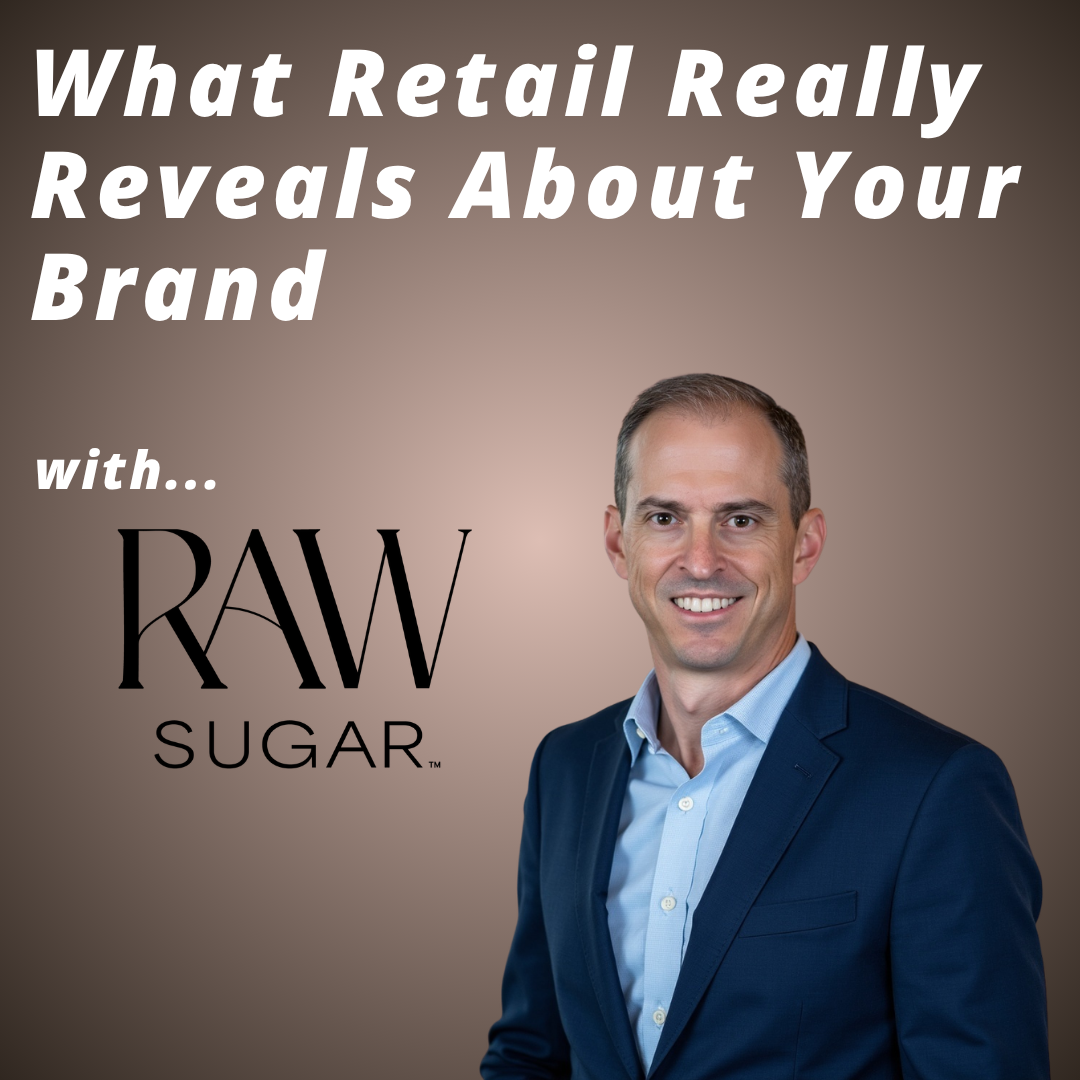
Getting on shelf is not the win. Staying there is the business. Rose Hamilton, CEO of Compass Rose Ventures and co-host of The Story of a Brand Show, sits down with Michael Marquis, CEO of Raw Sugar, for a masterclass in what retail really reveals about a brand...

 Apple Podcasts
 Spotify
 Castro
 RSS Feed
 Getting on shelf is not the win. Staying there is the business.
Rose Hamilton, CEO of Compass Rose Ventures and co-host of The Story of a Brand Show, sits down with Michael Marquis, CEO of Raw Sugar, for a masterclass in what retail really reveals about a brand.
With more than 20,000 doors across Target, Walmart, CVS, Walgreens, Meijer, Sally Beauty, Amazon, and DTC, Raw Sugar is one of the most compelling case studies in mass retail execution in the clean personal care space today.
* Clean personal care at mass retail prices is not a tagline. It is an operating model. Raw Sugar launched as a Target exclusive with a deceptively simple belief: clean personal care should not cost more than conventional personal care. That mission drove every formula, fragrance, packaging, and supply chain decision the brand has ever made.
* Operational execution comes before brand strategy. The first thing any retailer watches is whether you can supply product on time, in full, at consistent quality. Michael is direct: the worst thing a brand can do is win the shelf and then fail to fill it.
* Retail compresses the truth. In DTC you can retarget, rewrite the landing page, and buy yourself more time. In retail the shelf does not care how hard you worked. The consumer either gets it in seconds or they don't. And the weekly scorecards come fast.
* A restage is a consumer trust event, not a design project. When Raw Sugar evolved its packaging, the team knew that loyal consumers needed to recognize the brand, understand the change, and feel reassured rather than disrupted. Getting that choreography right is one of the most underestimated challenges in brand building.
* Do not go too big too fast. Michael's sharpest advice for any founder heading into retail: hold back on the temptation to chase doors and scale before the brand is fully baked. Place is part of brand positioning. Make sure the channel is a logical extension of what the brand actually stands for.
Join us in listening to this episode for one of the most practically useful retail conversations the show has ever produced. Rose and Michael cover shelf clarity, velocity, brand restaging, omnichannel discipline, and what it really takes to compete against the giants without acting like a smaller version of one.
Whether you are already in retail or working hard to get there, this conversation will change how you think about the channel.
For more on Raw Sugar visit: https://rawsugarliving.com/
If you enjoyed this episode, please leave The Story of a Brand Show a rating and review.
Plus, don’t forget to follow us on Apple and Spotify.
Your support helps us bring you more content like this!
Rose (00:01.115)
Welcome to the story of a brand. I'm Rose Hamilton, founder and CEO of Compass Rose Ventures. At Compass Rose Ventures, we help consumer brands find the growth hiding in plain sight, the positioning, the channel strategy, and retention levers that turn a good product into a business that people actually want to buy, fund, and scale.
Today's episode is very special and it is going to be a focus on retail, but not the shiny part that you might be thinking. Not the target announcement or the Walmart meeting or the photo of a product in an aisle. It's the real story that starts after that. Because getting on shelf is not the win. Staying there is the business. And raw sugar is a powerful case study because it built in one of the hardest places first, mass retail.
The brand launched as a target exclusive with a belief that sounds actually quite simple the more I dug into the story, but it is very hard to execute. Clean personal care should not cost more than conventional personal care. That is not acute mission line, it's actually an operating model.
It's a formula, fragrance, packaging, cost of goods, retailer margin, supply chain, promotion, all decisions that nobody sees but everybody feels. So today I want to use raw sugar as a masterclass in what retail really reveals. Because retail will not make a blurry brand more clear. And it will definitely make the blur more expensive. So, Michael Markey, welcome to the story of a brand. I'm so excited to have you here.
Mike Marquis (01:33.688)
Thanks for having me, Rose. Excited to be here.
Rose (01:35.728)
Yeah, so for everyone listening, Michael is the CEO of Raw Sugar Living, and the Raw Sugar brand was actually built and has created real skill by making clean, premium, feeling really great, good personal care accessible in the weekly shopping basket, not just in the prestige, beauty, or specialty wellness space. So today, raw sugar is in more than 20,000 doors across Target, Walmart, CBS, Walgreens.
Meyer, Sally Beauty, Amazon, and DTC, that's a mouthful. So clearly distributed in retail quite widely and broadly. And Michael stepped in during the scale phase after the WM partners acquired the brand. So this is not just the average origin story.
It's actually a scale story. And scale is usually where the truth shows up. A brand either gets sharper or it starts to blur. Michael, in our pre-interview, you said something that really stuck with me, and I immediately wrote it down. Getting into retail and getting on shelf is easy. Staying in it is hard. So that line is this episode. So let's actually start here. What does that really mean once the product is live and the retailer is watching?
Mike Marquis (02:51.788)
Yeah, well thank thanks for having me, Rose. I mean, part of the experience when brands are building and and they kind of are looking to drive into retail.
is there's a lot of positioning, great brands that that create new spaces that you can get excited about in the boardroom and and find ways to make your way on shelf, whether that's a couple, you know, a couple hundred doors or full chain distribution. But once you're there, the competitive dynamics kick in. you're held to the same standards as you know large multinational corporations in terms of what your velocity looks like. You need to drive demand to the shelf and the numbers and data start
judging whether you're gonna perform and be able to scale beyond that. And so it's it goes beyond kind of the the initial kind of hypothesis of what you think you're gonna be able to turn to the reality of week on week, being able to look at the numbers and adjust quickly to be able to perform. And so it's you know, I think it it takes a a special team like what we have at Ross Sugar to be able to, you know, jump into that highly competitive environment. but it's the reality beats starts hitting you very fast with those weekly scorecards that you're held against.
Yeah.
Rose (03:58.556)
Yes, I think that's the piece. A lot of founders are retail excited. I talk to them all the time and they have the dream, the deck, the packaging, the whole nine yards. Some of them even have the launch post ready in their head, ready to be posted. But it it's the moment that matters. I get that. But retail ready is really quite different. And retail ready to me means the product reads in seconds.
That the price makes sense without some long explanation. And the benefit is obvious. And so the brand knows what it is actually there to prove. And it's easy in the digital landscape to share that narrative through a video, through what it may be, but on the shelf it's a whole nother story. and the team can move fast when the numbers start talking. So I think a question for you is: as you consider where you are today.
What have been some of the largest challenges with the staying on shelf behind the scenes that one might not actually know?
Mike Marquis (04:53.025)
Yeah, I mean part of it, I I think a lot of what your questions are around kind of branding and positioning. and I think a lot of founders as they're creating new brands.
You know, the reason they've had a lot of success and sort of entertaining this discussion is because they've created something that is truly unique and has a great kind of positioning or found a white space. As the one of the things that I think is often forgotten that needs to start even before you have that meeting with a with a retailer is can you operationally execute against it? So the worst thing you can do is have a great positioning, have a good marketing plan, but can't fill the shelf, can't supply the product on time, you have logistical executional issues, etc. And so as you prepare for the launch, the first
thing you if you talk to any merchant the first thing you have to do is supply product on time in full with a good quality you know with the same quality you might have done it when it was kind of a bespoke brand that you're making out of your garage and so it's it that's really kind of step one is operational execution I think as you go beyond that you have to understand what type of competitive environment you're going to be walking into a retail whether you're going into a regional retailer or you're going into a national mass chain
kind of have to understand what that competitive dynamic is and how your consumer aligns with what that retailer looks like. in our case where we we're a clean you know brand positioning that consumer dynamic is not the same in terms of people who are looking for clean products as kind of a first order of of purchase is not the same across the the US. It has a tendency to be coastal, it has a tendency to be more west coast and east coast. And so you have to find the right kind of retail landscape even if you're looking at a national retailer though what are those doors you should start off with so that you have
have a little bit of a wind at your back as you go into your positioning into into the market.
Rose (06:35.081)
Well, and I think that's why retail is such a brutal teacher. I mean, at the end of the day, it compresses the truth. And on DTC, you can just keep explaining, change the landing page, retarget, run a different offer. You can always buy yourself more time in DTC, but retail, because of the pace that you're describing, gives you much less oxygen. And the consumer's busy, the aisle's crowded, and you know, the buyer is watching the numbers. So that's a real tension right there. And the shelf does not care how hard you worked.
It's it's much more about do people get it? Are they gonna buy it? Are they gonna come back? It's all those questions. And so I think is the br if the what if the brand is blurry in its positioning, retail will just again not make it any more clear. And it'll just make the blur more expensive. So when you think about affordability in the space of clean.
I want to talk about price because this is where raw sugar gets really interesting to me. There's so much discussion around price, costs going up, inflation. A lot of clean and really the beauty products and the personal care brands are built with a consumer who can afford to have values. I don't say that cynically because it is just true. Better ingredients, cleaner formulas, a more elevated experience. And the price sometimes quietly is saying this is not really for everyone. But raw sugar.
Has made that bet quite different. Clean should be reachable in the weekly basket, in the family room. You share that raw sugar shampoo launched at $9.99 and it's still $99, $9.99. I don't hear that as pricing detail. I hear that as a statement about who the brand is and what you value. So talk to me about that belief and what it takes to protect it when the business gets pressure on every side and there's new economic challenges every day for consumers.
Mike Marquis (08:21.889)
Yeah, I'm I'm lucky enough to be able to work with the founder of Ross Sugar, who's still actively involved, Don Damollis, who is, you know, kind of at at my side each day and had this belief as she found at the brand. And so she ensures as we go forward, we don't, you know, deviate from her initial vision, which was getting amazing kind of high quality products at an affordable price that you know she can offer to the masses and we'd be proud to have everybody everybody use. And where that balance comes in is how to make that affordable, how to offer great kind of breakthrough.
Beauty products and it with amazing quality that people will continue to see as a value. So that might be taking something that might be a similar category or offering that might be a $40 in market and doing it at $15, or on an everyday basis, being able to hold our shampoos and conditioners within our hair care line at $9.99 and keep it under $10.
Which I think takes a lot of work on the pennies along the supply chain. So you mentioned kind of some of the the upward pressures on on cost from logistics, gas prices, tariffs, everything that kind of goes in and starts adding up across the supply chain. What you have to end up doing is working through the rest of the
the inputs and seeing how you can make sure that you can keep those costs in control because ultimately we think that's that's what the mission is of the brand is to serve that consumer who's looking for it and might be walking into a retailer with you know $30 of cash in their hand and seeing how far that they can stretch it and they really want to have something that is a a high quality clean product for their their families and and hopefully we hit the hit the mark with that price point. But it's the people who are involved cut across people who are formular working on packaging, how we do our logistics, our our retailer partners around
how we spend dollars in terms of price and promotion. And and so I think you know it it really it's it's kind of the core of what we do every day.
Rose (10:11.506)
How important would you say it is for let's just say we've got an emerging brand who's considering retail? how important is it to have the team and the back end and the behind the scenes logistics supply chain pricing nailed before you start accepting big orders and expanding distribution quickly?
Mike Marquis (10:30.829)
Yeah, it's it's massively important. I mean you have to know
all of the costs that come along and not just the you know your initial product costs and what the logistics costs are going to be to service the consumer, but ongoing as you go forward, you know, you have to plan for if things go differently than what the initial plan is. All of our forecasts are always inherently wrong. And it goes up or goes down, you end up having, you know, fines or charges where you need to add more what you know promotion or support in different areas. And so quickly, you know, you could have a channel that turns something that you don't want to invest in because all of a sudden it's not very profitable for you. So I think it's important
important that people have a level of experience because it's it's a fight every day and I think you have to know, you know, as you're going into that, what the potential risks are because it's hard to unwind it if all of a sudden you decide it's not something you you wanted as part of your brand strategy.
Rose (11:19.754)
So true. And I think that's the part that many people underestimate. And I feel like the large quantities of conversations I have with founders from
Less than a million, up to 200 million. It's a very different conversation along the path in terms of where you choose to go into retail depending on the category and the product. And I think really price is not just what the consumer pays. It's what the brand believes. And I like how you're talking about the belief and the founder being at the core of it all. And Ross Sugar's price point says you shouldn't have to choose between clean and accessible.
But I think the belief has to survive the business. The cost pressure, the packaging increases, because it's always coming at you. The retailer margins. And I think that's where brands tend to get exposed because it's easy to say accessible when the numbers are easy. It's much harder to stay accessible when the business gets tight.
And what I hear in Raw Sugar is that affordable clean is not the cheaper version of premium clean. It's its own discipline. And it sounds like that probably runs across the DNA of the company. So I'm just curious to hear how do you make that a value with how you operate and any tips and tricks about the culture aspect in terms of how you keep that mission front and center.
Mike Marquis (12:35.223)
Yeah, I mean I I think it it might sound sound like a a a a typical thing that a brand marker would say, but when you
When you're close to kind of consumer audience and you're really clear on who you're serving every day, it ends up you know driving clarity in terms of your brand positioning and what you're doing. We we ultimately, you know, we we're a brand that started at Target. And if you can imagine that that Target shopper, that millennial mom who was going to Target and looking for something that was a you know, brand, you know, design forward, you know, in in kind of you know, more advanced in terms of beauty and fashion, but needed to make her dollars stretch a little bit farther. I mean, that is that is the person that we're
serving and that's why when you look at our line it goes beyond
beauty care for her around you know personal care and hair care, but it's extending into our kids line or even our pet line that, you know, she was looking for options that were clean products for her kids and and you know, no dyes and no, you know, you know, nasty stuff in and kind of the formulas with sulfates or parabens or phthalates. And so like she, you know, w those conversations end up opening up opportunities for the brand because you end up getting crystal clear on who you're serving. And so ultimately if you started to deviate from that and you
you know, started going in in areas that were not kind of serving what her needs are, then, you know, y that's where brands get in trouble when they, you know, they kind of start looking at the the competitive set as as kind of their benchmark versus looking at the consumer as a benchmark.
Rose (14:01.042)
Yep. Having the consumer at the table is really so important. And I I'm almost hearing a story that premium will give you the margin, but affordable is gonna give you pressure.
Mike Marquis (14:11.629)
Yeah.
Rose (14:11.74)
And pressure reveals whether or not the mission is real and how much you choose to stick to it. And so for anyone building a brand right now, I would suggest writing this down. If your positioning does not survive operational pressure, it's not positioning yet. We just heard about how important it is to have the back end in place. It really is messaging. If it's not backed by the operation. And just messaging is probably not going to survive. And that is the difference between accessible as a word and accessible as a business model, which is what impressed.
Me about raw sugar. Anyone can say accessible, but the question is how do you build your operation and your culture around it? And very team few teams can actually operate that way. So I want to pause here because this is exactly why we've created the CPG Curator newsletter. The best brand lessons are usually not hiding in the press release. They're hiding in operational choices, just like we're uncovering here.
Price architecture, shelf discipline, channel roles, product clarity, retention logic, what a company protects when the easier answer would be to dilute. If you want sharper breakdown on what actually is driving consumer brand growth, not the hype, not the vanity metrics, but the decisions that create enterprise value, be sure to sign up on LinkedIn for the CPG Curator newsletter and send this episode about raw sugar to anyone, an investor, a founder, or an operator who's actually thinking about retail and the choice.
Whether you're in the midst of asking, are we ready for retail? How much more do we want to expand in retail?
And really ask them, are you building a brand that can get on shelf or a business that can stay there? Because they're two very different things. And I think the next topic, and one of my favorite moments from our interview, was when you push back, Michael, on retention. Because in modern CPG, we love to make retention tactical. Subscriptions, emails, SMS, loyalty programs, replenishment reminders, and certainly I believe all that can matter. But you said the number one retention tool is actually product quality.
Rose (16:12.97)
Yes, I'm gonna pause. Product quality. And I love that because yes, it's obvious, but it's so obvious that it's usually skipped right past. And in personal care, retention is not abstract. It's the new it's the next shower. I mean, it's the next bathtime, it's the next moment.
Where somebody's reaching for a bottle, it's what the it's when the brand really earns its place. So how do you think about the product itself as raw sugar's repeat engine? I'd love for everyone to hear your perspective on that.
Mike Marquis (16:44.556)
Yeah, I mean if it comes to having a culture in a total company that is just product obsessed, you know, and so it's one thing for a founder or someone in marketing or product design to be able to look at, you know, look at a product and make sure it maintains its quality. But if your entire company and your community overall is out watching to make sure
You know what, if this doesn't smell right or the fragrance changed, or the you know, I see it on shelf and the cap is broken and I'm gonna buy it and I'm gonna make sure that you know I I return it so it doesn't kinda stay on shelf. You need to have the army of the whole company obsessed with product quality. And I think it you know, you wanna be proud of what you put out there. But I I we spend a lot of time in this industry talking about marketing and great marketing will get people to buy it once, but great product will get people to come back over and over again. And I think
being obsessed with the quality of the product, I think, is key to what the what has had this brand exist now for 12 years is just an obsession with the product quality. And I think
Know that goes into it's not just the the formulas and and everything that that go into it, but design, the execution of the package, how it's delivered, if you get it if you order something online, is it showing up, you know, in in good quality versus you know, in some cases you open that box and you have a product that leaks or you have, you know, too much paper or not enough paper or whatever those things are that that are in there. so I think we I think obsession with the product quality is your best repeat vehicle that you can have.
Rose (18:09.934)
I couldn't agree with you more. And the thing I love most in this conversation is that you talked about price and connected the consumer and the customer.
So instead of saying you need to be customer-centric or customer obsessed, that's implied. And it's almost as though you've evolved right past that. Like that's gotta be table stakes. But the next part is being product quality focused because that's the reflection of a company that actually is very focused on the customer. But really, that quality element I think is so important along with the pricing. That's the heart of it. You know, retention is not a flow, it's really a behavior.
And the best behavior is reflex. So the consumer really reaches that product again because they want to, not because an SMS text came through. it's just so interesting. And as you think about it, you have found a way to keep the joy with the product, keep people coming back. And I think the better question is, are we building a product that people would miss? That
To me, is the real retention test here. So when you think about the founder ethos and what it means, let's talk about something that you said that stayed with me. Raw sugar is scaled, it has been acquired, it's operating at a much bigger level now, much bigger stage. But the founder is still highly involved, still protective, still treating it like her own baby. And so from the outside, that can sound sentimental, but I don't think that's part of the business point here.
How does Donna's involvement instinct still show up in the business today? Like, how how do you see that? And where does it continue to come to life?
Mike Marquis (19:49.431)
I I think one of the the when you think about the evolution of I think how founders interact in the business in kind of a healthy way, you know, initially they're grinding.
grinding through, you know, getting it off the ground. You know, what do they say? The most fuel from a rocket is burned in the in the very beginning. So that they are grinding through getting a getting a launch off the ground. When you get to a stage like we're at at Raw Sugar, where we're working on scaling, allowing them to be able to step back and have perspective, to be able to look at the operations of the business, find white space that maybe they they weren't able to see before because they were focusing on the execution elements. And you know, that relates to innovation, it relates to the
that we might be messaging, how we're running the organization and how the people are being developed and and you know grown in in the the new context of more resources and a and a broader a broader org. So it's it's honestly more of a coaching as you come through to say like are we still are we still in the vision that we're looking at and what's next to make that vision happen.
One of the things we did recently at Raw Sugar was kind of an overall restage and design restage of our packaging. and to have a founder who created the brand 10 years ago go through the journey of like, okay, I'm gonna change the thing that made me so successful and made this business so successful, takes a lot of courage. And so it was, you know, it was great to kind of have the debates and discussions around how we how we did that in the in the right way. And you know, we're really, really lucky to have her.
Rose (21:17.416)
Amazing, you know, and it's such an important distinction, I think. I run into so many businesses where the founder's exited, and then I've got an investor knocking on the door saying, Well, we thought we had all the math and all the details captured on the piece of paper, so we didn't think we needed the founder to stick around for too long, and now we figured out something's missing. Can can you help us figure out that secret ingredients that did not carry on, or the reverse of it of getting ready for a strategic exit, and then you've got a question mark on.
Especially with celebrity brands today and influencer-backed brands, if that person who's the face of the brand steps off the the stage, do you really have a flywheel? Do you have everything you need before that person exits stage left or right? And so I think the founder story is overvalued when it's used as marketing and it's undervalued.
when it's used as governance. That's really what I'm picking up here. So if it's sitting on an about page, it's nothing more than copy. And if it shapes what the company says yes to, no to, protects funds, refuses to do, it's more like a strategy. And that matters even more after scale. And I don't think people always think that.
I think they take that for granted that there is always a role for the founder. It's just a matter of how what they're able to step back from, but how you keep them in the mixture. And I think it's a risk that a brand becomes more professional but less distinct, and the machine just gets stronger and the meaning gets weaker. And I'm so impressed that that has not happened with raw sugar. And so when you think about expansion being a trust transfer, right? You it's got to keep going. Raw sugar now plays across hair, body, kids, deodorant, hand care.
PET and and more, and I'm sure there's more coming. And so that kind of expansion can create real enterprise value. It can also create a mess when you start expanding too fast. I've lived in some of those scenes. I've been in that movie. and I think many brands usually ask the wrong questions first. They ask, can we do this? And I think maybe the better question is, will the consumer believe we belong here? Do we have permission? So to me, expansion is not the product product roadmap really. So it
Rose (23:24.478)
Kids and pets, I think, are great example because i permission, especially in those categories, matters so much in both. How did Ross Sugar think about those moves and working through them and not just saying, can we do it? but really saying, Do we have permission? How did you work through that?
Mike Marquis (23:40.441)
Yeah, I mean, well, part of it is, you know, the the insight kind of popping up through consumer conversations and saying, all right, these these are things that people are looking for and would love for Rush are going to be able to make an offering in. I think what we've learned you know, if I take from the very beginning stages where we've expanded into some categories into where we're going now, I think one of the things that has evolved is we've developed a better systems for us to be able to do, you know, smaller scale experimentations to be understand, you know, what is working, how is the messaging working, etc. Our are
number one hair care line this year that is doing extremely well is the GrowPro, which is a vegan biotin line within hair care, initially launched on our D2C live and on Amazon only to figure out the messaging, get feedback on the product, etc. before we took it to retail. And now it's it's our fastest growing franchise. I think those experiments whereas initially if you went back five, seven years, it was going and partnering with Target and probably
Buying a lot of inventory, putting it on shelf, seeing what worked, churning through a lot of the you know, the puts and takes and and kind of grinding it out. I think the the market has opened up a lot of areas for better experimentation so that before you go and you invest at a level at at retail to to go into kind of that competitive shark tank, if you will, of of what's going on, there's avenues for us to be able to experiment in a better way to increase our chances of success.
Rose (25:00.936)
I just I love that story. And I think so many times people ask, should we do retail first? How should we think about innovation? Should we put it on TikTok first? And I love the notion of get product market fit in DTC and then get it into Amazon, because then you're in a competitive landscape and you're not having to draw all the the traffic. And if you're in both, you can learn really fast. They're just very dynamic consumer labs. And then you go to the retailer.
Mike Marquis (25:26.914)
Yep. Yeah.
Rose (25:28.134)
Otherwise, so many brands, I think, in today's world wait for the retailer to say we'd like this. And then the retailer is almost owning the brand as opposed to the brand owning the moment, the consumer, the feedback they're getting. So it's like, are you innovating for a retailer or are you innovating for your consumer? And I really love how you think it through is it's the consumer.
I also think the category can be growing and still wrong for your brand. And a retailer can have white space and still be wrong for your consumer. So before launching the next category, might it be safe to say, ask the question, are we expanding the brand or are we asking the brand to carry our growth anxiety? Because really that's what it usually it is. That question can save the team, it would seem to me, a lot of money. Would you agree on that front?
Mike Marquis (26:15.02)
Yeah, yeah. I mean I think I you know, lots of times you're looking at growth opportunities, they they come from all different angles, you know. I
having worked in consumer goods for 30 years, every cocktail party you go to, someone has an idea for you and looks like are you going into X, Y, and Z. And I think you end up having to, you know, as a leader of of one of these brands, end up being fairly disciplined and asking about what is what does our consumer say? What are we you know, how is it different and in line with what our brand ethos is versus what's out there in the competition. And put up a lot of a lot of questions to make sure it's right because you know, there's a lot of people who extend their brand
and you're not gonna you know jump the shark and really kind of mess with their brand positioning if they don't stay true to it. So I think that's where I think a you know perspective of leaders and founders comes in to make sure that it it fits in line with where you want to take the overall brand.
Rose (27:05.738)
So true, so true. I want to talk a little bit about DTC because you corrected my thinking in our very first conversation, and I think the correction really matters, and I'd love for more to hear about it. It would be easy to frame raw sugar as the retail first brand's DTC second act. That'd be real easy to do. But that's not the right story. Raw sugar is still a mass retail brand. People are not necessarily buying most of their shampoo and body wash from a single DTC site.
And I think it's always so important to have a role for each of the channels. And DTC can still matter if it has a clear job, even if you are heavy retail distribution. And that is really the larger point, not DTC versus retail. It's really about channel role. So for raw sugar, what job should DTC actually do? You already hinted at it in terms of being test, but tell us more about how you think about that, given that you're so retail heavy.
Mike Marquis (28:02.382)
Yeah, I think we have a lot of opportunity to to continue to kind of expand the DTC relationships with our kind of community and consumers. Right now it's really a community offering. We do have super fans. We have people who are really excited about Raw Sugar. We've pulled them into market research. We've asked for ideas. It's amazing how a product we discontinued three or four years ago. We we, you know, get conversations about bringing certain fragrances back and products back. That that discussion is incredibly valuable because I think they that they're onto something, they're watching what we do.
They they're almost, you know, an ongoing, you know, a pretty large focus group that you could ask questions to about different moves that you're making and create an intimate relationship with. you know, so I think right now it's a it's it's really part of a community build and people who, you know, really have enjoyed our products are are big fans and you know will often recommend it to friends and family and they want to have an impact on the business. And it's a you know, when they get to be on a focus group with me and the founder and other folks and come, you know, and we've had we've
We might have some come on to the you know, different focus groups we have with them and want to apply for a job and and work at Roger. So we have we have people who are are very excited about engaging with us. And the revenue is is relatively small when you compare it to a Walmart and Target, but the value of that relationship is really high.
Rose (29:21.096)
You know, I really think that's the channel conversation more teams should be having. Not just should we be there, but what job does this channel do? Retail can give you reach, DTC can give you learning, Amazon can capture intent, TikTok creates discovery, we all know that now, and retail media can create velocity. So Target.com and Walmart.com can also bridge search and shelf, and a website can explain what the shelf cannot. They're all to me, they're all different jobs, and the
Is asking every channel to be everything to everyone. And I think that's also how teams get scattered in terms of how they sequence. And omnichannel without that channel discipline is expensive complexity. And that is also why I think the starting line is giving the brand a place to learn before they expand into retail. Just like you talked about with GrowPro, the online channel did not become the whole business to be valuable.
It needed to be useful and it doesn't have to have a huge impact to matter, but it has a job to do. So I think this is a really interesting space, along with attribution. So let's say with channel roles, let's talk about the role of TikTok. Not TikTok is a trend, not TikTok.
just alone and on its own, but TikTok is a discovery map. You made an important point to me that TikTok shop may not become a massive percentage of sales for a massive retail brand. But
That doesn't mean TikTok is not working. And a consumer may discover something as part of their routine, something like a this new scent, a new clean, a new shampoo, something new through anywhere, a restock video, and then buy it later on TikTok, Walmart, Amazon. So you get any of the number of places where you're located.
Rose (31:11.262)
And the dashboard not may give TikTok the full credit, but the consumer journey sure did. So how do you there at Raw Sugar think about TikTok's role when discovering conversations may happen in very different places?
Mike Marquis (31:23.18)
Yeah. Well, I mean ultimately the consumer's gonna convert at the less the least friction point of their their habits. And right now TikTok shop.
you know, for our brands ends up having a lot of friction relative to the conversion. So there's a lot of awareness driving a lot of discovery. And then they're popping over to Amazon, Target.com or going to their, you know, retail basket for the conversion. And I think you you know, we see the correlation to that. it's just, you know, it's something that's pretty hard to do, you know, very pure kind of attribution against. but it's very you know, you can definitely get the correlation for sure around the discovery and activity, especially with our consumer and the world of beauty is is
is very high. but I think you have to look at you know the categories you're in and how consumers are typically shopping them and it it ends up being from a conversion standpoint fairly low but the you know the awareness driving is really high.
Rose (32:13.834)
True. And I think this is the line that every consumer brand should almost have on the wall that attribution is not the same as influence. Attribution tells you where the sale was recorded, but influence tells you where the belief was created, where the behavior changed, the new routine was discovered. TikTok may create the want, but Amazon may catch that search, or Target may close the purchase, but the product may earn the repeat.
So, if you only credit the final click, you may underfund the place where the man was actually born and miss out on a whole lot of things. So I think
The strategic question is not what is TikTok shop as a percentage of sales. And I think many brands are still looking at it that way. The better question is where is TikTok showing up in the consumer belief? That's much more useful than thinking about it as modern demand creation. So I think it's a very delicate balance where you sequence in as you're an emerging, growing brand, especially when should we get on TikTok? The easier answer is, right away. But if you don't have, as we talked about earlier in this conversation,
the supply chain nailed the volatility of inventory and pricing and discounting will really wreak havoc on how you serve all various different channels that you're in.
Mike Marquis (33:33.229)
Yeah. Well there's a difference between TikTok and TikTok shop, I guess what we're talking about. So making sure that you you know, you look at those either as a a point of awareness and brand building and discovery versus conversion on on the site. So I think it's just making sure you understand the different types of applications of the platform.
Rose (33:51.369)
Yep, yep. So now I'd love to talk about the recent reset stage because this is where the brands learn when consumers actually recognize. And you described it as evolution and not a revolution as you thought about the restage. But even evolving is a major shift, whether it's the packaging, the formula, the retail cutter, I mean any one of the things, the market, everything, anything involved in evolving has to happen in a sequenced order.
And and then something happened that I thought was such a good consumer signal. Some loyal customers saw the old packaging marked down. I loved it when you said this to me and thought raw sugar might be going away. So what did they do? They didn't step away. They stocked up. And that tells me people were not just aware, they were attached. What moment, what did that particular moment teach you as you went through it?
Mike Marquis (34:43.074)
Well, I mean it was it's one of those ones where you have any you know, some early signals that might be that might have some false positives. You know, you you end up budgeting with when you're doing a a hard cut over like we did, you end up budgeting with retailers about markdown activities and dollars. And we got some early signals saying, Wow, we're selling through our markdowns really fast, which is great. We're gonna save money. We won't have to mark down fast, we'll be able to convert over faster. Well, you end up finding is that a lot of our loyal consumers were
seeing it marked down, worried about being able to get their favorite products and stocking up. And you know, and so we've we've been able to kind of measure that through share requirements and kind of, you know, loyalty over the course of first quarter. It's great to see that that level of consumer love. As we came out with the restage, what happened over the course of the next few quarters is the people that were buying our products were a lot of new to brand, people who are new to the category, who got appeal for the new packaging, kind of saw it, maybe caught their eye for the first time. And now we're seeing those loyalists coming back after their
their stock up purchase in the first half. And so we're we're off to the races and you know excited about what this is gonna do for us. And I think when you go through a rebrand once a decade, you know, which is what we've what we've done, you need to you need to kind of look at it, you know, with a long lens as well and make sure that what you're doing is gonna, you know, hopefully we only do this once every 10 years or so. And I think we nail the design, the the feedback has been really strong. When you do these redesigns, like TikTok can hold you accountable of people who
hate it or, you know, question it. There's a lot of brand managers out there on TikTok who are are giving you feedback on your brand and and I feel like we did a good job of staying loyal to the the heritage of the business but cleaning it up and bringing it to the next the next decade.
Rose (36:22.9)
You know, that's the thing. Change needs choreography. It's like a waltz and a dance. When a loyal consumer thinks his or her product is disappearing, it's not just a packaging issue, it's really more of a communication issue. And a restage, I think many people think about it as like a design project, but really it's a consumer trust event. And it tests whether people recognize you and it tests whether they understand the change. And tests whether they feel reassured or disrupted. It's a trust thing. I just got a package.
From a subscription that I have, and the box showed up and all new design. I I it became a trust piece because there was no communication, nothing in the box saying new and improved, or we heard you, we listened, here's what it is. And so I suddenly was like, hmm.
I don't know, this is a consumable product and no one's talking about what has happened here. So I think the goal is to become sharper without breaking the trust. And I think you did a really excellent job. And I think that is the lesson. So you know, when you think about all the things you've done in your career to date, and if you were to write your younger self a note, knowing that our audience has a lot of founders who are scaling, they're in a position like you, they might be emerging founders who are
In the grit stage that we talked about earlier, and they're just grinding it out. I mean, you've seen all aspects of it. What would you say to your younger self?
Mike Marquis (37:48.459)
it's a question. I mean, I think the the keeping things simple and understanding what your brand and business model look like and staying true to that, I think is a really important skill to learn. If you're fine, if you're creating a brand or you're working on a brand or restaging it or or whatever it might be, you should be able to articulate what your business model is. And that is how you make money, what do you do every day, what does the company do every day, what how are you different from the competition?
And when you do that, making sure that you can articulate that. And then your job as a leader is to stay, you know, stay the course and have people, you know, believe into that. And what you find is you end up repeating yourself over and over and over again because people have ideas all the time. They have different ways they want to grow the business. But when you hold people kind of true to what the what the mission is, what the brand stands for.
You know, asking those core questions. It might seem like a very simple task as a leader, but it ends up when you don't do that, that's when brands can bifurcate and they can go in a bunch of different directions. You start chasing shiny objects, you know, all over the place. And I think that's one of the things that I think in my earlier days, you know, you always wanted to create growth through new ideas. And sometimes growth happens by listening to those new ideas but staying true to what the brand stands for.
Rose (39:11.124)
So as we start to wrap up, I'd like to do a quick rose brand audit on raw sugar. So here are my takeaways. The shelf test. Raw sugar learned to win in seconds, not minutes. I think many brands missed that point.
The value test, the brand made clear at its very early stages that clean personal care accessibility without turning affordable into cheap, super important. And I think the repeat test, I love to talk about retention, but the repeat test is product quality, the discipline around fragrance, the formulation care, the obsession as you described it with product, a pleasure to do the retention work before CRM even touches the customer.
That I think is precious about this story. And I think the permission test, kids and parents may make sense because they came along as someone you could serve, but it really came from consumer trust and listening and not just competitor envy. And I think that's pretty special. Not everybody gets that in terms of growth. And then the channel test, DTC, TikTok, Amazon, retail, all of the mediums each need to serve a job.
Otherwise, omnichannel just becomes complex, expensive, and very noisy. And I think the bigger point is we could easily write a headline that's about raw sugar has distribution. That's why it's grown and scaled. But I think what you've proven in this interview is that raw sugar is not interesting because it got distribution, which everyone loves to talk about. It's interesting because it built a channel that serves every brand, stayed true to the heritage, continues.
Questioning are these the right decisions, and gives very little room to hide. So for as I think about it, you need to be clear, valuable, earn the repeat, expand very carefully, as we discussed. And you got to compete against those giants and who and people who are making a smaller version of the giants. And it's a boardroom lesson. Smaller brands do not beat giants by acting like little giants. They win by being sharper, being customer and product focused, faster and quicker.
Rose (41:16.816)
So Michael, I want to close with the founder listening who is either already in retail or trying so hard to get here. What is the mistake you would most want them to avoid?
Mike Marquis (41:30.299)
going too big too fast. Yeah, I I think there's a y there's
One of the things, if you think about brand positioning and all the classic kind of, you know, four or five Ps, however you were trained on it, you know, place is part of your overall brand positioning and thinking about where your brand should show up, where the consumer's gonna think that it should show up, and it being a logical extension of your brand, retailers, outlets overall, not just you know, physical retail, but but online and and everything, have context for where your brand should sit. And thinking about how to make sure that it's true to what your brand ethos is.
initially and sticking with that for a long period of time, holding back on the temptation to chase the dollars and the scale. I think it's one of the key aspects to make sure your brand is kind of fully baked because once you go into you know larger kind of context of broader retail the data is gonna drive whether you're successful or not. Spend time on your brand in the context of where where it sets up in terms of its place.
Rose (42:30.622)
That's amazing. Well, I think this is just a perfect place to land. So the lesson of raw sugar is not that every brand should start in retail. The lesson is that every brand has to understand the channel it's trying to win. And retail is not distribution, only distribution, certainly not. It's the test of clarity, value, repeat, and discipline.
Most importantly, discipline, the things that you say no to. So before you celebrate the door count, ask better questions. Can the consumer understand us in seconds? Does the product earn the repeat? Do we have permission to expand? And does each channel have a job? Are we measuring influence or only attribution? Because getting on the shelf is not the win. Staying there is the business. And that is where brands create enterprise value. Not in an announcement, but it's all the things we just talked about. So
As we bring this to an end, I just want to say thank you so much, Michael, for making this a really in-depth, very careful thought behind the brand that is raw sugar today. We really appreciate you and your time, and thank you for listening.
Mike Marquis (43:34.99)
Thank you, Rose. Pleasure to be here.
