
Paper Culture - When Sustainability Meets Stunning Design
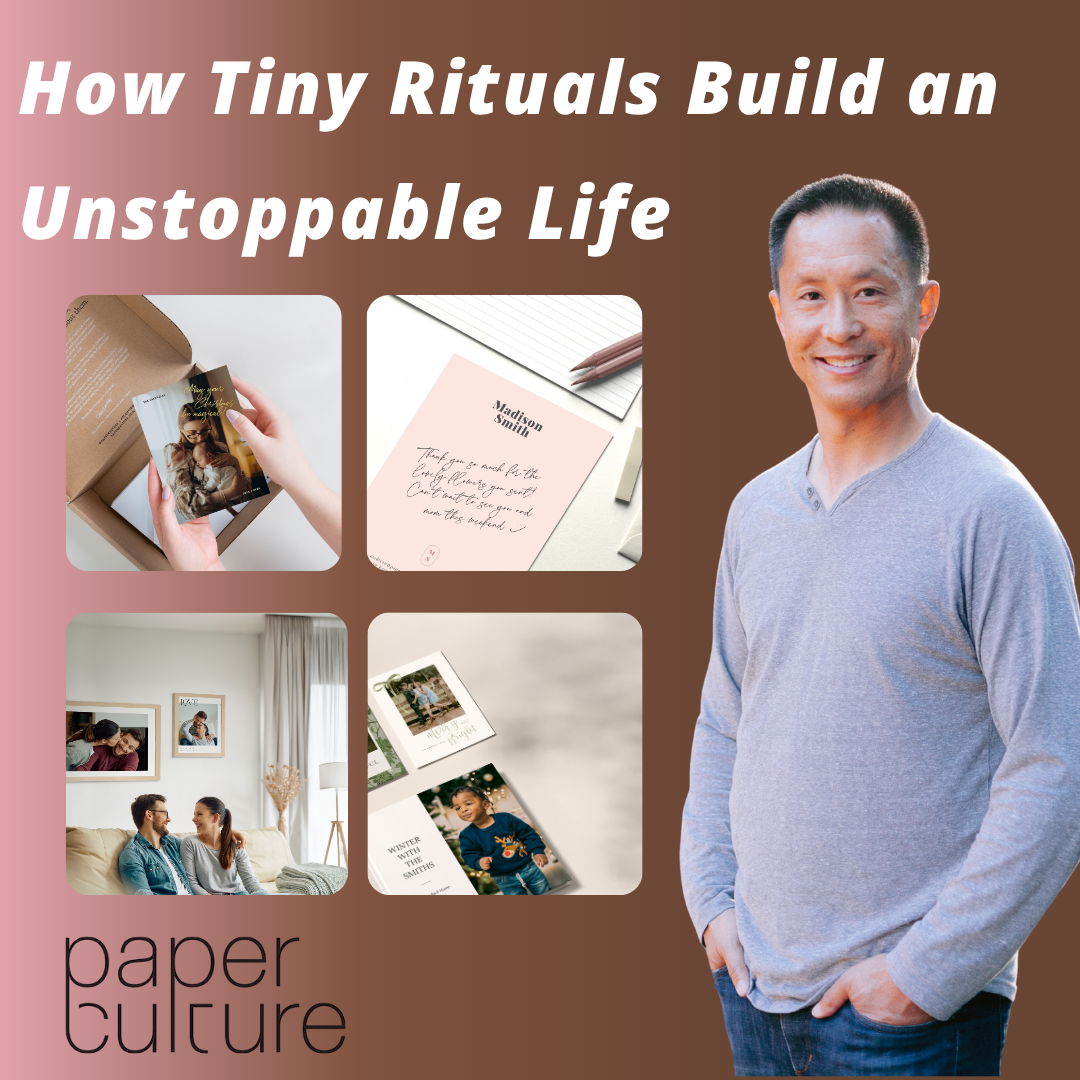
In this episode of The Story of a Brand, I sit down with Christopher Wu, Co-founder & CEO of Paper Culture, a company that has quietly—and consistently—been redefining what sustainable, beautifully designed paper products can look like. From day one, Paper Culture has stood at the intersection of modern design and deep environmental responsibility, long before...


In this episode of The Story of a Brand, I sit down with Christopher Wu, Co-founder & CEO of Paper Culture, a company that has quietly—and consistently—been redefining what sustainable, beautifully designed paper products can look like.
From day one, Paper Culture has stood at the intersection of modern design and deep environmental responsibility, long before sustainability became a cultural talking point. What moved me most was hearing the origin story: four founders, a six-page website, no automation, and the sheer grit it took to hand-typeset every order until two or three in the morning—all fueled by a mission they believed in.
Throughout our conversation, Christopher shares the early chaos, the lessons learned from starting during the Great Recession, and the unwavering North Star that kept the brand alive for 17 years.
We talk about the power of design, why sustainability should never require a sacrifice in quality, and how physical products—like holiday cards, photo books, and personalized gifts—remain meaningful in an increasingly digital world. Paper Culture doesn’t just sell cards; they sell connection, joy, and a chance to make a small but real impact on the planet.
Key Moments From the Episode
* The gratitude moment that started it all: Christopher remembers friends and family working late into the night during their first holiday season—unpaid—simply because they believed in the mission and wanted to help.
* Starting during the 2008 recession: With a wedding, a new home, a baby on the way, and no venture funding, the team built a fully bootstrapped brand by embracing long-term horizons and reduced competition.
* Where design meets sustainability: Paper Culture was born from the idea that consumers shouldn’t have to choose—great design and climate-friendly choices can and should coexist.
* Their mission as a true North Star: After 17 years, fighting climate change continues to be the company’s guiding objective, driving everything from materials to processes to planting over a million trees.
* The lasting power of physical products: Even in a digital world, a holiday card or personalized gift still stands out—and reconnects people in a way screens can’t.
Join me, Ramon Vela, in listening to the episode. If you love brands grounded in mission, craftsmanship, and real human connection, you’re going to enjoy this conversation.
Christopher’s story is a reminder that business longevity comes from purpose, not hype—and that even the smallest choices we make as consumers can leave a meaningful imprint on the planet. Tune in and discover the world of Paper Culture.
For more on Paper Culture, visit: https://www.paperculture.com/
If you enjoyed this episode, please leave The Story of a Brand Show a rating and review.
Plus, don’t forget to follow us on Apple and Spotify.
Your support helps us bring you more content like this!
*
Today’s Sponsors:
Color More Lines: https://www.colormorelines.com/get-started
Color More Lines is a team of ex-Amazonians and e-commerce operators who help brands grow faster on Amazon and Walmart. With a performance-based pricing model and flexible contracts, they’ve generated triple-digit year-over-year growth for established sellers doing over $5 million in annual revenue.
Ramon Vela (00:03.128)
Welcome back everyone. We have a great show. I have with me Christopher Wu, who is the co-founder and CEO of Paper Culture. Welcome to the show.
Christopher Wu (00:28.643)
Thank you. Great to be here.
Ramon Vela (00:30.37)
Well, I appreciate your time and I know you're busy and you're gearing up for a very busy season. We were just talking about that, Black Friday and the holidays. So we'll talk a little bit about that a little bit later, but I always like to start off with a signature question and that question is around gratitude. And I think I'd love to ask it for a couple of reasons. One is I'm just a big believer in gratitude. I do a gratitude meditation. It has helped me through my very
dark moments of my life, both entrepreneurial as well as personal. And it's just an amazing power and it's free for everyone to use at any time. helps you relieve stress and anxiety and helps to put things in context. And it really is much more powerful than what people believe. I've actually read an article where it says that it is impossible neurologically in your brain to hold both anxiety and gratitude at the same time. And so that's how powerful it is. So
something I definitely recommend people if you're feeling anxiety or stress, but I also love it because it's a great way to start off a discussion about your journey because there's so many things to be grateful for and so many people and things that have helped you in your journey. then lastly, you know, it's really easy for people to see brands online or on retail shelves or wherever they see it. And then simply think it's a, it is a sort of a
you know, faithless corporation. And people don't realize how difficult it is to start a business, to build and grow a business, to have any longevity in a business, and also, you know, to sell and make products. So it's really, really difficult. It could be incredibly rewarding, but it's also a challenge and each day is a challenge and it can be very stressful. So, um, I'd like people to realize that there's real people behind these brands that we feature on this show. And one way of doing that is by
getting to know the person that we're interviewing, and also learning about them through what they're grateful for. So Christopher, if you don't mind, can you share a moment or a memory when someone did something for you that just made you feel grateful because it meant that they believed in you, your vision, or your potential?
Christopher Wu (02:44.975)
Well, first and foremost, thank you so much for having me. I'm excited to be here and I think it's a great question to kick us off. I really have to go all the way back to the beginning and bear with a little bit of context, I think will help as well. So the year is 2008, the year that we started the company. There were just four of us. We were a bootstrapped company.
Ramon Vela (03:01.998)
Sure.
Christopher Wu (03:14.785)
not even really a company at that point. We were an idea. And our idea started out with creating sustainable cards. And we'll get more into that. But our entire quote business was a six page website. It was a home page and five holiday card designs. But at this point, actually personalization and all of that stuff that is just totally normal now,
Ramon Vela (03:29.88)
you
Christopher Wu (03:44.282)
didn't exist, at least for us. And so our entire website was this homepage and a link to five designs. And on those designs, it was just a picture and a text box. When you typed in the text box, nothing happened. All that happened was you were typing all the information that you wanted. And when you hit Submit, it would send us an email. And then we would start scrambling.
Then we would take this email in, we would hand type set it, we would redesign the card to fit perfectly. by the way, we didn't have your photo at this time. So we would email you back and ask for a photo and then we would set that in, we would edit it. We'd email you back and if you were excited, you'd say, great, I'd want some. Then we would email you an invoice. We would also customize a personal stationery to go along with it and try to upsell you like any good entrepreneur.
Ramon Vela (04:18.049)
Mm-hmm.
Christopher Wu (04:38.959)
Uh, and then we would send you a PayPal invoice because we had no e-commerce system. All of this took hours for every single order. And we thought, Hey, this isn't going to be a problem. Who's going to know about us. have no advertising, no marketing. Um, and in that first holiday season, we went from having one order a week, right? When we first went up to hundreds of orders and hundreds of orders doesn't sound that much.
But when it takes three to four hours per order to fulfill, with four people, the math doesn't add up. You don't have enough time in the day. And so this is where the answer to the question comes in, which is in order to fulfill those orders that first year, we called in every friend and family we knew into our little cramped, I wouldn't even call it an office, like a rented space.
Ramon Vela (05:32.385)
Thank
Christopher Wu (05:35.124)
and we were all cramped in there and every day we would work until two or three in the morning. It didn't matter what you did, whether you could typeset or whether you could answer the phones or whether you could reply to an email or just pick up pizza for everyone that was eating. We would work and work and work and we would barely get all of the orders out on time. But somewhere typically around two to three in the morning we would finish every day.
No one was getting paid, right, at this point. They were just doing it out of the goodness of their own heart. They did it because they believed in our mission. They believed in us. They wanted to support us. And there was some massive satisfaction getting to that spot when you were done for the day. And we would actually have this group huddle when we were finished. There would be this like joyous scream, we're done! And everyone would get together and we would just...
Ramon Vela (06:28.791)
Thank
Christopher Wu (06:33.859)
go in this huddle and really it was, we called it our thanks huddle, but you know, to the point of being a gratitude moment, was just every day, we were just so thankful that here our friends and family would come to support us. And A, sure we were satisfied that we got those orders out, but I think more so we were grateful for the support. And without that support, know, 17 years later, we wouldn't be here.
And so for that, I am forever grateful.
Ramon Vela (07:07.499)
Wow, I love that story. There's so many questions I have about that, but I appreciate you sharing that because that's such a great story. And these are the little stories that a lot of people don't even like the, this is what they don't hear on social media. know, all the little behind the scenes, you know, back office stuff that happens, whether, you know, it's your friends or your parents calling.
you know, packing orders, calling customers or whatever it is, you know, these people in the back and are just there and helping you because they want to see you succeed. And to the point of the question I gave you about gratitude, they see something, they believe in you, your vision, your potential, whatever it is, they see it and they want to help you or else they wouldn't be doing it. Right. So I have two questions.
One is you said 2008 and I just have to comment that 2008 was a great recession. So wow, to have the, you know, the cojones to start a business in 2008 when a lot of businesses were just going under and the real estate market was going under.
Christopher Wu (08:24.015)
Or lack of wisdom. Either side, I'll take your version, but I've heard both.
Ramon Vela (08:26.477)
Thank
Well, mean, it was a scary time. mean, my whole trajectory in starting this podcast really was born out of my business actually at the time going under. And my experience with that led me to what I'm doing today and really guides me in terms of like wanting to help entrepreneurs.
with their business by telling their story, but also, you know, illuminating and making their products known. So I just have to say that that is, that's crazy. mean, what was going in your head when all this stuff was going around? Because it was scary. don't know. People don't, people don't remember. People may, some of them may not have been born at that time. Who knows? But it was a scary time. I remember distinctly, like I always tell people that I felt like I thought my life was over.
Christopher Wu (09:11.535)
for sure.
Ramon Vela (09:24.321)
when I remember watching the news on, it was a Friday night, think, I think in September or it could have been August, and I was watching the news and I had known that my business, like I had to fix my business because I know I wasn't being run right. I wasn't paying attention to the margins and so forth. There's a lot of mistakes, but I always thought, oh, you know, as long as the revenue keeps coming in, we'll be fine. And I remember,
Washington News, and I think again, was August or September, and they showed a run on IndyMac Bank. they show the cameras from above, and people were running into the bank trying to pull their money out. And I remember hearing that, hey, this hasn't happened since the 1930s, where people were running in to pull their money out. And that's what they call a run on the bank. And at that point, I thought, crap, this is like, this is worse than I realized. And it was a scary time.
That is my point. What was going on in your head? Was it just like not paying attention? Like not in a bad way, but just not paying attention or what was it?
Christopher Wu (10:30.359)
No, so there was the, I think there was two parts of the story. One very large part crazy and the other part somewhat, somewhat thought through. So I'll go through both because I think they make at least the first one is a somewhat entertaining story. So in the two years before and after we started the business.
I proposed to my wife. She moved out from New York. I was living in California. We sold our first house. We both quit our jobs. We got married. We bought a new house. also, I started a business and nine months after our honeymoon, we found out we were expecting our first baby.
Ramon Vela (11:30.509)
Hmm.
Christopher Wu (11:31.3)
This all happened in a span of two years. So we started paper culture with all of this newness. We both were in new jobs. I had just started this business. We were having our biggest life adventure, which is our first child. And so the ultimate crazy is doing all of this at once. I cannot recommend it as a path for anyone. And I had many lessons.
Ramon Vela (11:59.566)
you
Christopher Wu (12:00.132)
And not least of which any entrepreneur could tell you it's so much harder than you realize when you when you first start out and add to that any parent will tell you it's also so much harder than you realize when you first start out. And the combination of those two is probably not something that I would recommend to people. So that's the crazy part. So maybe wasn't entirely thinking entirely rationally as evidenced by all of this poor decision making. But in terms of the timing of starting the business,
Ramon Vela (12:15.063)
Mm-hmm.
Christopher Wu (12:30.433)
It was actually a very conscious choice. So paper culture, unlike many of the businesses founded at the same time and in the same space, was and was always intended to be a self-funded company. And that makes a huge difference to timing. So I'd actually been in the venture space. ran ventures at HP prior, was at a venture-funded company.
and had been in and around the venture world. And in venture, you better, it's really tough to go in at the bottom. Actually, if you can raise money at the bottom, it's fantastic because you're one of the few and you have a lot less competition, but it's so hard to raise when the momentum is against you. And so as a venture funded company, it really would not have been wise to start at that time. But
as a self-funded company, one of the benefits that you have is that if you can make it, you have a lot more patience, you have a lot longer time horizon, right? And the benefit you know is that there's a lot fewer companies being founded, right, at that time. And so there's a lot less competition, you have more time to develop your idea. And so it was with that knowledge, we figured we had a year or two of...
quiet capital raising to sort of incubate our business and give us a little bit more flexibility. And so that was the at least the rational side of it. But to say that it was entirely rational or irrational was really probably a combination of the two.
Ramon Vela (14:00.226)
Mm-hmm.
Ramon Vela (14:06.253)
And there's so much to unpack there, but I did have another question because based on your gratitude story, we talked about how these people were helping you and they saw your vision, you saw your potential. Take us back to that time period again, and give us an idea of how did you speak about the company and its mission? Now, obviously people wanted to help you.
because they knew you, your friends, your loved ones, whoever, and that obviously plays a part in it. But I think there's also, you know, there's one thing helping someone, but it's like there's an added plus if you can share with them the mission and why you felt so strongly about this business. So walk us back and maybe take us back to a conversation and share with us what you shared with them that got them fired up.
to be part of this.
Christopher Wu (15:06.863)
Sure. Well, I'm going to attempt, and this is a little bit, it's a little bit different because it's 17 years later. So I'm not sure how this will work, but I used to ask everyone the same couple of questions. So I'm going to try it on you, which is think of a friend who's really eco-friendly and really cares about the planet. So take a second, think about them. Okay. Now.
Ramon Vela (15:34.253)
Mm-hmm.
Christopher Wu (15:35.513)
Give me a couple sentences about this person. What do they look like? What do they like to do? How would you describe their fashions?
Ramon Vela (15:43.53)
I would say that it was, they were, I would say that there were, I don't know if this is right word, maybe adventurous in how they dressed. they were free spirited. they were creative. they, like to do DIY type things. like they, like they would like to learn to cook or they would learn to garden.
They enjoyed doing those type of things.
Christopher Wu (16:15.719)
Mm And and if you were to picture their their clothing or something, could you picture like a plaid shirt or maybe some Tiva's is that was their fashion sense or, you know, how what would you think of the brands that they might follow?
Ramon Vela (16:34.615)
Well, I think the person I'm thinking of, they're very creative in terms of how they put together their outfits and whether it was like, whether it was a band t-shirt or whether you're wearing a skirt or like the person I'm thinking of is sort of, they like to dress sort of retro. So they like to wear, you know, sort of retro skirts and clothing.
you know, things that we look back on and think like, that's cool. You know, like old brands and old t-shirts of brands and things like that, or rock music and things like that. So yeah, that's very creative, you know, almost like artsy a little bit.
Christopher Wu (17:10.701)
Yeah, absolutely. So I think, you know, your your picture of a person is pretty classic. But and when we often ask the question, people sort of generated this image of their their outdoorsy friend who's hiking through the woods in a plaid shirt and Tiva's and sort of granola type aesthetic, or creative and
Ramon Vela (17:31.757)
Mm-hmm.
Christopher Wu (17:36.912)
nothing like we actually most of us at our company, have that aspect of us as well. But we also said at the time, so if you go back to 2008, this was the time when sort of modern contemporary design was really taking over the corporate sort of world. Apple was really starting to take off.
Ramon Vela (17:59.469)
Mm-hmm.
Christopher Wu (18:01.141)
know, companies like Ikea were doing really well in terms of clean minimalist design. And every company in the Fortune 500 was adding a chief design officer, right? Before that time here, no one had ever heard of a chief design officer. But this was all design matters, right? And I think nowadays, so much later, you know, we sort of think of it the Apple aesthetic, of course, right?
Modern, minimalist, clean, those things matter. But back then, that was sort of new and the craze was thinking a lot. So what we really, our thesis was that there were a lot of brands that stood for sustainability. Brands we really admire like Patagonia and the like, but they often had an aesthetic about them that was somewhat common to what we've described, creative artsy, a little bit granola.
And then separately, there were all these companies focused on contemporary design. Apple, and back then, Motorola was big, not so much anymore. But a lot of these companies, and our thesis was, we believe that there can be a consumer brand that sits at the intersection of these two. Why is it one or the other? Why do these live in different worlds? Why can't sustainability be for people who also appreciate great design?
Ramon Vela (19:03.789)
Thank
Christopher Wu (19:24.953)
Right. And not to say that that's everybody. We're not trying to be everything to everybody, but we're trying to create a brand for people that really care about climate change, that care about the planet and also like to put a design foot forward. And that was our thesis back then. And still 17 years later, I don't think that has changed at all. We still believe that there is this huge sort of
emptiness in this overlapping space. There very few brands, even 17 years later, that have stepped into that space. There are a few that are a little bit outside our space, you know, maybe Everlane or people like that, that have come along that have some of those values. But that's really what we set out to do. And we saw an opportunity to do this across many different consumer brands.
I think this is where maybe we have not been as successful as our original vision and that we simply started out in the personalized product space because this was a space that I knew well from my past work experience and as a bootstrapped company, you have to be able to execute quickly, right? You can only afford to write checks out of your own pocket for so long. And this was a playbook that we sort of understood at least the operations and execution of.
Ramon Vela (20:41.11)
Mm-hmm.
Christopher Wu (20:48.919)
And so that's the space we picked initially. And the idea was to launch different brands, right, that stood for the same thing and have a common thread that tied between them. We still hope to do that, but 17 years later, we're still on phase one and a half of that story. So that hasn't gone as quickly as we had
Ramon Vela (20:59.744)
Mm-hmm.
Ramon Vela (21:08.96)
Yeah. Well, I love that. I love that story and how you framed it. and by the way, just so people know, who are, who are listening and eventually will watch this on a video. love the theme going on in the background. I mentioned you've got, grew from the guardians of the galaxy. You've got, something that says trees in the background, obviously paper and all of this.
So I appreciate this thing going on in the background. so with the length of time the company has been around and this mission that you've had, you've had a lot of changes in popular culture, right? Now the 2008, it doesn't even seem that long ago, but cause you think of like Apple and iPhones and you think, they've been around forever, right?
But they have it. mean, I remember those years where they, mean, what's the little one, the little small one with the keyboard on it. Yeah, the Blackberry. Yeah, the Blackberry. So that one, I mean, that one was like everyone had those things, especially in the corporate world. Like it was, that was so popular and so forth. And I remember people thinking like,
Christopher Wu (22:20.451)
The rim, Blackberry.
Ramon Vela (22:31.614)
Apple will never be in the corporate America. No one's gonna use that, blah, blah. Now look at everyone has an Apple or of course now Galaxy. I mean, times have changed a lot. Things have become digital. There's all sorts of things like that. So trends change, culture changes a little bit. What do you think?
And it could be what you've just mentioned, a little bit of what you just mentioned as well. But what do you think has been those keys to longevity for you guys? Even given the fact that things have changed. Like for instance, I still use notebooks. I love them, I still use them. However, I also use a digital notebook to do my notes for the shows and so forth. That way I can keep them and catalog them and so forth.
But things change. So I'm wondering what has been for you, what has been the key or the keys of longevity given how things have changed both in design, both in digital formats and so forth. what do you think are the keys of longevity for you guys?
Christopher Wu (23:43.418)
Yeah, no, I think I would say two different things in somewhat different directions. So one is, I think, the mission. And that has stayed the same. And I'll speak a little bit more about that. And then the second is the nature of the physical product. So starting with the mission, think what we didn't expect when we started the business, we assumed that everyone
Almost everyone accepted that climate change was real. That this was inherently a good thing, right? To fight for sustainability, to use recycled products, to care about your carbon footprint. It never once occurred to us that maybe 17 years later, it might be actually a harder argument to convince people that this matters for some people than when we started.
Ramon Vela (24:16.652)
You
Christopher Wu (24:42.863)
And so I think one of the surprising things for us has been, you know, not to get political, right? But that in our view, this is a very non-political issue. This is an issue that affects every person on the planet and really should be something that if we care about not just ourselves, but we care about the generations to come in front of us.
It feels like an unassailable truth that, we have to do something about it. And we can't just kick the bucket down to the next generation. And if we're doing that, it feels almost selfish. And we're not a preaching company, but we're one that hopes to provide inspiration, to inspire people to want to care, to want to choose sustainability.
And I think our backgrounds, my co-founder and I both were at Yahoo and sort of were introduced to this business to consumer world where I think in the business to consumer internet world, the whole art is how do you start with one single person? And you don't think about needing to hit millions of people. Your focus is always on one person. How do I make that one person's experience so amazing?
that not only, of course, you want them to come back and use your product or buy your service again, that's sort of the bare minimum. But you also want them, for us, we want you to recognize that, wow, it's not a sacrifice between sustainability and joy in your product, right? We want to deliver the ultimate product experience. We want you to say, wow, I can get sustainability and quality and amazing service and great design.
Why would I ever not want all of those things? Right? And so then not only do you come back to us, right? But then if we can get you to change your behavior in businesses that we're not in and say, hey, I should be able to demand all of these things from companies. Then that starts to change your behavior. And then you talk to your friends, you inspire them, they have the same experience. And that's how a single customer can become a movement.
Christopher Wu (27:01.411)
Right. And I think that's the art of business to consumer is how do you create that indelible experience that inspires people? And we've always wanted to be an inspirational brand. And I think what's changed is I almost feel like it's more important now, right? It's more important to be able to deliver the joy, to show people not by screaming at them or insulting them because they're not doing it, but inspiring them.
by having such an amazing experience that other people wanna have that same experience, right? And so we always try to focus on the positive and the joy that our product can bring. It's a little bit easier for us because we're invited into people's amazing life events, which 90 % of them are happy events, right? There's weddings, there's births, there's holidays, and these are joyful events.
Ramon Vela (27:44.534)
Mm-hmm.
Christopher Wu (27:59.0)
And so we get invited into these happy spaces. People are predisposed to joy, right? And so we have an unfair advantage in that. And so I do think that that has evolved over time. even this year, I think we now get flagged often in digital advertising when we say, care about sustainability.
Five years ago, that's not a political message. Apparently now that's a political message. And so we have to go through all these hoops just to say, hey, we're not Republican, we're not Democrat, we're about the planet and that's an inherently good thing. And so I think it just speaks to some of the age that we're in and we're trying to sort of lead a different path. And so the message has stayed the same, but I think the backdrop against which we're delivering that message has changed a lot.
Ramon Vela (28:31.329)
No.
Ramon Vela (28:53.932)
Hmm.
Christopher Wu (28:55.051)
So that's the sustainability side. then now I can't even remember. What was the question? had the second.
Ramon Vela (29:02.208)
Well, yeah, no, I love what you just said too. And I wanted to comment on that. But the question was, what have been the keys of longevity?
Christopher Wu (29:10.991)
yes. So the second part was the, as things get more and more digital, right, as people spend more time on their phones, more time in the digital realm, the physical becomes more and more unique. And certainly fewer people become predisposed to paper, right? Cause they haven't necessarily all grown up with it, but universally.
When you get that paper holiday card in the mail amidst all the other junk mail, that stands out more and more because fewer and fewer people are naturally predisposed to do that. Same thing on the physical product. So we're also in personalized gifts. So we have wall art and photo books and the like.
And so being able to touch and feel and see that physical product actually has new meaning, I think, in a primarily digital world. And so I think those are trends that will continue to, I don't see the physical product disappearing. I certainly think the use of cards and holiday cards and even wedding invitations, those are probably, you know, will look very different in the future than they do today. But
photo books and wall art and some of these gifts and physical incarnations. I think those will continue for, you know, for the long term foreseeable future.
Ramon Vela (30:43.028)
You know, just to comment a little bit on what you said, well actually, I think there's like two comments. One is,
given the moment that you kind of described where it feels harder to talk about what you think is just a fact, which is, know, hey, we have to do our best to help the climate, know, help the environment, climate change, Israel, all of this stuff. And then it feels like there's more pushback on there now, given maybe like cultural wars and all that kind of stuff. I also feel that on the side of where
of people who do believe in that, who want to protect the earth, who want sustainability. I think it's, I find that those people are even more adamant now to buy products like yours. Like they feel like it's their obligation. Like not that they wouldn't have in the past, but they almost feel like, this is an opportunity for me. You so it kind of works both ways. yeah, there are, maybe there's some people who
who don't believe in it and don't care, but there's also a lot of people who do believe in it and feel like, you know what, is my, like, I want to do this. Like, this is something I feel strongly about. And so they feel even more adamant. So I kind of feel like, even though maybe it's a little bit lower on this side, on the other side, I feel like it could be a little stronger. I know from my own perspective that whenever I have an opportunity, I always choose the sustainable route.
And so that's one comment. And then the second comment was something you said earlier, which I just wanted to highlight, which is a product like yours. I think one of the main things, and I've, I've, I've said this about like food and beverage, where I've had products online on the here that have been, you know, sustainable, built sustainable. They, they might be even like vegetarian or whatever, or they might be better for you or something like that.
Ramon Vela (32:52.364)
And then, you know, but some of them are very, they're like, the taste is not there, right? And I'm one of those people that, I'm one of those people who will sometimes put up with, if I know a product is really good, like some supplement or health or food, I'll put up with it because I know it's healthier. But a lot of people won't. so taste is really, is really important. And it's important for, you know, in terms of quality, it's, you know,
People want that and you should have to sacrifice taste in order to have something healthy, at least in an ideal world. Now, when I hear you say it, I kind of think the same thing. kind of feel like what you're saying is, listen, you don't have to, you can be sustainable, but you don't have to sacrifice the way something looks. You don't have to sacrifice the design. And in an ideal world, I think that's the way it should be, right? Like you should have a product that...
is sustainable, looks great, or if it's food, tastes great, et cetera. And in an ideal world, there shouldn't be a difference. There shouldn't be a quality difference. And you wouldn't have to sacrifice in order to be sustainable. You don't have to sacrifice the way something looks. And I kind of feel like that is important because I feel like that is the consumer-focused approach.
I think that's the key to longevity as well, because it just feels like that small point is that it doesn't have to be a sacrifice. You can live your values. You can protect the environment. can, you know, choose something sustainable and, and the design, the quality, the look, et cetera, looks great. And it doesn't have to be different. Doesn't have to be it. It's almost as if all products should be that way. Like it's just, it's just, it's just a regular product.
Christopher Wu (34:41.817)
Absolutely. it's, mean, it's such an astute observation. I think we'd even go further, which is we challenge ourselves that, you know, we, we need to compete on all of those things. Like, in fact, we need to be better, right? On all of those aspects in order to win your business. And while we are unique from the sustainability perspective, our, our goal is to
beat you on all of those other characteristics so that you get better quality, you get better service, you get better design, and on top of that, you get sustainability. Because that's how we win. If you're sacrificing one of those other things, then it's a much tougher value proposition. And the more of those dimensions that you can win at,
then the more successful you're gonna be, no matter what your business, right? And I think the special sauce for us is that we add that commitment, we add, and for us, it's not just about the makeup of the product. So yes, we care and spend an immense amount of time. So when we think sustainability, what does that mean? It means that when we...
make a product we think about the materials. So whether we're using 100 % post-consumer recycled paper, well, what does that mean? When you use post-consumer recycled paper, that means it's already been in the stream, right? And so you're using truly recycled materials. That means no new trees are cut down, right? In order to make your cards. And then...
You know, what are the packing materials that we use, all of those ingredients. But then there's also the process. Of course, we're mailing the cards, we're manufacturing those things, we try to minimize our carbon footprint, but everyone has a carbon footprint. We don't generate our own renewables. So, you know, we buy carbon offsets, right? And so we make sure that our operating is carbon neutral or better.
Christopher Wu (36:58.095)
And then our fun part, the part that we love and part of the reason why you see all these trees is that we plant a tree with every order. And that's become a very special experience for us as well because people dedicate the tree and we've been able to plant over a million trees for people over our time. And it's really sort of...
Ramon Vela (37:02.751)
Mm-hmm.
Christopher Wu (37:24.199)
the tree I think is symbolic of our overall mission and what it does for the planet. But also, you know, some of the some of the joy that trees brings, it's the shade that you read under or, you know, the, the tree that you remember in front of your house, that's just in, you know, always in your mind. And I think trees are special in that way. And that's sort of why I celebrate trees behind me.
Ramon Vela (37:36.011)
Mm-hmm.
Ramon Vela (37:52.01)
Yeah, I love that. And you you said something earlier too about focusing on that one individual customer and their experience. Reminds me of an article I just read about, I know this doesn't seem like it's the same on the surface, but there's been some articles around George Clooney and his tequila company, right? And how successful it was. And it became sort of like the,
case study that other celebrities would copy, you know, because he made so much money off of, know, after they sold it and, sold a percentage of it. And, the problem was that so many other celebrity would, companies failed. And even though they did everything they could to copy what George Clooney did. And, but every article I read was that George Clooney did, did one thing that
many others didn't. Where others were creating, where others were trying to copy the case study and really looking at it on a very sort of shallow level, I would say, like just the shadow of it. What George Clooney did is that he built his tequila company because he was only thinking of creating a product for him and his friends.
And was like three friends and they, they originally just were buying and making them just for themselves. And they would, they would have a, like a couple of cases made and they would enjoy it. And then friends would want some and they would make some for them and so forth. And pretty soon, the Mexican authorities who deal with this, said, Hey, you know, you, you've got to like, you're, making so many. This is like, this has to be like, you're, this has to be called that as a business and blah, blah.
And it was born out of really looking at that one individual, which was them, and building a base off of that. And so it kind of reminded me what you said, because a lot of times we look at a business and we think, what is the demographic? What is the, you know, the, the addressable market? What, you know, what, what does that, you know, what do those people care about and so forth? And I think sometimes we forget, you know,
Ramon Vela (40:15.965)
about thinking about that one individual, right? Thinking about that one person. And that's what I thought of when you were saying that earlier.
Christopher Wu (40:18.445)
Yeah, no, it's.
Christopher Wu (40:26.145)
It's so funny you bring that up because the true paper culture origin story. So I think I mentioned my wife was pregnant at the time and my wife is super warm. She's amazing. She's a CMO of a publicly traded company. She does everything. But even as she's pregnant, she's still doing everything.
I mentioned we were moving into a house, she was handling everything, all the baby stuff. I had one task and only one task, which was to get the birth announcements. Because naturally I'd been in this business. This is from HP and Snapfish and all these other places. So she's like, okay, you have one competence, right? You go figure this out. Of course, when you have a true boss mom, you're not really in charge, you're just the executor. So she's like, hey,
You can do anything you want as long as it needs to be, you know, has to be amazing design. want really beautiful paper. I want it to be recycled and sustainable and, and, and, and the design really needs to stand out. Like how hard could that be? So I went out and I knew all the players in the space and I looked around and there was just nothing that spoke to us. Right. Either it was, you know, the design wasn't right or the
the paper, you know, back then everyone was printing on the silver halide, like photo type paper, which is like really gross from an environment perspective. And so we just couldn't find something that was us, right? And that was really how we started by saying, Hey, there really is a market opportunity, not that birth announcements was this huge thing, but like all of these characteristics.
we couldn't find in one place. And so that really was our origin story of, right, hey, this was the spot, it was for my daughter, right, that we were building this. And that's how we started off.
Ramon Vela (42:31.807)
Yeah. Well, I think every, when you look back at every great product, it really boils down to thinking of that one individual, whether it's yourself or a particular customer. And, and I think those are the ones that have a quality to them. And I think that quality is what is what gives the company longevity because it's not based off, Hey, let's we see, you know, there's nothing wrong with this, but looking at something and saying,
from a very mechanical standpoint, hey, there's an opportunity here. Let's figure out a way to build around it. It's more about we have this mission and we feel strongly about this. We want to build this for ourselves. And I think, and then we see that there's might be other people like us. So I want to go get into the product. But before we do that, you know, again, I am in awe of companies like yours that that last
You know, and because of so many companies, they don't, I mean, that's just the reality of it. So many companies don't and you've been already 2008. think you said, what was that 18 years or was that, um, what is that? 10, 10 or everything years. Yeah. Um, so it's really just, I mean, it's just amazing. So if before we get into the product, why don't, um, you tell us a little bit about what lessons you've learned that you would want to share.
Christopher Wu (43:43.087)
Almost. We're at 17 right now, going on 18.
Ramon Vela (43:59.478)
to someone else who's starting and or who's running their business right now that they can learn from. You've been through a lot. Before you do that, let me just remind people. I have Christopher Wu, who is a co-founder and CEO of Paper Culture. We're gonna get into the product right now, but you can go to paperculture.com. So that's two words, paper and the word culture.com. Paperculture.com is the website. So what lessons hard,
earned and hard-won lessons would you share with other entrepreneurs?
Christopher Wu (44:35.311)
So my business partner, Honorogh Mendecker, unlike me, this is his fourth or fifth company. He's an incredibly successful entrepreneur. And I actually went to him as I was thinking about founding a business for advice, because he was one of the most successful entrepreneurs that I knew. And I said, hey, I'm thinking of starting a business. And at this point, I didn't actually know what the focus of it was.
And he says, well, guess what, I'm, I'm thinking of starting yet another business as well. Why don't we do it together? I was like, well, why would you ever want to start a business with me? I'm this is my first time doing something. And he's like, you know, it's, it seems boring, right? But it's, it's all about the people, right? And you want to work with people that you love what and you know, I think that's been true throughout.
But really to answer your question, I think the biggest insight he gave me was as we were thinking about starting a business, he asked me this question. He says, when any entrepreneur with anything like thinks that their idea is the one that's the greatest idea, that's gonna change whatever industry or space that they're looking at, that actually doesn't differentiate any entrepreneur, right? Because every entrepreneur thinks that.
He says the true question is, in his experience was after a year and a half, you're into the business and assume you're still running. You're in the grind of the business. A lot of the appeal, the flash and the sizzle has gone out of it after a year and a half. And so you're really in the nuts and bolts of it. And his question is what gets you out of bed in the morning?
And you need to answer that question now before you ever start the business. And if we don't have clarity on that, and we don't really believe that that's what's going to get us out of bed in the morning, then we need to work harder. And so we thought a lot about this. And we didn't come into this thinking that sustainability was our North Star. But we both had young kids at this time. And for all the parents out there, I think you know that
Christopher Wu (46:59.791)
once you start having kids, your whole perspective on what you're fighting for changes, it becomes you're fighting for your kids and the future, right? And a lot of that is the story of climate change, right? And you're thinking about providing a better world, not for yourself, but for your children to grow up. And so I think we realized that our common thread was that we really cared about climate change.
and that we thought this is one of the biggest crises facing humanity and we thought we could contribute to it. And through all the ups and downs of the business and the products and the markets that have come and gone, that's been the one thing that has gotten us out of bed every single morning, right? And that is the North Star for us. And so my biggest piece of advice is, you know, find your North Star, right? And
whether that's sustainability, whether it's some other cause, it could be an intellectual cause. Hey, you're trying to solve some quantum physics problem. And that just drives you right to that. But that's what gets you up because all the other stuff, whether you want to be a unicorn or a dekakorn or whatever the heck, from evaluation perspective it is, or whether you want to be on the front page of a news.
those things are fleeting. And quite frankly, even when you achieve it, you're like, well, what's next? I think having a broader sort of North Star everlasting vision and mission is so critical. And I think it just, everyone says, of course I have vision mission strategy, but like the number of people who truly have that North Star, I think people don't ask a hard enough question at the beginning. And so I think,
Ramon Vela (48:49.067)
for you.
Christopher Wu (48:50.391)
My partner pushed us for that and I think it's served us so well. And that's a huge reason why, you it hasn't always been glorious. You know, why we keep persevering is because we feel like our mission's not done.
Ramon Vela (49:00.043)
Hmm.
Ramon Vela (49:04.459)
Well, and to that point, I reiterate what I've heard on this show by others in that it's that why that's going to help you, like you said, get over the many challenges that take place, the ups and the downs, but it's also that why that's going to push through like burnouts, right? People get burned out when they're just constantly working and doing stuff. They forget sometimes.
you know, cause there's so many things that happen on a daily basis, so much stuff that goes on that sometimes you have to be reminded of your why. And if you have a strong North star, then it keeps you going and it keeps, it keeps that fuel and the energy going. And then someone else also told me that for them, it was like having a huge one. Like if you have a small one, that's fine. But, but, but if you have kind of like going back to Apple, you know, like,
What did Steve Jobs had a famous quote like I want to ding the universe like I want to I want to create something so big and so huge and I think when you have something like climate change or the environment and so forth, it's a big one. Like it's it's it's you know, unfortunately, we're still trying to solve for it and so forth, but it's a big one. And so it's going to keep you motivated. Like I have this big like if I can do this, I'm going to make a
you know, this little dent in the universe and that hopefully will make a difference in how people buy and what people buy. So I love that aspect.
Christopher Wu (50:36.777)
Yeah, and I would say that, you know, it's multiple levels, though, right, which is in in a classic, I was you can tell I was a management consultant, right. So you have vision, you have mission, and you have strategy. Right. And so I think what we're talking about is vision, right, which is you have a true North Star and your vision typically never changes, right, for a great company, right, or for a great vision. Your mission is
Ramon Vela (50:47.028)
you
Christopher Wu (51:05.389)
It's big, it's a big, hairy, audacious goal. know, the BHAG, I think it's often called. And it's like five to 10 years out, but it's a big swing. It's something that's really impactful, but it's something that can change, right? You can actually achieve it. And I think strategy is, hey, what am I gonna do this next year, right? To make the company successful. And I think a you know, a good organization.
understands what the difference between each of these things are, right? And your strategy changes all the time. Your mission hopefully doesn't change all that often, right? Five to 10 years, but your vision stays the same. And for us, the vision is to reverse climate change, right? And to do it from the ground up. And the mission has changed over time, right? For us, right? Because we've been through two to three cycles of that sort of mission evolution.
Ramon Vela (51:54.228)
Mm-hmm.
Christopher Wu (52:01.357)
And sadly, our strategy, unfortunately for us, often changes every year.
Ramon Vela (52:05.898)
And that's, I mean, that's part of the, the adapt, right? Adapt. So, okay. So let's go to the website. It is paperculture.com. And so someone's listening to this. They've enjoyed this conversation that we've had. They really liked what you said about your mission and why you do what you do. Where do you want them to start in their journey of paper culture? So let's imagine them going to the website, paperculture.com.
What would you like them, where would you like them to start? Obviously that depends on what their occasion is, I'm sure, but if someone asked you, like, hey, I love the sound of your business, I love what you do, tell me about it, where should I go, what should I do?
Christopher Wu (52:54.457)
Sure, absolutely. Well, we're talking in the lead up to the holiday season. And so I think the most popular products for us are our holiday products and really two big directions. Do you want to send holiday cards? whether it's a fun photo card to capture the memories from the year past, or maybe you don't have kids, you just have a pet.
and you want to show off your new golden doodle and share it with your family and friends, that's one of the things that we were initially known for. And so you can find thousands of different designs, you can customize it online, you can upload and personalize it in real time. But one of our differentiations is we actually have real designers there to help you.
you can request any assistance. it's totally free. It's totally included. We'll even customize it before you purchase. There's a, only a couple other sites that even offer this service, but all of those, have to purchase first and sort of commit for us. We, we will make your card perfect and then you can decide whether you want to buy it. and then you check out online like any other site and we ship it to your door. with every order we plant a tree.
and you have the opportunity to dedicate that tree to someone special. And we hope that that will inspire you to remember sort of why you picked paper culture and the difference that you're making. So that's one path. Second path is maybe you don't send holiday cards, but you're really interested in most people give gifts during the holiday. And so we have a lot of personalized gifts. We recently launched
a series of framed prints. So they have from just plain photos in sustainable frames to actually designs that help you, you know, create years in review or the like, and you can personalize those online. We'll once again, we'll print it and ship it to your house. So framed prints, photo books, we have
Christopher Wu (55:12.569)
fun things like memory game, which is like this game of concentration and you put photos and you try to match it like your old game of concentration. And so I would encourage people to check it out. If there's a personalized sustainable product, we probably have it. And we're backed by 100 % satisfaction guarantee. So if you're not happy, no worries. We're pretty confident.
Ramon Vela (55:19.828)
Hmm.
Ramon Vela (55:37.355)
I love, yeah, I so I wanted to just reiterate a couple things you said. What I love about this is paperculture.com. What I love about this is exactly what you just mentioned, Renan. It's highlighted on the website. Free designer assistance, which is great. That unto itself. Then you also have your design it yourself section there where if you already have a design and you want to upload it and put it on the card,
and also get some free design assistance, you have that available. The other thing I wanted to mention too is not only about the tree planting which you mentioned, the sustainable materials and the carbon offsets, you also are a certified B corporation, which just for anyone out there, I've mentioned this before when I run into this, this is a big deal. Why is it a big deal? Because this is an extra effort.
that a company goes through. It's not an easy thing to go through. I've actually talked to this to other B Corp companies, founders and CEOs, and they're like, you know, this should be easier for people to do, but maybe that's the reason why it's so hard. Because it is, you know, it is difficult to go through. And so you know that when someone goes through this, they are committing not only to run their company a certain way, but treat their employees.
make sure their vendors treat their employees well, to choose good vendors and so forth. There's a lot of things that are extra. And it also costs more. So this isn't just some sort of like willy-nilly thing. I know that's a weird term, but it's just this saying. It really means that this company cares about what they're doing and is essentially putting the infrastructure and the structure in their business to show that they care.
And for many companies, I know there's a lot of companies who do well, who do good and aren't B Corps, but when you see a B Corp, then you realize that there are not only, what's the word I'm looking for? They're congruent. So they have this mission, they have a theme, they have a vision and ideals that they wanna uphold.
Ramon Vela (57:53.221)
And they're congruent with those ideals and one way of showing it by doing a B Corp. So I don't know you want to add anything else, Christopher, but I just wanted to make sure people realize how special that is.
Christopher Wu (58:04.983)
No, I really appreciate you pointing that out. We are an incredibly proud B Corp. Like you said, it's not easy to get certified. think the flip side is everything that you go through is something that we've always believed in. And I think the best part for us is just being part of the community of other, because the bar has traditionally been very high just to learn.
Right, we were constantly learning about other ways and ways to get, we share a lot of common goals. And so it's been a great community and I would really encourage anyone considering it to really look into it. It's a meaningful, powerful organization. And honestly, I think in a perfect world, we wouldn't need third party certifications, but we do a lot of them. We're a California green certified company.
And we use all sorts of, care about the certifications of the paper because we don't have people to go out and check the entire supply chain, right? And so sometimes the third party certifications just help reinforce the messaging. Unfortunately, there is a lot of quote green washing out in the world. And I think most companies aren't doing that. And these types of certifications help
help consumers who may be experiencing the brand for the first time that don't actually know what's behind it to have a little bit more trust in the first times that they're using them. So I do think that they're important.
Ramon Vela (59:46.719)
Yeah, no, I think they're very important and I think consumers really need to know more about it, which is why I like to spend a little time on that. So, and on the website, of course, like Christopher mentioned, you've got holiday cars, you've got wedding, you've got the photo and book and gifts on the navigation button, the cars, et cetera. I really love the whole idea of being able to do it yourself and or use a free design because I think this...
It allows you to kind of add that personalization and that touch that you just can't get otherwise. So that's pretty cool. Let's see what else. I would recommend people going on their website, so paperculture.com, signing up for the newsletter. You'll be hearing, you'll be listening to this episode just a little bit before the holidays or even before the shopping holidays, like Black Friday and Cyber Monday, et cetera, and Cyber Weekend.
So this is a great time to go to the website, paperculture.com. Sign up for the newsletter. They have discounts, they have other things. So I would highly recommend going in there. And I'm looking at some of these designs and they all look really great. And like I said, I really liked the whole idea of the personalization. I'm assuming now, instead of having your helper elves do all the work in the background, now you have a lot of this, you know.
Christopher Wu (01:01:05.131)
Heh.
Ramon Vela (01:01:09.508)
and automated and digitized and because it's really when you think about it, you know, how difficult was it in the early days because you're basically doing this all, you know, in the back end yourselves, right? So.
Christopher Wu (01:01:25.463)
Yeah, no, it's, you know, I think the the first time it's not easy, but I think for and we're not unique in this a lot of the amazing part of sending holiday cards now is that you have you have your address book, right, and you enter it once and you know, maybe 5 % of the people move. But then the worst part of sending holiday cards used to be writing out all the holiday cards, especially in this younger generation where nobody writes.
And so to address all of those things and some people still write because they love to, you know, hand write the addresses. But for people like me who much prefer to really it's about the sentiment and the connection. It's so easy in five minutes, I can have my holiday cards sent and addressed. We'll actually even if you choose, we can stamp address and mail your cards for you. So it's really just
you know, in minutes you can design a card. If you have the photo, can personalize it, preview it in real time, add all your addresses that you had and just change the one or two that have moved and then off you go. And in five minutes you're done. So it can be a pretty painless experience as well. And I think that's what people appreciate.
Ramon Vela (01:02:41.314)
Yeah. Yeah, I love that. As a side note, you know, I've encouraged all my children who are now, I have one daughter who's a teenager still, but the other ones are like in their early 20s, mid 20s. And, you know, they are on the working world or just finishing college. And I would encourage them that when they're doing internships or they're going for a job,
or they do an interview, know, write a note, send them a card, send them something, because no one does that anymore. Like I grew up and that was like part of the thing you did afterwards, which was send a letter after you do an interview or send something. And everyone just sends emails or text or whatever, which is fine. mean, it is what it is. But, you know, if you want to stand out, send a card because, you know, it is so, it's so different nowadays.
especially from that perspective, but anyhow, that's just a side note.
Christopher Wu (01:03:40.302)
No, it's actually interesting. reminded me of, so COVID obviously happened during our time. And I think like every other business, we were like, hey, what is this going to be good for our business? Is this going to be bad for our business? We had no idea, right? Turns out we had the biggest year we've ever had because people were locked up inside. They hadn't seen each other.
what we really provide at the end of the day, it's not about paper, it's not about the book that we send, what we're really providing is connection, right? And what people were yearning for in COVID was connection. And what do you do when you send a holiday card? You're reconnecting with family and friends and...
it's your it's this one photo, but that photo almost comes alive with the story and the memories right that you infuse. And so that experience is is a little bit different for every person that you send it to, even though the card might be might be very similar, or the note that you send might be the same. But it it's really reinvigorating the connection. And I think that's what's so special about all of the businesses that we're in, right? Hey, you're
you're, they're about connection, right? When you attend a wedding, it's, you're sharing the special moment with the people that matter to you. When you're sending a holiday card, you're reconnecting with those family and friends that maybe you haven't seen over the course of the year. And, and that's, I think the, the fun about being in the business that we're in.
Ramon Vela (01:05:20.522)
Yeah, I love that. And I think that's a great, great way to end this conversation. I want to be respectful of your time. We're going over a little bit, but I appreciate you making time. It's been a pleasure to talk to you about this and really learn about the company. And I feel strongly that you guys meet our tagline, which is products we're buying, brands we're supporting, because I love our talk about your mission, about
how you started, the lessons learned, the stories about the early days, and just really just your attitude around the business and why you do what you do. So thank you, Christopher. This has been a great conversation and I appreciate it. Now, before we end this, I want you to let people know where to go to buy the product, if it's just your website, or if there's any other place you want them to know.
Christopher Wu (01:06:16.409)
We're, we're online. So check us out at paper culture.com and, really thank you, Ramon. It's been such a privilege and pleasure to share this time with you, but also to, to be a part of this amazing project that, that you're embarking on and chronicling other, you know, fellow companies that, are out to, to
provide inspiration for us all. So we're very privileged to be a part of it. It's been great speaking with you. So thank you.
Ramon Vela (01:06:47.582)
Well, I appreciate your kind words. So thank you so much. Everyone out there. have just had Christopher Wu, who is the CEO and founder of Paper Culture. That's paperculture.com. Go to the website, check it out. Again, you should be hearing this just a couple of weeks before all the big shopping holidays and the holidays like Black Friday, Cyber Weekend, Cyber Monday. So go check them out. Don't hesitate.
Also, if you see this online, we'll make sure to have images of the website and some of the designs and so forth. Or you see us on social media. By the way, what's your social media handles?
Christopher Wu (01:07:26.799)
It's almost universally at paper culture. So I think Instagram Facebook Twitter is all at paper culture
Ramon Vela (01:07:30.503)
Okay.
Ramon Vela (01:07:36.991)
Great. We're going to make sure to have those links in the website on our podcast description, which you could find on Apple, Spotify, and anywhere you listen to podcasts, you'll be able to find it. And then of course, we'll start sharing the videos and video clips of that, of this conversation. So go check it out. Like I said, I really love these type of businesses. I love the fact that they're B Corp for me. That's, that's huge. And as a consumer, should care about that too, because if you want to do business, you know, you're going to buy things, you're going to purchase products. And I,
personally feel that whenever possible, you should go with a company that really cares about what they're doing. And one way for them to share, to show you that they care is by having these certifications, having this mission. And like I said, this is definitely a product worth buying, brand we're supporting. So go check them out. Beyond that, everyone stay safe, stay sane, stay healthy. And one last thing, we've all been going through a lot of stuff in the last, you know, five, six, seven years now with the pandemic. Then we've got politics and we've got
political geopolitical wars going on. have a lot of stuff going on to stress you out. The economy, whatever it is. Let's just remember that everyone is going through something. It could be a layoff. It could just be the stress of watching the news and all of the other stuff going on in our world and our country. So let's just do ourselves a favor. Let's just be kinder to each other. And I know we can make this human experience a better one. Beyond that, thank you from the bottom of my heart.
for listening to another episode of the story of a brand.