Vitamin Shoppe - Brand Is Not Marketing. It’s the Business
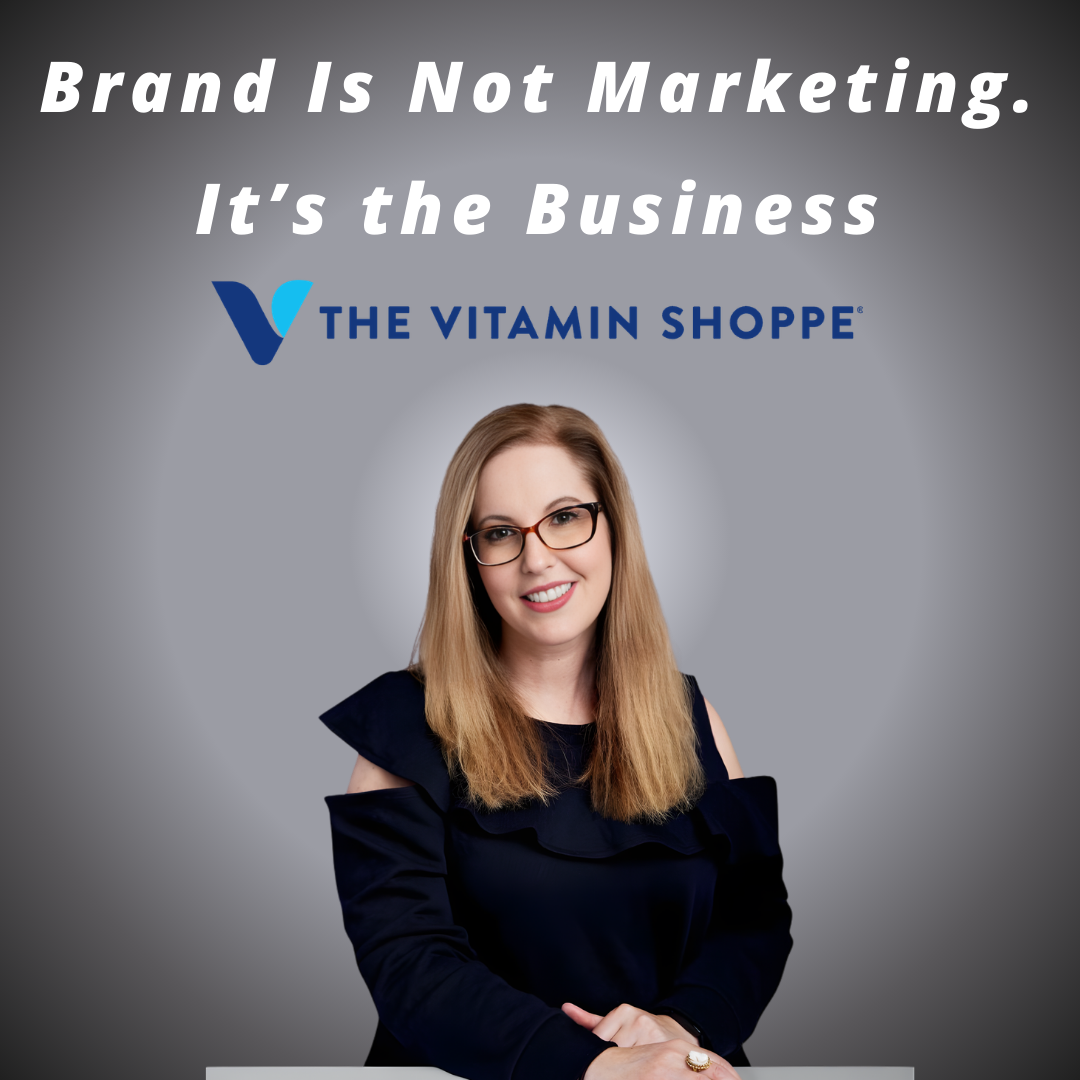
In this episode of The Story of a Brand Show, host Rose Hamilton, CEO of Compass Rose Ventures, sits down with Lisa Chodnofsky, Chief Brand Officer for Vitamin Shoppe, for a thoughtful and energizing conversation about what it truly takes to steward an iconic brand in today’s evolving wellness landscape. Throughout the discussion, Rose and Lisa explore...


In this episode of The Story of a Brand Show, host Rose Hamilton, CEO of Compass Rose Ventures, sits down with Lisa Chodnofsky, Chief Brand Officer for Vitamin Shoppe, for a thoughtful and energizing conversation about what it truly takes to steward an iconic brand in today’s evolving wellness landscape.
Throughout the discussion, Rose and Lisa explore the responsibility that comes with leading a heritage retailer in the health and wellness space. The conversation highlights how consumer expectations are shifting, why clarity of purpose matters more than ever, and how brand leadership extends far beyond creative—it’s operational, experiential, and deeply cultural.
Lisa shares insight into how Vitamin Shoppe continues to evolve while protecting the trust and credibility that built its foundation.
Key moments from the episode include:
* What the role of Chief Brand Officer means within a legacy wellness retailer
* How Vitamin Shoppe balances innovation with honoring its core identity
* Why trust, education, and in-store experience remain critical in a digital-first world
* The importance of cohesive storytelling in connecting with modern wellness consumers
* How leadership alignment and mission clarity drive long-term brand equity
This episode is a powerful reminder that enduring brands don’t simply react to change—they evolve intentionally while staying rooted in purpose.
Join me, Ramon Vela, in listening to the episode to hear how Lisa Chodnofsky is helping shape the next chapter of Vitamin Shoppe and what brand leaders can learn from her approach to modern retail and wellness.
For more on Lisa Chodnofsky visit: https://www.vitaminshoppe.com/
If you enjoyed this episode, please leave The Story of a Brand Show a rating and review.
Plus, don’t forget to follow us on Apple and Spotify.
Your support helps us bring you more content like this!
Rose Hamilton (00:00)
Welcome back to the story of a brand. Today's episode is a really meaningful one for me because it brings together my past and present in a way that does not happen very often on this show. I am so thrilled to welcome my dear friend and colleague, Lisa Chudnofsky Chief Brand Officer at The Vitamin Shoppe Lisa and I go back to a formative chapter in my career, our time together at The Vitamin Shoppe when the business was in the middle of a real transformation.
It was a moment when retail was no longer just about selling products, but about becoming a trusted destination for wellness, education, and community. Some of the most important lessons I have learned about brand building, leadership, all the things did not happen in boardrooms. They happened during that period of change. What makes Lisa's leadership so compelling and very special is that she brings a unique editorial mindset into retail.
Before stepping into commerce and into retail, she built her career shaping voices and narratives in media. And she carried that discipline with her. Retail does not win by pushing more product. It wins by earning belief. In our last episode, we talked about mass retail and the power of scale. Today, we're going to shift the table, and it's going to be all about the counterpoint. We're going to talk about specialty retail, why it is not just another channel, but a relationship.
Why partnership actually matters more than the placement of the product and how education has become one of the most important and powerful and overlooked growth levers in modern brand building. Lisa, I'm just so glad to have you in this conversation. Welcome to the story of a brand.
Lisa Chudnofsky (01:38)
Thank you, Rose. I'm so happy to be here. I'm ecstatic to have a nice beefy conversation with you about brand and community and specialty retail, and just to spend some time with you.
Rose Hamilton (01:52)
this is going to be fun. So as you know, we recently explored mass retail on the show through the lens of Walmart, where scale and reach are everything. And from where you sit in a very unique position, what do you think makes specialty retail fundamentally different?
Lisa Chudnofsky (02:08)
Well, coming at it through the vitamin shop lens, we consider ourselves to be an incubator of brands, right? Before Garden of Life was a huge brand in the wellness industry, they were at the vitamin shop.
So many other brands have gotten their start right at the vitamin shop sort of like how Brittany got her start on the Mickey Mouse Club. We're the Mickey Mouse Club of the wellness industry and a lot of brands dip their toes in with a retailer like us who's really looking for innovation. We're really looking for brands that are different, ⁓ that are on the pulse of trends.
that are busy building a brand on Instagram and TikTok, bringing them in and helping them refine and get a sense of how retail works. And then we kind of, you know, let them go off in the world and spread their wings. But the specialty part is such a huge part of that, that whole process.
And we play a big role in getting the word out and amplifying their message ⁓ and really speaking to a true wellness and fitness customer, the person who is looking for those new and hot items before they gain mass appeal.
Rose Hamilton (03:31)
And what I love about that distinction, I especially love the Mickey Mouse reference. think that's so funny and so true and so relatable. And the distinction is really that specialty, doesn't really allow brands to hide. They've really got to work with you as they're coming into the ecosystem. And you're also teaching and training as an incubator there. And it requires true intention from both the retailer and the brand. And I think so many believe you just need to get on the shelf.
And that's the end of the story, but that's actually the starting point in building the relationship is super important. And so this is a question founders ask most often, at least that I hear in many of my conversations. It's what does it actually take for brand to be super successful at the vitamin shop?
Lisa Chudnofsky (04:17)
Yeah, so for me and what I've seen over the past nearly 10 years of being at the vitamin shop, it's true partnership as you just mentioned. It's ⁓ really being in it together. We're true collaborators. So we don't expect to put your product on the shelf and then just do nothing about it. We're gonna really tell.
everyone from social, we're going to activate it on our own channels, CRM through SMS, email, we're going to put it on our homepage, ⁓ we might do direct mail. So, you we're going to make a big push to tell our customers about it, but
you know, the brand has to do their part as well. They've got to tell their loyal customers ⁓ and their social followers, hey, we're at the vitamin shop now. ⁓ If they don't know, they don't know. And so we've got to do it together. And the message really gets amplified, especially on social. So as a chief brand officer, I oversee social. And a big part of that is collaborations, like literal collaborations on Instagram and working together with the brands and
influencers,
our influencers, bringing them together. ⁓ Sometimes this can be tricky because brands are very precious about how they show up. And we are too. We're a brand, not just a retailer. We have our own brand standards and guidelines. you really have to come together and have one unified message that speaks to both brands, look and feel.
and feel really great about it and hold hands and say, we're in this together and really combine those communities. Without that, ⁓ it's hard to have true success.
Rose Hamilton (06:03)
That's so true. And something that you're describing I see again and again, success in specialty retail is really not just transactional. And I think that's the part many miss. It is very relational. And it starts long before the PO gets placed, the product gets shipped, and the product hits the shelf itself. It's about building that relationship. And so to that end, getting on shelf does not mean you've won. Even doing the relational parts, you do the relational parts, now you're on shelf.
Lisa Chudnofsky (06:15)
Mm-hmm.
Rose Hamilton (06:33)
Can everybody kick their feet up and say, we're done, we're one? Or from your perspective, what separates brands that become true partners in the long run from those that simply take up space? Because I bet there's some examples of uniqueness of those that are in it for the long term and continue evolving right along with the vitamin shop, as opposed to once in, gave a push, and then forgot about it went off somewhere else.
Lisa Chudnofsky (06:57)
Yeah, I mean, our best partners are the ones who are having the most success at the vitamin shop. ⁓ They are the ones also, though, that we brought in because they were doing such a great job of building their own brand on their own. So the raw nutrition and transparent labs of the world, ⁓ they were doing a fantastic job building a following on social and telling a story that differentiated them from the rest of the industry. And they got customers on their own.
and then we're able to tell their story under our own roof. And the way that I like to describe it is when we bring people into the store.
We're the picture frame. They're the picture, but we are the picture frame. And ⁓ our job is to tell their story, not to change their story, to tell their story, but through a lens of what our retail customer is really looking for when they come through our doors or go to our site. We do have the knowledge to know, ⁓ okay, you've got a brand message, but it's a 500 word mission statement that we can't put on our homepage.
or we can't put on a sign, we can help you with a concise message that will translate to the retail customer. So again, it's that partnership and being able to give a little on both sides.
and, really the, the social partnership is very important because we're both doing wonderful things to get brand awareness. And so we really just need to combine forces. ⁓ what's working for a brand should work for us too, and vice versa. So, you know, let's really find the best way to amplify that, ⁓ to even put some spend behind it if it's working organically, ⁓ and just be open to.
a lot of different fun and new activations, trying new things, taking a few risks here and there. ⁓ Those are our best partners and it usually pans out.
Rose Hamilton (09:01)
Yeah, you know, and there's so many good nuggets in what you just described. And I think one of them is a perception of founders thinking it's almost like a reframe now. It's not just about more products, more on shelf. It's about going deeper with what you have and building the brand long before you land on the shelf. ⁓
retailers are not necessarily looking for more products so much as it is the good ones, the innovative ones, the differentiated ones, the ones that there's demand behind them.
Lisa Chudnofsky (09:33)
specialty retail
especially, right? Like that's, we know that a lot of these big brands, once they become big, they are going to go to the targets in Walmart's of the world. We understand that, we understand why, but ⁓ give us the exclusives, give us the unlimited editions, ⁓ the ones that our specific customers come to us for, ⁓ that will...
that will really maintain a special relationship. And that's why we came to that brand in the first place, right? Because we saw something unique that they were doing with a formula. The science to us is very important. The ingredients, we...
feel very strongly that we have to tell that story. We have to be accurate. Everything needs to be science-backed. You probably won't find as much of that education at an Amazon or a Walmart. They have many things that they do better than the vitamin shop, but what we do better is that we have that expertise.
We push out a lot of education to our field associates so they know how to talk to the formulas, not just the brand. They know how to talk to the science and the ingredients and ⁓ be accurate and ⁓ be a real guide and a source for the customer who comes into our store and just sees walls of supplements. That's a scary experience for some people. So we can help with that.
Rose Hamilton (11:04)
You know, and it almost feels and sounds to me like you're building the platform, which would be the picture frame, to put the brand on stage and to spotlight them and to give them all of the ecosystem to be incredibly successful. And I don't know, I'm just going to peel back the curtain on this. I don't know how much our audience actually understands about the investment in the health enthusiasts.
and the role they play. And I also don't know that the audience maybe frames or views health enthusiasts as truly advocates. Like it's like having a whole army of influencers, creators, because of the platform that the vitamin shop builds to support the health enthusiasts. So I'd love for you to talk a little bit about the role living in the world of social media and like what's unique about
any other mass scale retailer and the people who work within the stores versus the intentional purposeful training and the things that you do uniquely to get the word out and to educate and build a platform for these great brands.
Lisa Chudnofsky (12:17)
Yeah, absolutely. It's one of my favorite things to talk about because our health enthusiasts, which is our store associates, they are our brand. They're the core of our brand. They're our best weapon. When I first got here, when you first hired me nearly 10 years ago and I bought Into the Vision, I did my sort of tour and spoke with everyone.
one by one and they just kept telling me our health enthusiasts are our secret sauce. And he was like, well, then why are you keeping them a secret? don't understand. If they're so wonderful, why are they your secret weapon? They should be out in the open, right? You went to a store, you met a health enthusiast, they took you through.
all the products, you told them your life story, your ailments, everything that you had on your mind and they kind of spit back, hey, you need this, this, this and this. They're like your, you know, your pocket guide nutritionist. And you didn't know about it unless you went into the store and mind you.
⁓ We have a lot of people who like to shop in our store, but as we were going through a digital transformation with you as the Chief Digital Officer, they didn't exist digitally. They weren't on social. Our social was a lot of promotional messaging. And so ⁓ we needed to fix that. ⁓ UGC was becoming a bigger deal. But when I came on 10 years ago, was still like Instagram was like, you you had to kind of had that facade of this beautiful grid page, which I never really liked.
It
wasn't authentic. Now authenticity, you know, everyone is talking about authenticity, which is great. ⁓ It really does resonate. And so our biggest ambassadors, our best influencers have always been our health enthusiasts. We didn't know it when I first got there, but ⁓ I flipped a switch.
to give them all all stores Instagram accounts, which was seen as kind of wild at the time. Many retailers still don't do it. There's a big risk involved for the brand, right? You can't moderate every store Instagram account. We have 640 store Instagram accounts now and only one or two people who are able to see everything they're doing at first. You know, it was a bit risky.
⁓ But for me, the importance of it always overshadowed whether they used the right font on something or they got the tagline right or wrong. It's okay, maybe they didn't ⁓ abide by brand standards all of the time. That said,
Rose Hamilton (14:55)
you
Lisa Chudnofsky (15:07)
If they're the brand and there are representation of expertise, that was more than enough to allow them to have their own Instagram accounts, let them shine and help amplify the message of quality innovation expertise, which are our brand differentiators. And it's worked. mean, we have 340,000 Instagram followers on our corporate accounts and we're up to, you know, don't quote me on this because it changes, but it's over a million with our store account.
A lot of them do a great job and we focus most of our time on not getting them assets and You know, I want to be clear. We're not asking them to design We're not asking them to do anything with graphics until you know, say not to we want them to do reels and be if we want them in the content they are the ambassadors and We we don't need them taking pictures of products on a counter on a shelf. We want them in the content talking about
the benefits, the differentiators, and we want them jumping on trends and having fun. ⁓ And so our community manager spends a lot of time doing tutorials with the different regions and sharing with them what works, what doesn't. They have business accounts. They get to see their stats, ⁓ and they learn a lot along the way. They're doing a great job. ⁓ Some are better than others, for sure, but we have fantastic UGC. And at this point,
We now use it on our pages regularly to tell our story. We use the UGC from the stores in our email, ⁓ on store signage, and we even use them in our advertising and our performance marketing campaigns. So from the store accounts, we were able to identify ⁓ many health enthusiasts who were growing their own followings and wanted to grow a personal brand. So they became our shop squad ambassadors. We have about 35
five of them now who post on their own accounts and they act as they serve as talents in both our organic content but also our paid advertising and it's some of the ⁓ some of the content with the the best ROAS so ⁓ yeah they really are there they're our most valued ambassadors.
Rose Hamilton (17:27)
So again, it goes back to this is an ecosystem. And if you're a brand coming into it, the reframe, if you're a founder thinking about getting into the vitamin shop or choosing vitamin shop or mass or however you're thinking about it, it's almost a no brainer to collaborate and put all efforts double down when you're incubating into the launch of building your brand. But thinking about the vitamin shop is an important trusted partner that can help.
amplify anything you're doing on your own. Because really, if people leverage the ecosystem you just described and they're working closely with you, one plus one for a brand new brand is like 100. Because when that's happening, there's no need to go on sales pitches to other places because those buyers are coming knocking on the door because the buzz is already happening.
Lisa Chudnofsky (18:10)
Yeah.
Rose Hamilton (18:21)
So it's like if you put your efforts and you double down and you use the platform properly in the relationship and you build it, it will come. And I don't know that everybody knows that.
Lisa Chudnofsky (18:31)
Yeah, absolutely. I mean, I'm sure that...
even a lot of the brands that we bring in aren't even aware that we have all this happening. So they get, a lot of them get very excited when we tell them, know, okay, we can do this, we can do that. I think they, when we have our kickoff call, they're thinking like a straightforward announcement post, right? And it's like, oh no, you know, we have 640 store Instagram accounts. We have our Shoppe Squad ambassador program. You can send them a box of products, right? There's a lot that
we have at our disposal because of these different community programs that we work on. And because we have store associates who understand the value of ⁓ doing their own marketing, their own sort of local messaging. They can do things that we can't really even do on our corporate account. They can be more promotional. ⁓ They can talk up sales all the time ⁓ to their local customers.
and speak directly to them in the comments. They know exactly who they're talking to half the time because they know their customers so well. So they can have a real conversation in the comments. So we also do kind of train them on how to nurture their community.
Rose Hamilton (19:54)
So I am so inspired by what you just said, because it's so crucial to get the word out that I actually want to take a mini episode pause. Listeners, if you are finding this conversation helpful and inspirational like I am, please share it with a founder, an operator, a brand builder who could really benefit from hearing this perspective from Lisa. Because I don't think it's out there in the wild.
And I think it's pretty unique. And specialty retail is often, I think, misunderstood. And these insights really matter. So please, I encourage you to share it. Get the word out, because there's a great benefit here and a great value here of understanding the tools at one's disposal when you're really trying to build a brand, build demand, build volume. And I go so far as to say, if you're looking at a strategic exit somewhere down the line,
And you've got something science-backed that fits the things that Lisa's talking about. This is the spot. That's a great opportunity for you. And so staying right here for a moment, around social and building, this actually connects directly to how brands think about building demand before they ever walk into the retail conversation. So let's flip the switch just a little bit and say, I think many brands still lead with follower count when they're picking retailers.
Lisa Chudnofsky (21:15)
Yeah.
Yeah.
Rose Hamilton (21:16)
When
we evaluate brands and you're saying, one will be great and we're going to pass on this one, what matters more to you? Is it reach or engagement?
Lisa Chudnofsky (21:26)
So I know that follower count ⁓ is sexy, right? ⁓ It's...
It's a great badge of honor to be able to say we have, you know, 5 million followers, right? But it doesn't really mean much if they're not engaging in the content. so I, you know, I, I definitely perk up. pay attention. ⁓ if someone says, this brand, you know, got 2 million followers overnight, there's something special about it. You know, something happened there and we should pay attention. ⁓ but the second step is I dive right into the comments to see what people are talking about. It's really.
And it's about that social listening, which we don't really use that term anymore, but it is so important to really, what are they saying to the brand? Are they having a conversation with them? it a meaningful conversation happening? I'm definitely looking more at how engaged the customer is with the brand and how the brand engages with their customer. ⁓ How proactive are they? ⁓
are they treating their customer? Is this a brand that cares about the customer as much as we do? ⁓ Because we put the customer at the center of everything we do. ⁓ So that is something I do a deep dive into the brand. ⁓ Sure, will millions of followers peak my attention? Yes, but then there's a lot more to it, for sure. ⁓
you definitely want to see are people sharing the content? Are they sharing it with their friends? For us, that's the biggest metric. me, the most important one is shares. I want to know that our content is meaningful enough for someone to actually share it. ⁓ So those are the things that I look for.
follower count is certainly cool and something you want to put on a slide. ⁓ But yeah, it's definitely, it's not an automatic home run, just like celebrity isn't an automatic home run. That has to be incredibly authentic as well. There are a lot of celebrities who've come out with wellness products in the last few years. And the ones who, you you really believe that they
use this in their everyday life, that they kind of played a hand in the formulations, that this is just an extension of who they are. Like that resonates. ⁓ The ones where it just kind of feels like another check mark off a list of things that celebrities should be doing, they usually don't. They're not successful usually, yeah.
Rose Hamilton (24:16)
Yeah, that really circles back to five years ago, the product was important, but now the belief is more important than the product because products can be a dime a dozen and the amount of them that hit the market and fall apart is significant. But the ones that have that authenticity and that connection and the belief, like people want to believe them. Those are the ones that are successful. And I think it also leads to the question for me of
How should founders think about building demand, like volume? How much time are they spending in building their owned brand volume before going to retail with an expectation of, well, we built a little bit of demand. It doesn't matter. We just need to get on shelves. So walk us through that distinction about how should a founder think about when is the right time to be thinking about going into specialty retail if you're startup and you're beginning.
Lisa Chudnofsky (25:04)
Mm.
Rose Hamilton (25:15)
Obviously, this isn't about a turnaround situation. This is about the brands that are in the emerging growth. They're seeing potential. They're science-backed. They fit your target of who would be a great incubator. How long do they wait before they come and knock on the vitamin shop door?
Lisa Chudnofsky (25:30)
I mean, being on the retail side of it, I'd say don't wait too long, right? Like I'm biased. I don't think you should wait too long to go to specialty. I think it's about how long do you wait before going mass from specialty, right? Like really develop your retail chops with specialty because it is sort of a bit of an awakening for some brands about how retail works. And you can really learn a lot by
having some great partners who spend a lot of time with you in specialty, right? Versus mass where you might get swallowed up a bit. So yeah, I think, you know, rip the band-aid off, you know, in my opinion and do it early. ⁓
You know, there have been many brands that have held out ⁓ and they've had success. So I'm not saying like you can't have success without going into specialty quickly, but ⁓ I don't see the harm in it. I wouldn't do it with more than one partner. I would align yourself with one who you have shared values and ⁓ goals and really partner up. ⁓
that makes sense to me. ⁓ And we take good care of our partners. And so then I think it's a question of, then how long do you wait until your strategy really shifts and you go mass, if at all? ⁓ Some don't, but many do, and understandably. So.
You know, I don't see the downside of going into specialty early. just don't see it. If anything, you're just going to get ⁓ more exposure and more credibility. ⁓ And we want it, right? We want to bring in people who are doing unique and innovative things and who have quality products, right? Like for us, it is still a lot about the product in the sense that we want the big, exciting brands, but we're going to really thoroughly vet what the product.
is and what the ingredients are. Our science and regulatory team, they're on it. They want to make sure those claims are true. And we don't want to be marketing products that we don't believe in. ⁓ And at the end of the day, the customer will tell you. Some brands are a flash in the pan. They're very exciting for a while. And then after about a year or so, they fizzle out because people realize, like, this didn't really do it for me. Or actually, I never really liked the
way this tasted. thought everyone else did, so I bought it and it's actually not that good. That's happened, right? That does happen. So a lot of it does come down to the quality of the product. That's why our brand pillars, our differentiators, our quality, innovation and expertise. Everything we do ladders up to that. Everything.
Rose Hamilton (28:20)
Yeah. And it's also the reason why it's so crucial to have churn metrics in place, lifetime value in place, and be listening. And I will call it social listening because it's all forms of listening. All over it because you could have a great average lifetime value of X. But if you don't look at the survival curve combined with cohort analysis, you might find you had one month and a quarter
Lisa Chudnofsky (28:33)
All listening.
Rose Hamilton (28:49)
that did really well. And then the ones you brought on afterwards, and because maybe those were friends and family, ⁓ the rest that come on, and I didn't really like that. Everything you described didn't really match my expectations. But if a brand's looking at the average lifetime value in the short term, it's not probably going to be as strong as setting up those KPIs early on if you're looking for the long term, because that's really where it's at. And that's how those brands are going to have the longevity and the staying power and then getting into scale.
Lisa Chudnofsky (28:54)
you
Rose Hamilton (29:19)
And I think there's another critical thing to think about here is that this distinction is that retail amplifies demand, amplifies it. But you have to have it, and you have to have the stickiness of a consumer who likes that product to really be successful when you're amplifying. Because if you amplify the ones and donners, you won't be able to stay. It's not going to create it if you don't have the full life cycle in place before you're hitting retail shelves.
Lisa Chudnofsky (29:42)
Yeah.
Rose Hamilton (29:48)
And I think another important conversation here, I'm going to pivot a little bit, is private brand, private label. Because there's such a rise of consumers now that are looking at private brand and saying, I'm going to go that direction for various reasons. And so I know the vitamin shop has invested heavily in private brand over the years. So how do you think about private brand alongside the amazing third party innovation?
Lisa Chudnofsky (29:54)
Mm.
Rose Hamilton (30:17)
especially in the role you're in where you've got to allocate and decide resourcing around it and especially in a specialty environment where trust matters so much.
Lisa Chudnofsky (30:27)
Yeah, mean, our private brands are ⁓ definitely ⁓ a huge priority for us. We have a very dedicated team of private brand managers who are always innovating, formulating new products and ideas. We have seven different private brands that you probably wouldn't even know were owned by the Vitamin Shoppe because...
Many people probably just think our house brand, the vitamin shop brand is connected to us, but we have the V Thrive brand, which is a premium brand. have the plant brand, which is of course plant powered. Body tech, which is a very successful sports nutrition brand. True athlete at transparent sports nutrition brands. So quite a few. And, you know, we, we treat them like DTC brands almost. So we're not just a retailer. We're building, we're building these sort of, you know, other brands.
⁓
from I wouldn't say scratch body tech has been around for 20 years ⁓ and it's you know it took time to ⁓
get the credibility, but it's there. People see it as its own brand. Most of them kind of understand the connection to Vitamin Shoppe now because they see the quality seal on it with our logo on it. So all of our private brands have a stamped quality seal. That's really where we double down on our quality message. ⁓ Anything that we're going to manufacture, distribute, and call our private label has to pass
I think there's 320 rigorous testing processes that we say in our quality statement. We are real sticklers around that. And so that's where the message of quality shows up the most in our store and on our own channels. And that's where we will invest in our own.
⁓ athletes, ambassadors, again, using our health enthusiasts, especially the Shoppe Squad ambassadors to promote new launches for private brand. ⁓ So yeah, I mean, it's definitely ⁓ a bit of a...
a separate operation in terms of production and thinking through innovation. But when thinking through marketing, a lot of it is very, similar. It's just that ⁓ we really double down on that quality message because that's what we want to stand for. ⁓
Absolutely. Our house brand is something that has stood the test of time because you've got a brand that again, we can stand for quality, but it's affordable pricing, ⁓ which is why, you know, we, we branched out. V Thrive. Yeah. It's, ⁓ it is more costly, but it's a, it's a premium brand and a lot of trademarked ingredients focuses on transparency. And so they each really have their own ⁓ individual personality.
their own brand architecture. And I'd love to say that we have ⁓ a team for every brand. We do not. That would be amazing. We don't. But that's the dream. That one day we really will be able to build them out as if each of them is sort of like this DTC brand with its own website, social handles. ⁓ We are not there yet, but that is the goal.
Rose Hamilton (33:56)
That's amazing. And what's really interesting in what you're saying is that private brand does not crowd out innovation. That's what I'm hearing. It actually raises the standards across the category, and it causes any incubating brands to come in to be measured against that level of quality. And it allows them to be in different swim lanes, but one rises the tide on the other.
Lisa Chudnofsky (34:06)
Yeah.
Rose Hamilton (34:23)
So it's an interesting strategy to really double down on that private side. And consumers.
Lisa Chudnofsky (34:28)
Yeah, we don't have
conversations where we exclude brands because of private brands. We would never do that. ⁓ There's always something that ⁓ differentiates it from another brand. ⁓
Yeah, we definitely are not thinking, even if we are, know, private brands is always a top priority, but we're not thinking, ⁓ we're going to put private brand, a private brand launch ⁓ above another big brand launch that's third party, ⁓ simply because of the fact that it's ours. ⁓ It's what's best for the business and the partnership and the customer, the customer's most important. So it's really...
you know, what are they asking for?
Rose Hamilton (35:16)
That's brilliant. I think one important question I'm sure listeners would love to ask is, once brands are accepted into the vitamin shop, where do you actually see most of them struggle?
Lisa Chudnofsky (35:29)
⁓ I think a lot of brands are just stuck in their ways of doing things. And so ⁓ the struggle on my end, and I'm seeing this through again, my lens of brand and social and content and PR and communications is there can sometimes be a reflex of
no, we can't do that. I there's a lot of sort of this knee jerk reaction, like especially from founder led brands of just this sort of cringy, like, ⁓ we've got other people involved now. We've got other people telling us that, you know, giving us recommendations that feel kind of scary and different and weird. ⁓ And I would say try and go with it. Push back where you have to, but ⁓ yeah, there's.
there's some real expertise in our area around things like inventory and supply chain and how you show up within the store, ⁓ visual merchandising, where it might feel uncomfortable to a brand who has had total control over how they show up ⁓ and operate for years. And I would just say, know, like ⁓ kind of...
let some of it go, try some new things, take a couple of risks, learn fast.
Rose Hamilton (36:53)
Yep. Excellent advice. So for you personally, Lisa, I'd be remiss if I didn't ask the question, because I'm certain that there are many founders that function almost as chief brand architects, officers in their organization, if they're brand led first. And I'm sure there are aspiring people in the audience who would love to be in a position like yours. And as I highlighted in the introduction, you had a very unique path.
Lisa Chudnofsky (37:13)
Yeah.
Yeah.
Rose Hamilton (37:24)
that has helped you think differently. And even though you didn't have retail, the uniqueness of that background helped to get you where you are today and continues to evolve you. Because I continue hearing the storytelling, the customers first, the you don't need a massive team to be successful. You need to get in there, be bold, take some risks, collaborate, find the partnerships.
Lisa Chudnofsky (37:48)
Yeah.
Rose Hamilton (37:51)
build the partner, focus the partnerships, not every shiny ball syndrome, but it's the focused effort on the roadmap for how you're going to be successful. And so from your shoes, from the role of the chief brand officer, what might be some tips, lessons learned for you along the way that if you were writing a note to your younger self, what might you say that you wish you knew then that you now know?
and that you would impart upon people who look at you and admire at the amazing success story that the vitamin chop has become and the role you play in helping shape and guide that.
Lisa Chudnofsky (38:29)
Gosh, that's a big question. Yeah, I think, you know, before I came to retail, ⁓ I was in the media environment, is, I mean, retail is fast paced, so I can't say that publishing and media were any faster paced. But a lot of it is...
I was working on creating things and I still create things, but it wasn't as much about the people around me. It was always about knowing your audience and that has translated so well into knowing the customer. I think that's one of the reasons I've been successful in this position is the number one rule of being an editor and being in publishing and media is you got to know your audience. so bringing that over to retail was easy peasy, right? It's like, okay, know your customer, know who you're talking to. So that helped me be successful.
But if you're saying looking back and you know some tips and advice, it's all about the people, right? It's understanding what everyone else is working on and what they're doing and how you can help them be better and how they can help you be better. I think one of the words, and you'll probably remember this, that we used to use all the time when I first got to the vitamin shot was everyone seemed to be working in silos, right? And we had to get out of that. I don't
Rose Hamilton (39:45)
Yes. Yes.
Lisa Chudnofsky (39:49)
I don't feel like we do that at all anymore. ⁓ But that was sort of a default for me to work in a silo. And ⁓ it's so, so important that you have a good understanding of what everyone else in the organization does, down to things that you wouldn't even expect. I once was giving a review to someone who ⁓
you know, couldn't be further from the supply chain, does something completely different. And I was like, I think you should go to the DC. And they kind of like balked, right? Like, why would I need to go to one of the DCs? And I was like, because you really need to understand how every piece of the business happens, right? Operations is so important. You can't just kind of...
bop around just thinking I'm the brand person. I do the creative stuff, right? Like, you've got to be pragmatic. These are businesses that go through ups and downs and tough times. And in order to learn how to be scrappy and make your investment go as far as possible, you need to know ⁓ the operational aspect. You need to know what's at stake.
and you really need to know the business. So you don't have the luxury, at least on my end, of just being like, I'm brand. I do the fun stuff. You know, sometimes we joke about that, like, Lisa's here to do some show and tell, which I love. But at the end of the day, the reason I've been able to be successful is because I've learned the business. I understand what the merchants do. I partner with them effectively. We share information. I exchange information all the time with retail ops. Like, we make things work for our health enthusiasts.
And understanding sometimes the sacrifices you have to make from a creative end. think there are a lot of creative teams out there that they might be stubborn and not want to give things up because they might not.
you know, look the way that they intend it. No, everything has to be back. It's all about the customer. And ultimately that if it's all about the customer, then it's about the business. Then it serves the business. So, ⁓ yeah, I guess I don't know if I had told myself that a while ago, I would have actually listened, right? I'd probably be like, shut up, Lisa, right? But yeah, you have to learn this on your own. But, ⁓
Rose Hamilton (41:58)
It's been fun for all of us.
Lisa Chudnofsky (42:04)
You know, my boss now, the president of the company, Mural Gonzalez, she's been an incredible mentor and she is just...
a veteran merchant and I have learned so much from her and she's not a creative, right? I am so thankful that I report to someone who doesn't do exactly what I do, right? Like I've learned so much about merchandising and ⁓ she was in marketing for a very long time, but she's a true merchant. She really is. And like, you know, I used to think, well, I'm not the numbers person. It's like, well, I kind of do know the numbers now, right? And it's important. It's really important to factor all of that into the creative side.
Rose Hamilton (42:38)
Ew.
Lisa Chudnofsky (42:41)
of things and building the brand.
Rose Hamilton (42:43)
Lisa, what an absolute joy to hear you talk and just hear the impact you've made, which I always knew you would. ⁓ And so for listeners who want to follow the vitamin shops journey more closely or stay connected to the work that you and your team are doing, because it is pioneering here. mean, it is blazing the trails. So what is the best way for them to do that? Like, how do they follow you?
Lisa Chudnofsky (43:10)
Follow The Vitamin Shoppe. Well, on Instagram, we're at Vitamin Shoppe. We're also ⁓ working on building our engagement on TikTok. That's at The Vitamin Shoppe. We're still active on Facebook and X, but I wouldn't say that it's our top channels. ⁓ We're definitely doing a lot more performance marketing now on YouTube. But...
you Metta is where we're focusing a lot of our attention. You can sign up for our newsletter. We have a newsletter, What's Good, which comes every Saturday with a lot of our blog content where I was able to sort of take my editorial chops from Women's Health and working in publishing for so long and translate into a really fun and educational newsletter. Yeah, go to our stores, really.
Rose Hamilton (43:43)
Excellent. Excellent.
Lisa Chudnofsky (44:04)
Talk to a health enthusiast. It's really, I mean, they really do know what they're talking about. ⁓ They have been trained very well and they're good people. So if you're near a vitamin shop, check it out. There's a lot of fun stuff there. A lot of snacks, a lot of drinks, and everyone deserves a quality multivitamin. So yeah, head on in. ⁓ yeah, you can also follow me, but I will say,
I am not the most prolific on social media. I should be. I've always been someone who hides behind the handle of wherever I'm working on. So I'm constantly logged into our vitamin shop Instagram, not my own. you know, I wish that I was someone I know the importance of building a personal brand. But for me, I just want to see what people are commenting on, on our on our corporate site. Like I, I even still engage my community manager half the time is like, who wrote that? Oh, that was me.
I just jumped into the comments.
Rose Hamilton (45:04)
Lisa, thank you so much for joining me today. This was a thoughtful and I believe an important and inspirational conversation. And I know our listeners will take a lot from it. So for founders listening, this episode is a reminder that growth is not just about distribution. It is about trust, partnership, and showing up consistently in the places that matter most to your customer. If this conversation resonated with you, please share it with someone who could benefit from hearing it.
And be sure to subscribe to the story of a brand so you do not miss future episodes where we will continue to unpack what really it takes to make and build brands that last. Thanks for listening, and we will see you next time.