
I and Love and You - The Operator's Playbook for Pet
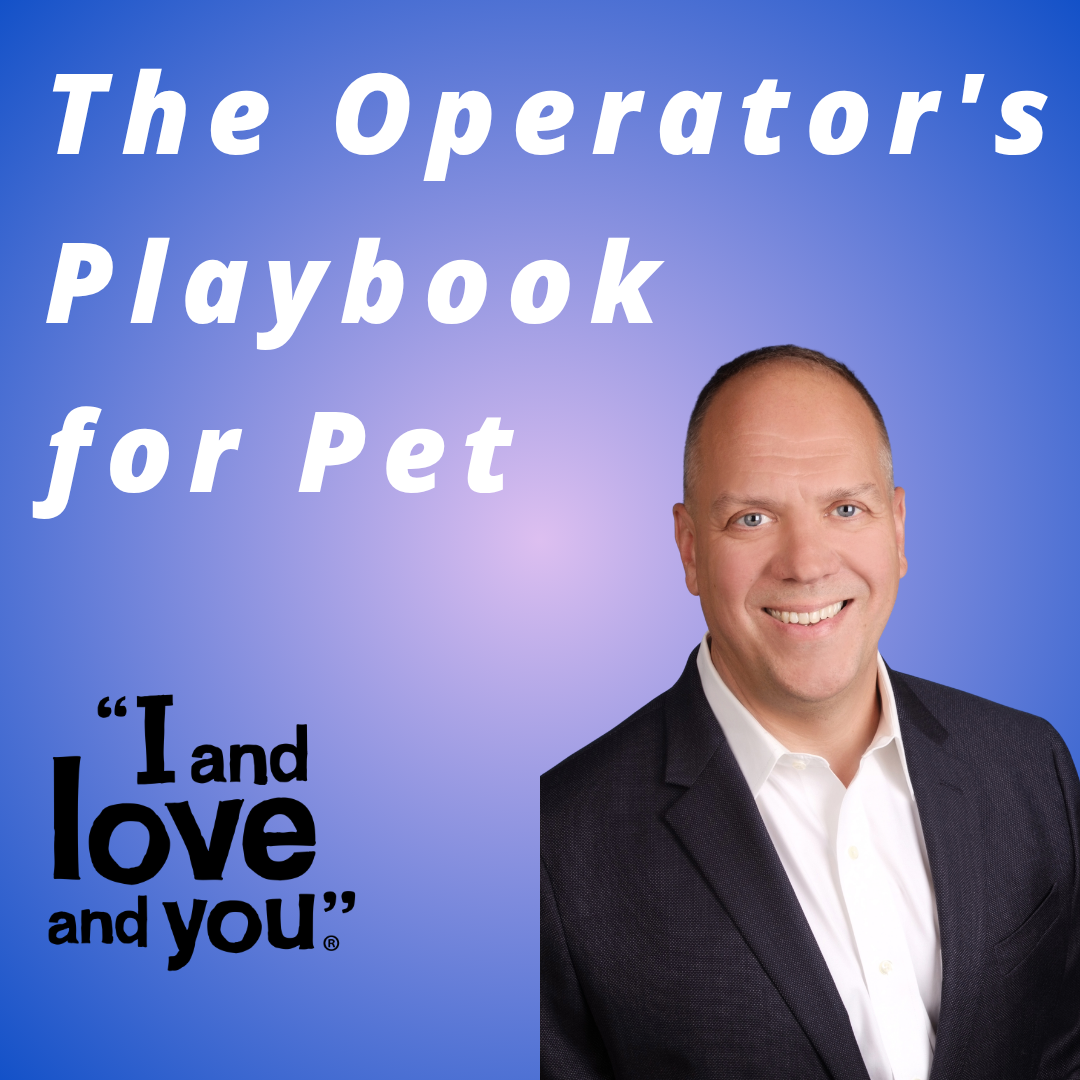
Pet food looks like a food category, but it behaves like a trust category and nobody understands that better than Michael Meyer. Rose Hamilton, CEO of Compass Rose Ventures and co-host of The Story of a Brand Show, sits down with Michael for an operator masterclass that goes far beyond pet food into the deeper mechanics of how premium consumer brands get built, scaled, and sustained...

 Apple Podcasts
 Spotify
 Castro
 RSS Feed
 Pet food looks like a food category, but it behaves like a trust category and nobody understands that better than Michael Meyer.
Rose Hamilton, CEO of Compass Rose Ventures and co-host of The Story of a Brand Show, sits down with Michael for an operator masterclass that goes far beyond pet food into the deeper mechanics of how premium consumer brands get built, scaled, and sustained.
With experience across Wellness Pet Food, Plum Organics, Restoration Hardware, I and Love and You, and Just Food for Dogs, Michael brings a rare pattern recognition that every founder, operator, and investor needs to hear.
* Pet food is a trust category, not a food category. The dog or cat either eats it or doesn't. The pet parent either feels reassured or doesn't. Repeat purchase is the only real trust metric that matters, and building toward it requires discipline most brands skip.
* Cats are the most underbuilt opportunity in premium pets. All the innovation went to dogs. Cat parents were always emotionally invested; the category just never gave them enough ways to express it. That is changing now, and it has to be intentional to work.
* The Bobby Flay lesson every founder needs. Celebrity partnerships only work when they make the product promise more believable. Made by Nacho added depth to an existing thesis. It was not motion for motion's sake.
* Distribution is not demand. Awareness is not trust. Getting on shelf is not the win. Turning and staying on shelf is the business. Scaling before your system is ready does not create growth, it creates expensive complexity.
* Don't rush it. Michael's sharpest advice for founders under pressure to scale: take a breath, think it through, then come back. Speed without clarity is one of the most costly mistakes a growing brand can make.
Join us in listening to this episode for one of the most practically useful operator conversations the show has ever produced. Rose and Michael cover category signals, acquisition lessons, channel strategy, celebrity partnerships, and the discipline required to scale without breaking what you built.
Whether you are a founder, an operator, or an investor, this one will sharpen how you think about building consumer brands that last.
For more on I and Love and You visit: https://iandloveandyou.com/
If you enjoyed this episode, please leave The Story of a Brand Show a rating and review.
Plus, don’t forget to follow us on Apple and Spotify.
Your support helps us bring you more content like this!
Rose (00:00)
Most people think pet food is about pets, but it's really about trust. A pet parent can like the packaging, believe in the claim, trust the retailer, or even get excited by a celebrity partner. But then the food hits the bowl. The dog or cat either eats it or does not. It's quite simple. The pet parent either feels reassured or does not. And the brand either earns a repeat or it becomes a one-time experiment. That is why I love the category of pet, especially pet food.
Pet food looks like a food category, but it behaves like a trust category. And today's guest is Michael Meyer. Michael has operated across premium pet, baby, lifestyle, better for you consumer brands, and private equity-backed businesses, including Wellness Pet Food, Plum Organics, Restoration Hardware, I and Love and You, and now just Food for Dogs. This is not going to be a Founder Origin episode. It's going to be an operator masterclass.
We're gonna talk about premium pet, why cat actually has been underbuilt, why made by Nacho matters beyond Bobby Flay in the headline. Why OmniChannel is not strategy, and why demand planning may be one of the most underrated brand building disciplines in consumer products. The headline is Bobby Flay joins a pet food company. The strategy is much more interesting. Michael, welcome to the Story of a Brand Show.
Michael Meyer (01:26)
Rose, thank you. So nice to be here.
Rose (01:29)
Well, we're delighted. So everyone, really welcome all listeners to the Story of a Brand Show. I'm Rose Hamilton and your host today. So, Michael, I really want to frame you as an operator with pattern recognition because that's what struck me when we were if we've been talking about this, is you've seen categories move, you've seen them get disrupted, you've seen brands at different life stages, you've seen the gap between a beautiful consumer idea and the operational reality that is required to scale it.
So I just want to use your experience as a way to help founders understand where brands get stronger and where they break, because I think that's absolutely one of the most interesting sides. In our pre-interview, you talked about pet food moving on a continuum towards better ingredients, better access, better variety, better nutrition, and more alignment with how people shop themselves as humans. So let's start there. You said pet food keeps moving toward better. Sounds simple, but
It is the category thesis. So when you look at pet food today, what shift are founders, retailers, investors all underestimating from your shoes?
Michael Meyer (02:38)
Well, I think they're as I don't think they're underestimating, they're starting to appreciate the value that humans, people have for their own food and how important that is for for their best friends, for their dogs and their cats. and I think that's the the the number one point there.
Rose (02:55)
Yeah, yeah. The category is still, when you think about it, behind the pet parent. and so even though consumers are moving at a pretty fast clip with the trends within health and wellness, it does seem like the category is still behind as it relates to pet parents, which presents itself, I think, as an opportunity.
Michael Meyer (03:15)
Totally. The I I think the category behind more is about the mass of the category. It is so big and it's so entrenched. and it takes time to change. And so that's where the newer brands come in. Some people use the word disruptor, the disruptor brands come in. And you know, you can have an amazing idea, you can have amazing product, you can have amazing formulation, you can have amazing taste, but if you can't get it on the shelf.
If you can't navigate the whole machine of retail, that is not going to happen. And so you need both.
Rose (03:50)
Mm-hmm.
Yep, you do. And I I'm so curious, what did baby, baby food teach you about where pet is going? Because you have that unique lens of seeing across baby, life cycle, lifestyle, pet, so many different things.
Michael Meyer (04:08)
Yeah.
Yeah,
I I think there's a couple of things. What number one is what's best for baby, right? As a parent, you want the best for your child. And and dogs and cats are are just like children. So it's the it's the same approach. What's best for baby. I think the second is believing in variety. I like to say long gone are the days where you put a bowl of food on the floor, what one one format and walk away. that that bowl is curated. you know it
for for my own dogs. Like my dogs had fresh blueberries every morning alongside, you know, the food in a bowl. so it's about that that human that human quality, that belief in variety, but that belief in in in whole food nutrition.
Rose (04:53)
Yeah, it's really true. And the trend versus shift distinction is really a lesson here because I think about a trend is something you test. A shift is something you start to build around. And pet parents are asking a high-order question now: is this good enough for the animal to that I love to love? Will will my pet love this? And that seems the same emotional architecture you saw in baby, different category, but the same trust transfer is what I think I'm hearing here.
Michael Meyer (05:04)
Yes.
Yes.
Yeah, I think again coming back to baby, we're selling or appealing to two audiences, right? There's the parent who's making the choice, right, for the food or the brand or the offering, but then there is the child or the pet who's the ultimate decider, right, in terms of the palatability. that goes along with obviously the nutrition.
Rose (05:46)
That's right, that's right. And premium pet has been dog first for a long time. Dogs got the innovation, the emotion, the brand building attention. I mean, it's so clear. But you said that cat is finally having its day. So I'm curious, was premium cat actually a smaller opportunity or was it just an underbuilt one, do you think?
Michael Meyer (06:03)
Yeah, I think it was an a an unrecognized or unnoticed opportunity. the the pet food industry has been dog dominated. it's been dog dominated because that's how it started, but also because larger sizes, the manufacturing part of that industry was you know focused on long production runs of more food where cats are less, in terms of the bite size, so to speak.
And all of the innovation went to the dog side. And you know, s there are there are brands out there, innovative brands like I In Loving You, like Made by Nacho, that early on recognize that that we we need to service cats. And and that the cats are different. They're different than dogs. They have different needs, they have different palates, they have different, you know, needs for hydration, for protein. and again, I I keep coming back to taste.
taste and palatability. So the the cat mindset is not like the dog mindset. And so you have to have that cat that cat mindset. And so it has to be intentional. It can't be a by the way, you know, let's move into cat. It's it has to be intentional.
Rose (07:16)
Yeah. And so how does a brand serve dogs and cats without becoming unfocused, given that they're so very distinct and and unique and different?
Michael Meyer (07:24)
Yeah, again it comes back to a couple of things. One is the brand ethos, right? What does the brand stand for? So in the case, again in I and Love and You, very focused on what we call a next generation or a newer age or a better for you natural offering that resonates with the consumer first. and so recognizing the needs and wants of the consumer, be it a pet or a dog a a dog or a cat,
And so again, coming back to intentionality at I and Love and Ute was very focused dog and cat, right? It's a dog and cat household. And as a result, we you know it takes time to build a brand. And it's understanding that connection, that you know, the feeling here with the consumer, and then architecting the offering for the dog and the cat from the product perspective, from the messaging perspective, from the size perspective. So it's again, it comes back to intentionality.
Rose (08:19)
That's so interesting. You know, it makes me think that really white space is not always an empty market. Sometimes it's an underdeveloped consumer truth. And cat, you know, think about it, cat parents were always emotionally invested. Like that's never not been the case, but the category just did not always give them enough ways to express that.
Michael Meyer (08:36)
Yes.
The
offerings were not available. That's right. Yes. Yes.
Rose (08:42)
Hmm. And cats give immediate feedback. And the bull does not care about your positioning deck. Last I checked.
yeah. So if you're building a brand, I love the topic of the brand.
You just don't ask where is the white space? You really want to be asking where the consumer more emotionally is invested in that category than it has been historically recognized, because I bet there's some other spaces where this thinking would really surface. so let's now talk about MA because I think it's a place where companies often mistake, I would say, the motion versus the actual strategy. And given that you've been through acquisitions and you've thought about that.
As made by Nacho came into the portfolio, you know, the acquisition can always be seductive, but they create a headline that just makes the portfolio look bigger. They give the company something new to say, but more can also mean complexity. So what I heard from you was very different, which is an intriguing chapter, I think, in this book is made by Nacho brought culinary credibility.
cat specific depth, new textures, and a complimentary way to really serve a category you already believed in. So I'm curious, what did Made by Nacho add that I and love and you could not build fast enough organically?
Michael Meyer (10:02)
Sure. I think well there's a a few things. First of all, the the the reason for the combination of I and Love and You and Made by Nacho was two brands that shared the same values, right? The the same cultural values, the the approach to the consumer, the approach to the market. you know, what Bobby Filet brings with Made by Nacho is an intense focus and love for the cat. and is bringing a whole culinary approach.
and and one that's actually rooted in hydration. Bobby's obsessed with hydration because cats need water and they don't get enough. And so, you know, very focused on the the wet offerings, bone broth offerings, on the I and Love and U side f have shared again, shared values in in terms of what's best for the cat, nutrition, hydration. but one brand can't
doesn't have the bandwidth to just innovate and innovate and innovate and continue to bring products to market. You know, there's a s there's a life cycle. and so, you know, what the two brands saw was a ability to bring two complementary portfolios together. And so that's an acceleration to innovation. Right. Now, now the brands have well, you know, on one hand, you know, there's a portfolio of pattes and shreds and texture is very important for cats. The other portfolio
has chunks and stews, right? and you know, one brand has more dehydrated inclusions in the foods. Right. So it's the ability to leverage that in innovation and bring it to the consumer a lot faster than either brand could do on its own.
Rose (11:48)
You described something interesting that companies are in chapters. And so I'm curious, what chapter was made by Nacho in?
Michael Meyer (11:55)
Mm.
Sure. so there's always the founding chapter, right? The the the conception, right? then there's the toddler phase, right? W which kind of getting it out there, starting to learn. and then there's the young adult, and and then obviously maturity. The Nacho is probably about six years old from its start. so it's kind of in the toddler stage. It's it's it's a robust portfolio has begun.
Rose (12:08)
Yeah.
Michael Meyer (12:28)
To offer the products to market has been very focused on the product development and the market and the culinary aspects. I in Love and You is a little older, maybe 12, 15 years old old, and is more established and more scaled. It's a scaled business. So what does scale mean? It means you're you have the ability to deliver the product to the consumer when they want it, want the product where they want it, to deliver to the retailer in a repeatable fashion.
and then to deliver to the business itself in terms of shareholders and profitability. so as as as founders build businesses, it starts nascent. It starts with a lot of investment up front. but over time it it needs to progress to what's called a scaled business. so that's what I and love and you brought to the table was a scaled business. And both brands brought an amazing portfolio, but also an amazing consumer base.
Rose (13:25)
Yeah, it's really true. MA, it sounds like should not create the strategy, but it should accelerate the strategy that is already clear. I hear a lot of that when you talk about the acquisition. So the question, I think, is really not what did you buy?
It's what strategic gap did the acquisition close? And I think that's the more important piece of it. And a bad acquisition gives you more to manage. and a good acquisition makes the strategy more complete. So you've really rounded it out with the thinking there.
Michael Meyer (13:51)
Yeah.
Rose (13:57)
And so, you know, celebrity is an interesting topic. Let's shift there because the headline could be Bobby Flay. I mean, very much could be in that acquisition. And celebrity partnerships can make me suspicious because sometimes celebrity is asked to do the work the strategy has not done. But you describe Bobby as a partner, not a paid face, not somebody bringing culinary credibility alone, but
By bringing that along with product thinking and along with the innovation and shared values around food. So is Bobby Flay an amplifier, would you say, in your case? And what makes him strategically useful beyond awareness as you as you evaluate celebrity?
Michael Meyer (14:38)
Yeah, it it again it starts with a shared belief. Shared belief in in delivering what's the absolute best to cats in this case, and now to dogs. so actually Bobby had puppy training last week to learn to learn, write a little bit more about the dog side of the equation. but the it's it's a shared sense of values, and a true commitment to to what we're all doing.
You know, if you see, you know, some of some some of Bobby's work, you'll see his cats on his counter in in in his home. it's true, it's genuine. and that's where it started. And when we first met, what we was like, okay, you know, let's get to get to know each other and we were like, Wow, there's so many similarities here in terms of the belief systems, in terms of the approach. and so it's more than a celebrity. It's it's it's truly a partner in in the business.
Rose (15:34)
Well, and I would also wonder why does culinary credibility mean so much in the cat category?
Michael Meyer (15:42)
Because cats have opinions. cat cats are very very choosy in terms of what they eat and when they eat. it's it's it it's about again I use the word palatability, right? It's the taste, it's the texture, it's the component. There the it's a very complex palette.
Rose (15:48)
Not expect that answer.
Michael Meyer (16:09)
and understanding that, you know, what's resonating with with the cat is really important. So we take that learning and apply it to the to the to the recipes.
Rose (16:19)
Yeah, I just find the Bobby Flay integration into the business, the way you describe it, so fascinating. And I think really the test for any celebrity partnership is does the partner make the strategy more believable? And it really feels to me like Bobby's done that. He's not just making it louder or more, not just louder or more believable, but can really amplify, he's really managed to amplify the values that existed because they're shared. And, you know.
Michael Meyer (16:44)
And they're
genuine.
Rose (16:46)
They're genuine and they can't, it doesn't seem like they can be replaced. So it's it's fascinating, and I think there's really important lessons to be learned in there as people consider acquisitions. It's beyond the spreadsheet that one looks at. It's not just the numbers. Yeah, yeah. I in Love and Use sells across natural grocery, conventional, e-commerce, Amazon, DTC, broader retail.
Michael Meyer (17:00)
Absolutely. Absolutely.
Rose (17:12)
It sounds impressive, but omnichannel is only powerful if the brand is really clear. Otherwise, it exposes confusion. We see that with many brands. So, what is the job in your mind of each channel for a premium pet brand? How do you expand the access without making premium feel less premium?
Michael Meyer (17:32)
Yeah, it's well I think it's a couple things. from a consumer perspective, it's about being available. we all shop in in very different places. Right? We'll go to our natural pet natural food store on the corner, right? We'll go to a conventional grocery store, we'll go to a mass merchant, we'll go online.
Right. And so, you know, as the as the as the as the world has progressed, you know, w the consumer is in more more control, so to speak. Right. so that's that's the the basic premise. And then, you know, from a channel perspective, you know, the natural channel is super important, right? Because that's that's credibility for the brand. that's that's a consumer who's really passionate about the the ingredients.
Rose (18:26)
Mm-hmm.
Michael Meyer (18:27)
right. and that that carries through. you know, conventional grocery gives a much wider access to the market. And, you know, the online properties, like huge ac unlimited access, right? And then you have the dynamics about, you know, shelf space. You know, in certain venues you can have a full assortment. in other venues you can only have a few products because there's limited shelf space.
And so it's balancing that. And so, you know, having having potentially less products and smaller sizes in grocers versus larger sizes and the full assortment online. And it's very carefully thinking about those interactions between the brands, the products, the venues. and to your point, it's but it's much more complex than just saying, you know, a brand is omni general.
Rose (19:17)
Yeah, omnichannel is not the we are everywhere that I think in the early days it was known as. It's knowing what job each channel has to do and what it can do to amplify and to build. And to re it's very strategic. you know, it sounds like natural validates, grocery creates access.
Amazon would create convenience, and then DTC can strengthen the whole relationship. So it's a whole system, a whole ecosystem. And the small bag example, I think, is smart because Shelf creates that trial, right? And online can support the repeat in a lot of ways. So I think that is the sequencing that's really, really important. and so I'm just gonna take a quick pause and give listeners something I like to call the operator scorecard.
So if you are thinking about scale and listening to Michael, one thing I might suggest you ask is: are we seeing a real category shift or chasing a visible trend? It could be one or the other, depends on how you're looking at your business. And the second thing is: have we earned consumer trust or only awareness? Third,
Does each channel have a specific job as you talk about it internally and think about demand planning and allocation? And then fourth, can our operating system honor the demand we're trying to create? Because that's another side. And certainly with the building of TikTok, you know, you have one viral day and it has lots of strain if you're not ready operationally. So if you cannot answer those clearly, do not scale yet, is what I would say. Because scaling confusion only creates.
Creates more expensive complexity. So let's talk about getting on the shelf. So you said something every founder needs to hear. Founders want to create an amazing product consumers love. Then comes the harsh reality: shelf placement, turning on a shelf, velocity, staying on a shelf, price, promotion, charge, all the things that.
i that lead to inventory, all these big decisions. So my question for you is what do founders most often misunderstand about that difference really between getting on shelf and staying on shelf? I'm very curious because again, you have a lens of seeing across all types of retail.
Michael Meyer (21:34)
Yeah, I think it it depends on the founder and their level of experience in each of these venues. and and that's that that comes back to actually the importance of a team. Right? No one person knows everything. and there are skill sets in the world that have developed over time. so
You know, what I've learned over over a lifespan is that partnerships are very important. Relationships are critical. And so for a founder to to to have those relationships with the team. So be it a a you know, a head of sales or a sales team that understands how the machine works in a grocery store, is really important. Or
how how does a brand communicate its values to the consumer but also to the retailer and then on shelf. you know these are are are are you know long learned right skill sets. and so that's that's I would say that's probably the biggest value is you know find those people those that team that can do it with you together.
Rose (22:52)
Yep, I I could not agree more. So thinking about the team and thinking about the topic of retention and subscription and the bowl, that's an interesting space because we're talking about consumables. So let's talk about repeat. In pet food, repeat's not just a retention metric. It's really a trust metric. And the parent pet parent has to believe in the food. The pet has to accept it, love it. as you said, especially in cat.
They are finicky. So the household routine has to really absorb it as a behavior of purchase and buying. And the company has to reliably deliver. So subscription is got a lot of stakes, high stakes. Stakes go up with subscription, but it's not just recurring revenue. It's a promise in a lot of ways. So how do you think about retention and reliability in pet food, especially when the product becomes a part of your household routine?
Michael Meyer (23:23)
Yes.
Yes.
so to your point it's a consumable consumable. It's it's a daily requirement. subscription helps to facilitate that. So if if a a pet is on a certain diet or a certain combination of products, you you can order it in advance and you know every week or every month that it shows up. which is beautiful, right? It's a really it's really convenient. but the brand
and that retailer that's working with the brand has to be able to deliver consistently you you're dependent on that and so coming back to scaling a business and having having you know again the right team the right processes the right partners right systems in place it's critical that that we deliver so if you have a subscription and you're dependent on the food and then all of a sudden the subscription shows up and you're missing your core diet, it's like wow what do you do?
Right. And so right there there's a moment where you A, you disappoint, which nobody wants to disappoint a consumer. B you're putting them out of out of pocket. Right. And then C, you're providing an opportunity for them to try something else.
Rose (24:56)
Yeah. So what has to then happen between trial and repeat to be successful? What's the trick?
Michael Meyer (25:03)
In terms of converting trial to repeat. Well, the the pet has to love, love, love the product, right? And then the the product has to deliver from a nutritional and a health and wellness perspective.
Rose (25:16)
Yeah, and then the operation has to deliver the consistency and the repeat so that people stay on it. So all together. All together.
Michael Meyer (25:20)
Yeah. It's all one right? All together.
Rose (25:26)
You know what's curious is that pet behaves a lot like baby. And so the buyer is buying for someone they love, they feel responsible for, obviously. And that changes, I think, the trust standard because the bowl is like the product test, the household is the behavior test, like do we keep getting the repeat coming in? And then subscription is the reliability test. And then repeat, trust is tested. So it's very interesting that retention is not just marketing. And I think sometimes people believe it to be that.
Michael Meyer (25:33)
Yeah.
Rose (25:56)
It's really product, quality, supply chain, customer service, availability, consistency. I mean, it's all of those. Yep, absolutely. So I want to go behind the scenes for a minute. A lot of teams want to talk about TikTok shop. I hear it every day in all conversations, influencers, paid media, retail doors, subscriptions, and growth. But one of the most dangerous questions I ask is: who owns demand planning?
Michael Meyer (26:02)
Efficacy the repeatability.
You know?
Rose (26:23)
Because if you create demand before the operating system is ready, you can break trust so much faster than you're gonna be able to build it. So what has to be true operationally before brands should aggressively be creating more demand and moving from the toddler into the teen, into the adult, into the different stages of growth?
Michael Meyer (26:40)
Yes.
Yes. So it is demand planning, but it's also it's a broader topic and it's many businesses use the term sales and operations planning. So on the sales side, so what what we're one business, right? One company. but on the sales side is thinking through from a brand and consumer perspective, what is the inherent consumer demand for the product, product and products, right? There's a assortment.
There is so that's one dynamic. The next dynamic is if you're selling through retailers, right? They have ordering patterns that may not necessarily mirror in real time the consumer pattern, right? So as an example, a retailer has to have product on shelf that turns, they have to have product in a warehouse, right, to replenish. and you know, one retailer can have a massive swing.
on on on you know on demand, right? That you don't see on the consumer side for some time later. Right. So this there's timing issues. So it's understanding the consumer side, it's understanding the retailer side. And then it's understanding the manufacturing side. So as we manufacture or produce food, A is perish perishable, right? So you if you produce too much and you don't sell it, right? That's not good.
And then there are intricacies on the manufacturing side with manufacturing partners. Right. You can't just turn the stove up and make food when you need it, right? It has to be planned. And to plan that you have to have ingredients and you have to have packaging. You have to have people to produce it. so it's a whole ecosystem. And so that's how we get from sales to operations and ultimately to to to deliver to the retailer and the consumer.
Rose (28:32)
So demand creation without demand planning sounds awfully, or sales, marketing, and operation being together sounds very dangerous. And the customer doesn't care that your teams get the lead times wrong. I mean, that's just reality. And the retailer doesn't really care that the packaging didn't arrive. So that subscription customer does not care that your forecast missed, and they certainly
Michael Meyer (28:40)
Yeah.
That's right.
Rose (28:56)
experience the failure when when there are challenges around that. So the question is not can we grow for those who are like wondering what do I gotta do to scale that might be new into building their first or their second business, but it's really can we honor the demand we are about to create? That is so important. And to me that also goes back to team, like thinking about
Michael Meyer (29:12)
Yes.
Absolutely
goes back to team. Team and partners in in the around the business.
Rose (29:23)
Hmm. Yes. So a lot of brands think the next stage means more. More SKUs, more channels, partners, claims, you name it, content, just more, more, more. But you push back on that, and I loved it in our pre-interview. You said it's really about sequencing, and that is one of my favorite topics. Knowing the stage of the brand.
Getting into market, into the right markets, learning, taking a breath, fine-tuning, and then moving to that next chapter. Like that's a real theme. So how should a brand know when to pause, when to fine-tune, and how to sequence instead of just adding more and more and more complexity?
Michael Meyer (30:02)
Yeah, it's it's an art and a science. so yes. So, you know, on the science side it's you know, are we delivering are we delivering on time? Are we managing inventory? are we managing cash, right? Cash turns it has to finance inventory. You know, there's a lot of moving parts there. So on the science side is i are the wheels turning? Are the metrics being met?
Rose (30:06)
Experience I'm sure tells you quite a bit.
Michael Meyer (30:31)
And then on the art side is you know from an assortment perspective, do we have the right, the right assortment for a consumer? Right. So assortment is just a a mix of products. And so, you know, are we looking at the variety of products? Are we looking at the sizes of the products? You know, you you might have a you know, a three ounce can of cat food, or you might have a a pack of four, selling pack of four, or a variety pack of 12 different flavors in in a in a variety pack.
You know, in a in a in on the dog side you might have a four pound bag versus a twenty three pound bag. and so it's really understanding what is that mix of assortment that's going to meet the consumer needs and wants, but at the same time doesn't break the system. So again, then you go back to the science side. So it's a constant, you know, back and forth and testing of those two two dimensions.
Rose (31:25)
There's a lot of tension between the two. It makes a ton of sense. And so the answer isn't always, it doesn't sound to me like it's to stop. Often it's more do the right thing in the right order. To be intentional.
Michael Meyer (31:36)
Yes. So
yeah. So coming back to the sequencing, you know, how is it working? How is it flowing through the market? And then is that the point at which we hit at the innovation, be it a new product, a new size, or what have you?
Rose (31:53)
Yep, absolutely. So it's just it's just interesting how, and I observe it all the time in in the client work that we do, that more SKUs can sometimes really hide unclear positioning and it can get very cluttered and more channels can make and really hide very complex. And more paid media if can hide the trust issue and more distribution can hide the fact really that the system is not ready.
Michael Meyer (32:09)
It's very complex.
Yeah.
Rose (32:22)
So I think the real question when people are thinking about the scaling is what has to be true before the next move really makes sense. And I think oftentimes people see an opportunity or the phone rings and the next big retailer is interested. And but if you don't stop and ask the questions like we were just talking about, you might really find yourself in a pickle. So yeah, yeah, I think that's that's really, really important.
So I think the lesson learned, or one of them, about this conversation is that it's not just about pet food. It's about consumer brand building. and really premium is not packaging. Premium is proof, as I think what you're saying here is that building into that premium space, the trust matters even more. distribution is really not demand, and awareness is really not just trust.
So you need to be really careful when you're creating complexity as I think the lesson learned. And without that clarity, it's gonna be real expensive. So before you launch another SKU or open another channel, chase another partner, pick up the phone for the next retailer, or even make an acquisition like we talked about earlier.
It sounds to me like it's important to really determine how are we building the real category shift? And that to me is what I've seen you do, especially in the two pet companies, because you're seeing a category movement and you're capitalizing on it and serving it. And you know, how do you know that you've got that trust? Does it show up in the numbers? Does it show up in net promoter score? Like, how do you look at that? How do you measure the trust piece?
Michael Meyer (34:00)
Yes.
You know, so you you measure it by the interact interaction you have with the consumers. so going back to baby, plum organics, right? So Plum Organics was probably the first brand in market that truly disrupted the baby food category. Right. We all grew up on Gerber jars, right? Jar jar of jar puree of food, and plum organics came out with organic.
Interesting ingredients like purple carrots instead of orange carrots, a squeeze pouch instead of a glass jar, very know innovative packaging. And you know, we had we use the term we have to win the hearts and the minds of the moms and dads, right? And so that's what we started with, right? So you know, why are we different? and and then connecting with them. So this is back 2011 or so, I used a little.
Rose (34:48)
Is so
Michael Meyer (35:00)
fair amount time ago, right? And we didn't have the, you know, all the electronic communications that we have today. You know, so we had phone lines. People would call in and say, I'd like to learn more about the food and tell me about the nutritional profile. You know, we we would keep track of the calls. You know, how many were tell me more information, how many were we love your product and let me tell you why. you know, there's a source of innovation there too as well. It's like, well
Can you do this and can you do that? and so coming back to winning the the hearts and minds is where you really, really connect with the consumer.
Rose (35:37)
amazing. I I love hearing that. I love hearing that perspective because really the bowl tells it all. It's all in the bowl. Yeah. So if I were doing a quick operator audit here, the category signal in in the story that we're talking about is that pet food is moving closer to human food expectations.
And the underbuilt opportunity that I'm hearing here is that cat, especially around taste and texture and variety and culinary credibility, is an underbuilt opportunity. And then there's an acquisition lesson that we've talked about, which is made by Nacho, added depth to an existing thesis. It was not just motion for motion's sake, buying something to buy it because it seemed right and it had a celebrity. And then the celebrity lesson is that Bobby Flay works only if he makes the food promise and trust even more believable. And I think
That's really important, is it's this the role of the celebrity that I think is that story and an understanding of how to evaluate celebrity partnerships. You give a pretty important lesson in that. And then I think the channel lesson in Omni Channel is that it's not ever, it's not being everywhere. It's knowing what job each channel performs. and the retail lesson that you mentioned is that getting on shelf is not really the win, but turning and staying on shelf is the business. And you need a team, a strong team around that.
And I also loved your note on retention lessons. In pet, repeat, is a trust metric. And I'd say the operating lesson is do not create more demand before your system can honor it. Clearly, we hear that. And so my final question for you is: for the founder or operator, or even investor, frankly, listening.
Michael Meyer (37:08)
Yeah.
Rose (37:19)
who has a promising product, early traction, pressure to scale, is maybe not just the toddler but is moving into the teen age, what would you tell them not to do next?
Michael Meyer (37:28)
Yeah.
boy, not to do next. don't rush it. Don't rush. everybody want to your point speed, right? Want speed to market, speed to development. it's okay to to take a little time. It's it's hard because you have a lot of pressures, right? You have investor pressures, you have market pressures. but sometimes it's okay to just take a little breather, sit back, think it through.
Rose (37:37)
Interesting.
Michael Meyer (38:00)
and then come right back.
Rose (38:03)
You'll be more fresh. I mean, it's sort of like working too many hours is not necessarily more productive. And if you just get the rest, you'll come back refreshed. And so I think that's a very important thing to know. you know, really the lesson from this conversation is just again, it's just not about pet food. It's about consumer brand building. and it really is that distribution isn't the demand. We've learned that awareness is not trust, motion is not strategy.
Michael Meyer (38:23)
Yeah.
Rose (38:31)
And I think because if you scale before the system is ready, you don't just create growth, you create complexity. And then scaling that complexity is very expensive without the clarity. So before you launch another SKU or open another channel, chase another partner.
Or make that acquisition or even spend more on demand creation. Really stop and ask are we building into a real category shift? Have we earned repeat trust? Does each channel have its job? Can our operating system honor the demand that we are trying to create? And if those answers aren't clear, we really want to sharpen the system. Michael, it's just been such a pleasure. You have such good words of wisdom for all of us to take home. And I really appreciate you taking the time to join me here on the Story of a Brand show. Thank you.
Michael Meyer (39:17)
Absolutely.
Thank you for having me.