
Eli Health - Your Hormones Are Talking. Are You Listening?
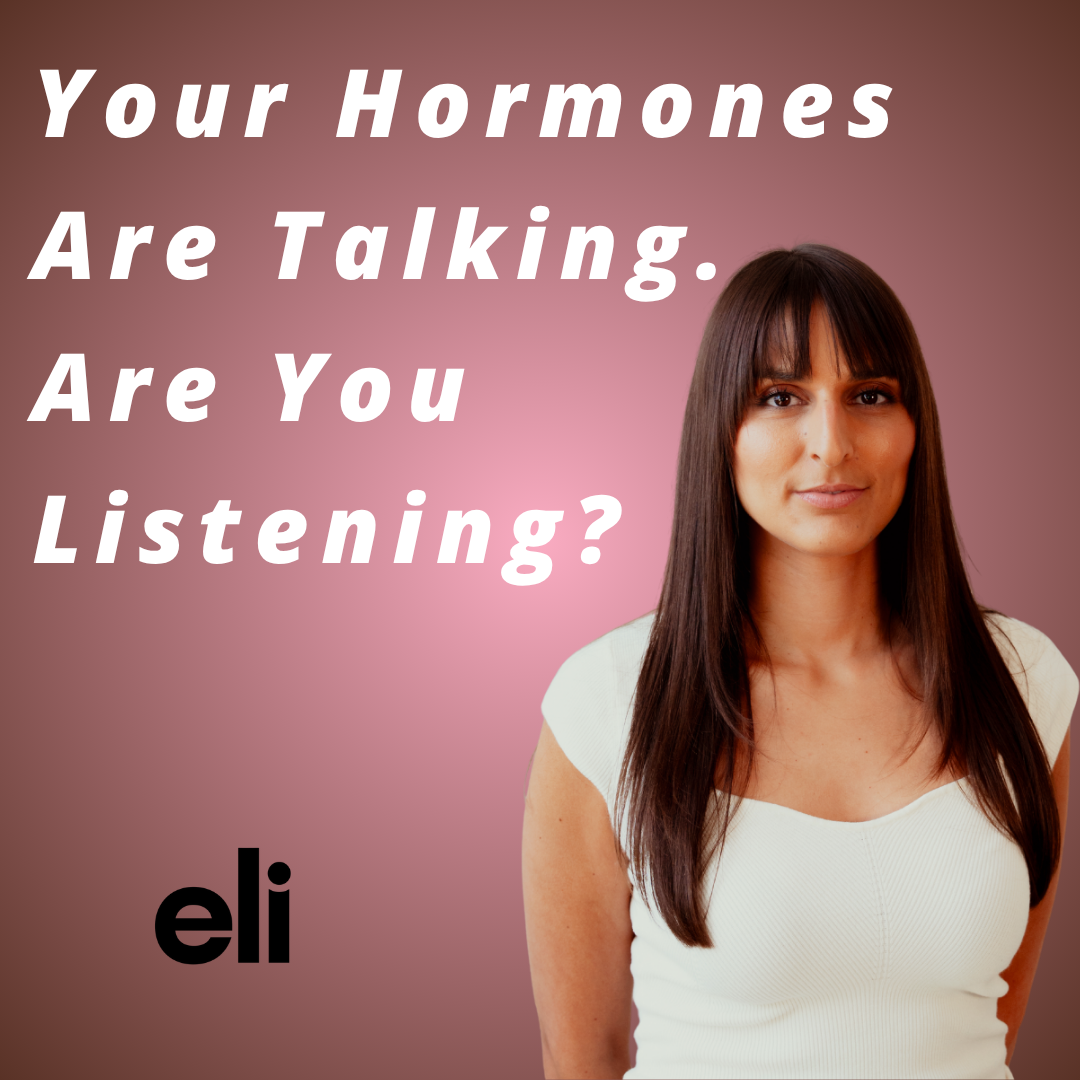
Most people get their hormone levels tested once a year — if they think about it at all. Marina Pavlovic Rivas, Co-Founder & CEO of Eli Health, is on a mission to change that. Ramon Vela sits down with Marina for a fascinating conversation about the technology she spent nearly seven years building: a saliva-based, at-home hormone monitoring platform that delivers cortisol, testosterone, and progesterone results to your phone in minutes, giving people real-time visibility into one of...

 Apple Podcasts
 Spotify
 Castro
 RSS Feed
 Most people get their hormone levels tested once a year — if they think about it at all. Marina Pavlovic Rivas, Co-Founder & CEO of Eli Health, is on a mission to change that.
Ramon Vela sits down with Marina for a fascinating conversation about the technology she spent nearly seven years building: a saliva-based, at-home hormone monitoring platform that delivers cortisol, testosterone, and progesterone results to your phone in minutes, giving people real-time visibility into one of the most overlooked dimensions of their health.
* The gap nobody was solving. After searching online for a way to track her own hormonal data, Marina realized the product didn't exist. So she built it, spending more than six years on R&D, regulatory approval, and venture capital before bringing it to market.
* Hormones affect everything, not just fertility. From energy and mood to sleep, libido, bone health, cardiac health, and cognitive performance, Marina breaks down why hormonal data is one of the most important and most underused signals in personal wellness.
* The wearable parallel that puts it all in context. Checking your hormones once a year is like measuring your heartbeat once a year: technically useful, but dangerously incomplete. Eli Health gives users the same continuous feedback loop that smartwatches brought to sleep and heart rate.
* A six-second saliva test. Results in 20 minutes. Users collect saliva, wait 20 minutes, then photograph the test to receive results directly in the app. Repeat over time and you build a hormonal picture that no annual blood draw could ever provide.
* Cortisol first, for good reason. Eli launched with cortisol because it sits at the top of the hormonal cascade. When cortisol is off, everything else follows. Testosterone and progesterone, including their interactions, are coming next.
Join us in listening to this episode for a genuinely eye-opening conversation about hormonal health, the future of at-home diagnostics, and what it means to build a category that didn't exist before you created it.
Whether you're a health-conscious consumer, a founder, or someone who just wants to understand what their body is actually telling them, this one is for you.
Visit: https://eli.health/
Try their Instant Cortisol Test: https://eli.health/products/cortisol?view=sl-44128C61
If you enjoyed this episode, please leave The Story of a Brand Show a rating and review.
Plus, don’t forget to follow us on Apple and Spotify.
Your support helps us bring you more content like this!
*
Today’s Sponsors:
Saral - The Influencer OS: https://www.getsaral.com/demo
SARAL is the all-in-one influencer platform that finds brand-aligned creators, automates outreach, and manages everything in one place. Request a live demo today. Let the SARAL team know you're a The Story of a Brand Show podcast listener to get an extended free trial! Visit the link above.
Ramon Vela (00:00)
Welcome back everyone. Today is going to be such a great program. I have a brand that has such an interesting product or products, and I can't wait to dive in to the science, to the health component of all this. And then we'll talk about the brand and what you do and how they do it and so forth. But before we do, let me introduce you to our guest today. We have Marina Pavlovic, who is co-founder and CEO of Eli Health. Welcome to the show.
Marina (00:41)
Hi, thanks for having me, Ramon.
Ramon Vela (00:43)
Well, I appreciate you making time. I really appreciate it since I know you're building a business and you have a lot of things on your plate. So I appreciate you making a little bit time for us and our listeners to understand more about what your brand does. And like I said, it's really, really interesting and I want people to know everything about it. And plus I have a lot of questions about it. I don't understand some of the health component of it and I'm sure others don't. So I think it would be great if we kind of dive down into some of that aspect of it.
Now, but before we do, I have a signature question that I ask every founder. We're now up to 1,380 episodes and I've asked, think maybe about 700 people this, seven different founders. And what I find is this question, it's a gratitude question. And I really do it for a couple of reasons. One is I think it's important for people to
know that these brands that we see online or on the shelf or wherever, you know, there's real people behind them because it's so easy for consumers to look at a brand and just think, you it's some faceless corporation, you know, multinational, whatever, they don't know. And so I like to let them know that there's real people behind these companies, that there's people who care deeply about their products and the science and their communities and their consumers and all of that. And one way of
getting to know people behind the scenes, it's just getting to know who they are and understanding what you're grateful for is a great way to do that. But also it's a great way to kind of as a founder to start a conversation about your journey. So all of that's true. Plus I'm a big gratitude believer. I have a gratitude meditation they do. I have had so many, I have, you know, lot of issues in the past around
business and personal issues. In one year I lost my mother, my brother-in-law, my nephew. And it really difficult moments, but it was a gratitude meditation and mindfulness that helped me get through those. So I'm a big believer in gratitude. It doesn't cost you anything. It's free. Whether you journal, whether you pray, whether you meditate, these things are available to you if you're feeling stress, if you're feeling anxiety, and I'd love to promote that. So with all of that said, Marina,
Share a moment or memory when someone did something for you that just made you feel grateful because it meant that they believed in you, your vision, or your potential.
Marina (03:15)
Yeah, well, first of all, thanks for asking the question. I also believe in the power of gratitude and the topic of today, or at least one of the topics will be around hormones. And it has been shown that some mindsets, including the process of gratitude, does have a very positive impact on your body, not just on the mind. So to answer your question, one...
One moment I'm grateful for and one person is my mom. It may sound cliche, but she had a major impact on my journey, both personally and professionally. And one of the moments that really came to mind when you asked the question was when I was still in school and I was interested in so many things. I was interested in
in science and biology, in computer science, but also in arts, in design, in social science, in a bunch of different things. And at that time, it was a moment in life where you kind of through the system had to choose one path, choose which program you're going to do at school. And I found that so...
restrictive. And when I was sharing that with her and sharing that I don't know what I want to do later on in life because I'm interested in all of those things and there's nothing really that I know of that mixes all of that, she replied, well, if that career doesn't exist, you can create it. And that really stuck with me that you don't have to limit yourself to the
existing possibilities or to the world as it is today that you have agency and power to create your own reality. So that mindset really stuck with me and I'm really grateful for her for that because many entrepreneurs and founders share how sometimes it can be, it's always difficult.
as a journey, starting a company. But unfortunately, sometimes they don't have the support from their family. But I'm really grateful for my mom that along the way, and that's one example when I was still in school, but that mindset persisted throughout the whole entrepreneurial journey.
Ramon Vela (05:41)
Mm-hmm.
Well, I love that. that's such a wise thing for your mother to say. And it kind of goes to heart of the question because she obviously, you know, she's your parent and so forth. But at the same time, she saw something in you that wasn't there yet. Right. Like she knew that you could do this. She knew that you can create it.
She knew you can bring this new career into existence somehow in some way. And, and I think that, you know, the bottom line was like, you know, don't limit yourself. Right. So she was, she was very wise woman. I hope, hopefully you've closed the loop many times with her and she knows how grateful you are for her. but that's, this is exactly what I, what I, you know, this is exactly the reason why I asked this question is that there's so many little moments, so many things that people say.
things that little things that people do. Sometimes it's just a phrase, sometimes it's just a word, sometimes it's just an action, whatever it is, it doesn't have to be huge, but these little things mean, are so meaningful to us and we carry with them throughout our journey. And those little moments kind of fuel us to keep going when we remember. And this is another reason why I like to.
I love to talk about gratitude with founders because I really think it's important because this journey is so difficult. And sometimes it feels like no one supports you. And that it's important to kind of remember those moments that can fuel you through those hard times, right? That can be there, it could be your why, could be your motivation. So thank you for sharing that. I really appreciate it. And you're absolutely correct. It's really difficult sometimes.
entrepreneurs are not islands. And so the more support you have, the better, but sometimes you don't have a lot, but you kind of need to look for it and hold on to what you can. So thank you for sharing that.
Marina (08:03)
Well, thanks for asking.
Ramon Vela (08:06)
So, all right. So, LE Health. This is, I want to get to know who you are, but I also want the company, the people to understand a little bit about what you're doing. So why don't we, from a very high level, talk about what LE Health is and what it provides.
And you don't have to go into the science just yet, but let's just know, give people an overview, like a thousand foot overview. And then we'll back up and then find out a little bit about, you know, how you started this and why. And then we'll, then we'll start migrating to a little bit more about, you know, each one of the components and what they mean for you and the testosterone and all the other things that you offer. So give us that 100%, 1000 foot overview.
Marina (08:58)
Yes, so at Eli, we developed a technology that enables people to obtain their hormonal data in minutes instead of weeks. So that means that with the product that they can use at home, and actually they can use it anywhere, they're able to get hormonal results from their saliva to their phone in a few minutes. those results...
enables people to see hormone fluctuations over time, including for hormones like cortisol, testosterone, progesterone, and they can make decisions based on that on a daily basis. So to make a parallel that many people can relate to, it's similar to a smartwatch where you use this technology to get data around your health on a daily basis. It can be around your sleep.
around your heart rate and you're able to see how the different choices that you make on a daily basis and how your lifestyle, how some events that you're experiencing have an impact on your health and how the different initiatives that you're doing to improve your health actually have an impact on your body. So we're introducing the same for hormones.
Ramon Vela (10:19)
Wow. I have so many follow up questions to that. But I don't want to dive into the science just yet. Because I want to know now that I understand what you're grateful for. So I heard your story. Now I want to know how you got involved with this whole idea. Because starting with the idea that, you know, when you were studying, were intellectually curious about all these different areas of science and biology and so forth. And so now I'm really curious, how did you
How did this whole idea for LA Health start?
Marina (10:54)
It started originally out of a personal need. I wanted to have access to this data myself. And initially, just casually went online to buy it because I thought for sure something like this would exist. But when I realized it didn't, with my co-founder, who's also my life partner, we realized that we could each have a part of what could become a solution.
So that's originally how it started and very quickly the vision became clear, that vision of enabling continuous hormone monitoring. And then it was a more than six year journey from an R &D standpoint to make it a reality.
Ramon Vela (11:40)
Wow, so six years to develop the technology to do this.
Marina (11:45)
Exactly. So before being on the market, really a bit more than six years, close to seven years of different iterations in the lab, raising venture capital, validating the technology, getting regulatory approval. So all the work that's being done in the background before it's even possible to put it in the hands of users.
Ramon Vela (12:08)
Wow. So the fact that it wasn't around, so like for someone who may, you just someone coming in new and doesn't understand business or anything, they might ask, well, if it wasn't around, maybe people don't want it or people don't need it, or maybe, maybe it's something that the, you know, they can get somewhere else or whatnot. But you wanted to have this data, this personalized data.
And also I've seen this trend where the whole trend in the last few years is getting this personalized data for sleep or for other levels of your A1C or whatever it is. There's all sorts of different things that people want and they want to be able to understand what those are at the moment so they can make changes to their lives and so forth. And I love this trend.
because it allows people to have more agency, it allows them to make changes and so forth. There's no more need for many of these things to go to the doctor and you don't have to go to the doctor every six, seven months or whatever it is. So I understand the trend, but help us understand what the need is to understand more about your hormones. I'm wondering if we were to peek in to your venture capital meeting,
and someone asked you that question or if it was a slide deck, why? Why do people, you need it as a consumer, but why do people, other consumers need this or would want this information?
Marina (13:50)
Yes, well, in the context of our business and any business where we're creating something for the very first time, there's a lot of what we call first principle thinking that needs to happen instead of thinking of, this is already on the market, so we'll do something similar and doing analogies, trying to go back to the basics to really understand the fundamental and how it could apply
to that thing that we want to create. So in this case, because I was experiencing the need, then the next question was, well, are other people also feeling and having that need? So then it became a mix of going into the literature, so the scientific literature, to better understand those hormonal pattern, the role that hormones play.
into her as it relates to her health. And what we saw by speaking to many physicians, endocrinologists, looking at that research is that hormones play a major role across all phases of life and across all areas of the body. Sometimes when we think hormones, we think it's women's health related. And yes, it is, but it also affects men.
And very often we will think it's related to fertility. And yes, it's true, but it's also related to mental health, bone health, cardiac health, energy, physical performance to really all the areas of health and wellness and hormones fluctuate all the time. But we have access to that data, hormonal data on a yearly basis and sometimes not even. So it's like...
measuring your heartbeat, one heartbeat per year. You wouldn't have information. You would have incomplete information. You would know that the heart is still beating, for example, but you wouldn't have the full pattern. So when it came to hormones and understanding that the frequency of fluctuation, it changes throughout the day, every day.
Ramon Vela (15:51)
Mm-hmm.
Marina (16:15)
And yet we have access to the data only once per year. Then from a fundamental standpoint, we saw that there was a gap there. And then shifting gears and speaking, going outside of the, let's say more scientific research and medical discussions, going to speak directly with other users. We spoke with hundreds of people and eventually thousands, and they were able to share the unmet needs.
that they were experiencing. Some of them knew that it was hormone related, some others not necessarily. But piecing all of it together, we saw that there were and there still is a lot of unmet needs as it relates to hormones. And that from a biological standpoint, having a technology that solves that gap, that data gap would enable to...
meet those various needs.
Ramon Vela (17:14)
So I think I understand how important it is to be able to have this data around you at a high level, but I guess at a very granular level from a consumer standpoint, I'm wondering, and I'm sure you have various levels of consumers. Some are more educated on,
the different, you their hormones and what these hormones do for them and or not having their hormones levels correct, what that could do to them. But I think a lot of folks are still, you know, there's still some education. Like I have very little understanding of hormones. I will read or see some posts about someone saying like, I've added, you know, I've increased my levels of testosterone and.
I'm working out better, or I have more energy, or something like that. And so I think like, oh, okay, well, that's great, but I still don't understand what testosterone does to me. I think I've even seen in a line item, like I'm due to do my, I do like every six months, I do like a test for diabetes or like all sorts of different stuff. And so I think testosterone is like one of those line items, I think.
and it always sounds acceptable or like, okay, but I don't know anything about it. I don't know. And I think a lot of consumers want to know that. And I'm wondering, this is not easy question or easy to answer, but as a consumer, is there something, some precondition, something that I am experiencing that would lead me to...
think, okay, maybe this is hormones, or maybe I don't have enough energy, maybe I should go look into testosterone, or maybe I should do whatnot. I don't know if I'm facing this question correctly, but as a consumer, why is it important for me to test my, let's say testosterone, it could be cortisol, as you mentioned, or others.
Is there a condition or something that I would be experiencing that would lead me to want to test this on a regular basis?
Marina (19:35)
Yeah, well, let's take cortisol, for example, which is the hormone that we have on the market today. Cortisol is often called the stress hormone and it often has a bad reputation. We think we should have no cortisol. But the reality is that cortisol peaks in the morning and drops in the evening. So that pattern, which is called the cortisol-Darnold curve,
Ramon Vela (19:45)
Yeah.
Marina (20:05)
is regulating how you feel, regulating how you sleep, regulating your level of energy, physical performance, and ultimately all areas of health. So on a daily basis, let's say someone who feels stress. So anyone that feels that stress has an impact on their day to day.
cortisol may be something that's valuable to measure. Because very often people are in situations where they cannot necessarily remove the stress. Sometimes they can, but very often they cannot. And many times they even don't want to. Let's say, let's take an entrepreneur, that building a business is a stressful endeavor, but very often stress is also
the price, quote unquote, to pay to live the life that you want to live. But then the next question becomes, well, is there a way to adapt to this stress so that those challenges that you experience, that you can take them on without the negative impact on your physical and mental health? So having the visibility on a frequent basis.
around that cortisol dyrano curve, seeing if its cortisol is too high or if it's too low in the morning, will tell you if your lifestyle, if the events that you're going through have an impact on your biology. And most importantly, create a feedback loop where you can have some different recommendations around what to do.
in order to reach those optimal cortisol levels.
Ramon Vela (22:00)
So I, and I'm, I think I get it now. And so one of the, so one of the things that I've heard from people just on a personal level, but I've also, think, talked about this on the show is sometimes, you know, we have these cycles or I don't remember exactly how you refer to it, rhythms. sometimes they're out of whack and sometimes instead of our, our cortisol levels, reducing at night.
Sometimes they don't, right? And so sometimes when people are stressed out, they can't sleep. and so much of our world, there's so many things to kind of be anxious about if you let it, right? So you watch the news, whatever it is. there's so much going on. Sometimes we don't even know what we're stressed out about, but we, we, our bodies feel it. And so if I'm having trouble sleeping, which so many people do, unfortunately I don't right now, but
Marina (22:50)
Mm-hmm.
Ramon Vela (22:56)
So I have had moments in my life where I've had trouble sleeping or you keep waking up and whatnot. so understanding what your cortisol levels, I think would be extremely helpful because it could be that they're spiking, right? At at at at nighttime and you don't know why, but they are. And so this allows you to have that data, which then allows you to make whatever changes, maybe you need to.
kind of like really start thinking about what it is that you're might be stressed out about and whatnot. So it gives you some sort of agency from in this particular example. Would that be correct for me to think of that?
Marina (23:39)
Yes, that's correct. And some people say, well, I already know if I'm stressed, I don't need to measure it. And some people do. But then we see millions of people adopting smartwatches, smart rings, like Ura, like Whoop, in order to have sleep score and have better visibility into quantifying what they feel, but most importantly, seeing patterns over time.
So for example, if you know your stress, do you know exactly why between all of the different things that you're doing? Is there one that has a bigger negative impact on your body? And is there some things that you do that can help offset that, for example? So let's say you're having high cortisol in the evening, maybe you do exercise.
and which is a great thing to do. One of the best things you can do for your health. But if you do, let's say, a high intensity exercise and you do that in the evening, it may be contributing to your cortisol levels staying elevated at night. So then shifting that habit instead of doing it later in the day, you do it earlier, or perhaps you change the type of exercise, could have a positive impact on your cortisol level. And perhaps you have some habits of
Ramon Vela (24:52)
Mm-hmm.
Marina (25:08)
let's say screen time in the evening. What happens if you shift that for something else? Maybe nothing happens, but maybe it does have a positive impact on your cortisol. And why it's so complex to know that without having the actual data is that it changes from one person to another. The same action for someone will have a positive or negative impact. And the same action for someone else.
will have no impact at all and sometimes even have a negative impact for someone and a positive impact for someone else. That's why having that feedback loop is extremely helpful as you're navigating the goal of optimizing your health and wellness.
Ramon Vela (25:43)
Hmm.
Yeah, mean, I think the reality is that, you know, our bodies evolved in certain ways to help us and to benefit us and to help us live our lives. But in modern times, we just have so many things like, you know, know, I mean, exercising at night or
phones, know, screen time, you know, scrolling, whatever you want to call it, TV, whatever it is. There's just so many things in our lives right now that are just really can drive us crazy and have us, you know, spike our cortisol and whatnot. So you really have to make a concerted effort, I think, you know, to kind of like relax. Like I use red lights. like my lamps turn red, you know, at a certain time of the night.
So I can just start like relaxing and then I start, you know, turn off the TV and then I start scrolling and then I read or whatever and then I meditate. So I have a whole little thing that I do, but yeah, I mean, I think the majority of people are at the whim of their hormone levels, the way that you describe them, whether it's cortisol and whatnot. So I love that. think that that's, I understand now and I think that makes a lot of sense.
Marina (27:09)
Thank you.
Ramon Vela (27:19)
And this, I'm going to ask my next question really applies to all of these, but does, uh, and we'll get more into the process of how LA health works. But once we know this, once we have this data and we know that this is happening, like for instance, like let's say, and I think this has happened to me where you work out very late and then after that, like your body's just like, it's too active and it's too, you know, going on. I, so I know I can't work out late like that, but, um,
Once this data is available, do you guys provide any, I don't know, suggestions or next steps or anything like that?
Marina (27:57)
Yes, so again, in the same spirit as smart watches, in the mobile application, you can see what's your hormone levels, but also have a way to tag the different actions that you're doing. For example, exercise that you're able to log that different information so that over time you have the interpretation and correlations.
that appear clearly, but also different types of actions that you can take to get to those optimal cortisol levels. So we focus only on lifestyle changes, no pharmaceutical intervention, very focused on lifestyle changes, things that are very often free to do to arrive to those optimal patterns.
Ramon Vela (28:54)
And so, okay, so now walk us through the other two areas that you focus on. So testosterone is another area. And then you mentioned a third one. Walk us through each one of those.
Marina (29:08)
Yeah, so testosterone and progesterone will be the two next instant hormone tests that will be releasing. And it's two hormones that also play a critical role on health. For progesterone, it's mostly useful for women. Men do have progesterone as well. But the cases where it will create symptoms or cases where it needs to be optimized,
to reach different health goals will be more niche. So the projects around product is mostly focused on women's health. And it's a hormone that plays a role across all life stages, including, yes, when people want to conceive, it plays a big role as it relates to fertility, but also a big role throughout perimenopause. And perimenopause is a transition. Very often we think menopause, we think
It's something that happens when we're 50, 55. But the reality is that there's a big transition before that moment that can be up to 10 years and sometimes even more. And during that transition, progesterone levels fluctuate and they decline. So being able to have that visibility for many women is very transformative because they can know.
what's the root cause of what they're experiencing. And they can have different recommendations around what they can do to either eliminate the symptoms or reduce their frequency and their intensity. And testosterone, I would say is very similar. It's a hormone that we think very often of in the context of men's health. The reality is that it has also a big impact for women, including during perinopause.
And so for everyone, testosterone is a key hormone, but especially as people age, it's a hormone that will decline over time. And again, having that visibility enables to put the finger around the root cause of different symptoms, but also again, have that feedback loop to understand the actions that are being taken.
how does it help increasing the level of hormones at the moment where we want it to increase?
Ramon Vela (31:40)
So I'm wondering if you could break it down, like for instance, like with cortisol, I can kind of see where, if I'm having trouble sleeping, I, you know, if I'm, I don't know, I guess that's the one big one, but I can see where I might think, okay, I should really understand, like I'm having trouble sleeping and I'm not sure what I'm stressed out about, but I must be stressed out about something or.
I must have something on my mind or there must be something going on. And cortisol levels might be one of those things that I want to check. I can see that. From a testosterone perspective, what stage of life and or is there anything that when it happens in a person's day to day life that would lead them to say, okay, I think I need to check my testosterone levels.
or I should be concerned about my testosterone levels. I don't know, maybe I'm being too, maybe it's like I'm asking for something that can't be answered, but for instance, if I'm, oh, I don't know. mean, if I'm experiencing something,
Like, wow, I'd say that's my, unfortunately my knowledge around testosterone is not very limited, but what would I be experiencing that would lead me to want to check my testosterone levels? Maybe that's it.
Marina (33:04)
Yeah, well, it depends on the life stage. We know that after 45, the decline, it's something that will happen. Testosterone levels and progesterone will decline more sharply after that age. And it will be linked to different symptoms, including
For progesterone, can be difficulty sleeping, for example. For testosterone, it can be the energy dropping, the libido dropping as well. So a variety of symptoms that after a certain period of life, that is very likely that it's linked to progesterone or testosterone. When it's trickier, I would say it's earlier in life.
There is some people that experience different symptoms where it could or potentially could not be related to that. And that's why having the data is very helpful to understand the root cause. Because there is also a distinction between having a single data point. Let's say you're testing once a year and you fall in the range that is considered normal.
but it's very important to distinguish between abnormal results in the context of let's say a medical condition versus results that are not necessarily abnormal but not necessarily optimal in the context of wellness. And that's really where we focus, not on the diagnosis side, not on the let's say more medical condition side, we focus on the wellness sector.
Ramon Vela (34:44)
Mm-hmm.
Marina (34:59)
And how can people reach levels, even if they're not, let's say, considered abnormal medically, how can they reach levels that are optimal to either eliminate the symptoms that they're experiencing, or even if they don't, let's say, major gaps like lack of energy and so on. Very often we see that people want to get that extra...
edge in terms of performance, whether it's cognitive performance, physical performance, and just want to feel more able to take on more challenges, then it becomes also relevant to have that feedback loop to optimize your health.
Ramon Vela (35:45)
So, okay, so I think I get it. And I probably should have started, we probably should have started off with what testosterone does or what does pro-esteroin, if I'm saying that correctly, does. Because now I think I understand it. And so now it definitely makes sense. And let me just remind people, if you wanna go and actually see what we're talking about and,
and understand these different things as well, you can go to the website. And the website is actually, she's made it really, really easy. We were talking about this earlier. Actually, I kind of like this. So the company is LE Health. And so you can just go to the website, which is le.health, le.health. And LE is spelled E-L-I.health is the website. So LE is spelled E-L-I.
and, and the website is really easy, LA health, LA health. So now I understand. So testosterone, what it does is it shapes our energy, our strength, our mood, libido recovery, long-term health. So if I am feeling less energetic, if I am feeling like I'm working out, but my, I'm just not, you know, feeling like I'm getting stronger as I get older, for instance, you know, maybe I'm feeling like.
my gym workouts aren't improving the way that I would like to improve and so forth. Or I'm feeling moody or whatnot, or experiencing issues with my libido, whatever, recovery and all sorts of other stuff. So some of these, of course, are age-related. I'm sure there's a lot of things can be involved, but...
a big factor would be to check your testosterone levels. So if your testosterone levels are lower, then you can, and you understand what those levels are, then you can take them, then you could take whatever next steps you're gonna take, right? You can, and I don't even know what the things that you can do, but let's say at that point you understand and then your app can tell them what they can do to improve testosterone levels in this case or the others.
But did I summarize that okay?
Marina (38:11)
Yes, that's a fair summary. And one of the reasons why we started with cortisol on the market is also because there is interaction between those hormones. So let's say if your cortisol is not optimal, if it's too high in the evening, too low in the morning, and that it stays flat. So any pattern that is not the optimal pattern will have downstream impact on other hormones.
So for example, with progesterone, it does happen that levels become not optimal. So for example, too low, because cortisol is too high. So really having that visibility around the interaction is also part of our vision with this technology to have one app and one
technology that enables you to test those hormones but also see the interaction between all of them. So as of today, that vision is not on the market yet. We're really focused on cortisol, given the big impact it has on all areas of health. But coming up will be also testosterone and progesterone, including the interaction between all of those hormones.
Ramon Vela (39:34)
Well, just to kind of like talk, because I don't even I never even heard of progress on own. But I think I understand it. So would it be safe to say that if if women are experiencing menstrual issues, you know, whatever that might be, but they're having those type of issues, could a lack of or a spike of
Progesterone be the issue? Like if someone's having some sort of menstruation issues, should one of the things that they'd be doing would be to check their hormone? It feels like that would be the case. Like if they were having issues and they didn't exactly know what it was and the doctors wasn't being that helpful, maybe suggesting a test like this through your app or whatever might be something that someone can do on their
Marina (40:29)
Exactly. the hormone is progesterone and that hormone fluctuates throughout the month. So cortisol, it's throughout the day and for progesterone, it's throughout the month. So you expect to have a peak of progesterone during the month and that's related to the different menstrual cycle phases. So having that information helps women understand
which phase they're in. And now today there's a lot of apps that's a menstrual tracking apps and even wearable that gives you an estimate of those phase, which is extremely helpful for a lot of people. But especially for women who have irregular cycle, which is up to 45 % of women and women who have different endocrine conditions like let's say PCOS, which is about one in nine women.
And then having that extra information around the actual hormone levels gives that extra layer of understanding different symptoms, but also being able to optimize different things they're doing based on that information. So to give an example, female athletes, having that information can be really game changing for them because they're able to optimize their training.
based on that information and take extra precautions sometimes also based on that information because there are some phases of the cycle that can be linked to more chances of injury, for example, and some other phases of the cycle where they could be more, their body could be ready to take on more load and more intensity. So having that information again,
As we say, information is power and it's true for hormones as well.
Ramon Vela (42:29)
Wow, okay, now I get it. I understand it. I love this. And of course, cortisol, you mentioned this before. So this is the one that's available right now.
It helps you to reveal the impact of mental, physical, lifestyle, and environmental stress on your body. By the way, I'm pulling these things out of your website. So this is how useful your website is. And again, everyone out there, you can go to elliehealth. it's ellie.health is the website. You can go check it out. Yeah, so this is great. And I love the website, very educational and...
really goes into a lot of the questions that I had as well. So let's switch over before we talk about the app and the test and then the app and all the things that you get. Let me ask you a couple of entrepreneurial questions because we do have an audience of folks who love to know about your...
entrepreneurial journey, but also we have a lot of entrepreneurs who listen to the show and I'm curious. So you have what I, what I just from our conversation and just understanding like your gratitude story, you have this science background and you're this, that's your passion and it makes sense. You know, this is a very science, you know, required app that you are a system that you've created.
But I'm wondering from an entrepreneurial standpoint, what has been the most difficult thing for you to deal with? Has it been, I don't know, the whole business side of it? I guess I'm wondering because I've interviewed certain folks before in the past and they're like, yeah, I really love the science component and I prefer not the business side of it.
and you're the founder and the CEO of the company, or the co-founder and the CEO of the company. And I'm wondering, was there any challenges that you faced in terms of running the business as well as doing the science component?
Marina (44:39)
Yeah, so I would say I love all the areas of the company and that comes back to the gratitude question. I love being involved in different fields, but each of them have their own challenges. So I would say that there's not one particular area that is more challenging than the others, but they are also all challenging.
And so to give an example, the technology I mentioned earlier that it took more than six years to develop it. It was thousands of iterations before we arrived to the product that was commercialized. So you can imagine over six years and initially even recruiting a team to join an early stage company to do something that has never been done before. That's both
extremely exciting for people, but it could be also extremely terrifying because you don't have the certainty of possibility. You don't have proof that it's impossible, but you don't have a proof that it is feasible because you cannot say this company is doing it and we're just going to do it better. You have to have some extent faith in your capabilities.
Ramon Vela (45:33)
Mm-hmm.
Marina (45:57)
both as a founder, but also every member on the team and keep also the morale high throughout all of those failures. Because sometimes there's progress in R &D, but sometimes you do one step forward, 10 steps back, and you need a special type of mindset for that. So as a founder, it is part of the challenge to always motivate the team in those situations.
but also to find people who have that mindset. So we've been lucky to find those people in the journey. But the same thing applies, I would say, at all stages. Now we have the technology, we proved that it's possible. But then what we're doing from a marketing standpoint to create a category that has never existed before and take this highly complex topic of hormones, of instant testing,
Ramon Vela (46:29)
Mm-hmm.
Marina (46:55)
to make it a consumer product that people can test anytime, anywhere for the first time. It comes with its own challenges in terms of go-to-market and education as well.
Ramon Vela (47:04)
Hmm.
Yeah. has well, and I actually that was on my other question is, the marketing component of it getting the word out, helping consumers understand it, you building awareness, building the brand, you know, even the tactical stuff like, you know, ads and influencers or however, you know, however you can go to market. Has that been the challenging part? Because I think from a from from a science
Like I know you'd love a lot of different areas, but if you are so used to like the science component of it where there's, you know, it's very strict, like you do X, Y, Z or ABC and you write down what you did and you know how it works. And if you make a mistake, you can go back to each one of those areas and kind of figure out what that is. And I think that's helpful in marketing, but also marketing is a little bit art as well, right? Like marketing is a science, but it's also a little bit of art.
Has that been a challenging component of you because it's not so easily broken down? sometimes you just think like, why aren't people reacting or why aren't people responding? Has that happened to you guys or to you?
Marina (48:20)
Well, that's really where for me having the two hats of arts and science is really where I thrive. I have a background in data science, but prior to that, I was in media production and communication. So very much focused on, let's say, the more arts piece. So for me, both are...
very related, although on paper they seem very different, two very different fields, but each of them have in common that it's about putting information in the hands of people. Although in one way, for one of the disciplines, it will be in a certain way with data science is another way. So for me personally, I try to this intersection, but I would also say that for many people in the team, even the science team, it's the case. And we realize
over time that almost everyone on the team, including scientists and engineers, have artistic practice. Some of them, it's painting, some of them, it's many different things. Because when we're doing things for the very first time, including in science and R &D, there's a big piece that is very, let's say, technical. Let's say in the hardware, there are certain...
rules and laws, quote unquote, that you know when you're going to do this pressure test, this is likely to happen. But when you're speaking of biology, and even in hardware, doing things that have never been done before, you have to use also your creativity, your intuition in a way that really blurs the line between science and art. And very often, scientists went on a path
that was much more driven by creativity and art or intuition rather and only after we're able to explain it from a scientific standpoint. So would say the two, it's really hard to distinguish both in the context of our business. Everything is a bit mixed together when it comes to art, science and other fields.
Ramon Vela (50:38)
you
Yeah, no, I get it. Yeah, I mean, and I love this. I love this sort of pioneering effort that you have around creating something that hasn't really been offered before, not in this format. And it's challenging, but there's also something very cool about it. And there's also something very, like I said, pioneering about it and something you should be very proud of.
So let's talk about the system itself, like the testing and so forth. And I realize that you have the cortisol right now available, but others will be coming up online fairly soon. How does it work? So someone's listening to this and they think, this is really interesting. I think I'd love to participate in it. Let's say it's either testosterone or the cortisol or whatever it is, but...
What would their next step be?
Marina (51:40)
So it's very simple on the website that you've mentioned, elli.health. It's possible to buy the product directly online. So there's no need for prescription, for anything. It's just available to anyone online in the US and Canada. It's going to be available in other countries in the future, but for now available in those two. And once they purchase online, they receive it at home.
And the format of the test, it's a saliva test. So they take one test, they put it in their mouth for six seconds to collect the saliva. And 20 minutes after, they take a picture of the test to receive the results directly on their cell phone. So that's something, a process that is very quick for them to complete. The active collection time is that one minute where they collect the saliva.
During the 20 minutes, they can do whatever they want. That's why we see some users testing on their way to work after the gym. It's really something that can be done anywhere. And they see the results directly on the mobile app, and they repeat that process throughout time. Again, similarly to a wearable, to create that feedback loop and be able to have the visibility throughout time and see how their actions is improving their...
their hormonal levels.
Ramon Vela (53:09)
And, you know, it's very simple. You also have us, you also, on the website, which is le.health, and le is spelled E-L-I, so it's le.health. On the website, it has the different products, the products that are available, but also shows what products are coming, the progesterone, the testosterone, and then of course it has a cortisol available there.
There's a navigation button about how it works. There's also a navigation there about the science. There's also a knowledge hub, which goes into, I think, just a lot of really cool information that you can look into if you wanna learn more about it. You also have a community also there. So you have something that people can join in and I guess provide like feedback and things like that. But you have so much stuff there.
You also have even something for partners and influencers and affiliates who want to participate and get involved and share the great work that you guys are doing. So this is really wonderful. So why don't we let people know when those, if you have any timelines around testosterone and the other hormone, when will those be coming up online? Or is that something you can share right now if it's not, don't worry about it.
Marina (54:35)
So currently we don't have a fixed date for it, but by subscribing to the newsletter online, people will receive the actual date as soon as it's available.
Ramon Vela (54:49)
So yeah, I mean, I think people should just go to the newsletter and just sign in so they can keep up to date on everything that's coming online. I am curious, just on a business standpoint, and I'm gonna let you go because I wanna be respectful every time, I am curious.
Will this ever be available in stores, you think? Like, and retail shelves?
Marina (55:09)
Eventually it could. It's something due to its format that could fit very well in a shelf. For now, we've prioritized the environments where we're able to deliver the education around the product, like on the website, like you've mentioned, there's a lot of information and a lot of context, or with partners that can distribute the product and provide some of the supporting information. So the high context touch points.
are the ones we're prioritizing. But eventually when the education will be more, let's say readily available, again, making the parallel with smartwatches. Now, most people have an idea of what they do, why would you use it? So when we'll be at the stage where it will be similar for product, then a lower context touch point like retail would make sense for.
Ramon Vela (56:09)
Yeah, no, I agree. I can see it eventually on there. I can see you offering a lot more items too, but you first things first, right? Like you want to get this out, help people understand what it is, and then you can build from there. And I think building a community is really a great thing to do as well because the community, I've seen so many brands utilize a community to test new products, get feedback.
you know, help create new products, things like that. So it's, it's, think it's a great, it's a great use of your time to build a community. But I want to be respectful of your time. So this has been fantastic. Marina, I did want to ask you more entrepreneurial questions, but quite frankly, like the science component of was just like too fascinating. And I wanted to understand about all those things. And plus I wanted the consumers and listeners to know what, what that was. So you're more than welcome.
to come back anytime you want. Maybe next time I'll ask you some more entrepreneurial questions and you have different phases of the company back next time so you can share those. But thank you so much for your time. Thank you so much for sharing with us the product and also the science around it. And you've helped me understand a little bit more about why it's so important around testosterone and then also really around the others because I didn't quite frankly, I didn't really know too much about the others as well. So thank you for all of that.
Marina (57:33)
Well, thank you so much for having me today. was great speaking with you.
Ramon Vela (57:38)
Yeah, so thank you. So everyone out there, have just had Marina Pavlovic, who is co-founder and CEO of Allie Health. And Allie is spelled E-L-I. And then if you wanna go to the website, it's Allie Health, or I'm sorry, Allie.Health is the website. And again, Allie is E-L-I. And by the way, is there any...
Any other place besides the website that they can that you want to send them to and then if you also have like a social media handle
Marina (58:13)
Yes, so we're also very active on Instagram at myeliehealth.
Ramon Vela (58:19)
Okay, great. So we're going to make sure to have those links on our podcast description, the website and their social media. And you can go check them out. Like I said, think the most, the best thing you can do is go to the website, sign up for the newsletter because they've got these other two products coming online very quickly. And then they have all sorts of new things I'm sure that they're adding every day. So go check it out. And I always tell you when I end these episodes is to stay sane, stay safe, stay healthy.
And one way to do that is by going to the website, le.health, because if you're having trouble sleeping, if you are, you know, feeling less energy, lower libido, you less recovery, you know, longer recovery times, all of that, you may want to look into, like for instance, testosterone. Now I understand why people are posting about it. And then of course, there's, you know, there's a progressor, progressor on, did I say that correctly?
Exactly. So there's that as well. So there's all sorts of things that this helps solve for. So go check it out. And then lastly, we've all been going through a lot of stuff the last, I don't know, seven years or whatever, with the pandemic and now with geopolitical wars and all sorts of things going on. Let's just do ourselves a favor. You know, it is stressful out there. There's a lot of anxiety going on. And this is another reason why you should be testing your cortisol levels.
Marina (59:16)
What is this?
Ramon Vela (59:45)
But there's all sorts of things going on. Let's just do ourselves a favor and just try to be a little kinder to each other. At the market, at this grocery store, on the freeway, on the streets, whatever, let's just be a little kinder to each other and I know we can make this human experience a better one. Beyond that, thank you from the bottom of my heart for listening to another episode of the story of a brand.
