
Caddis - The Anti-Anti-Aging Brand Changing Everything
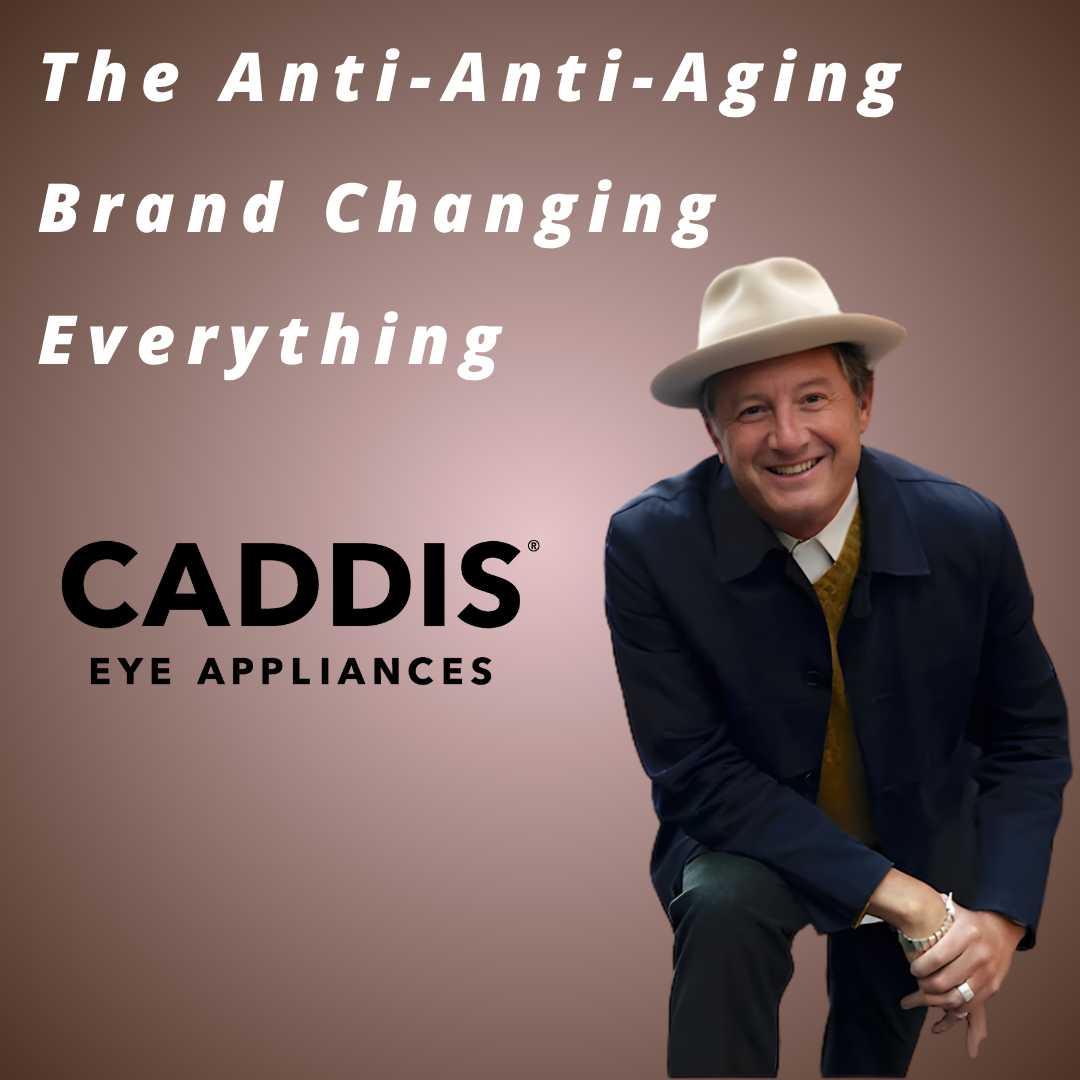
Why are most brands chasing 25-year-olds… when the most powerful consumers are actually over 50? In this episode of The Story of a Brand Show, host Rose Hamilton, CEO of Compass Rose Ventures, sits down with Tim Parr, Founder and CEO of Caddis, for a bold and refreshing conversation about building a brand for a demographic the industry has largely ignored. What unfolds is a story about...


Why are most brands chasing 25-year-olds… when the most powerful consumers are actually over 50?
In this episode of The Story of a Brand Show, host Rose Hamilton, CEO of Compass Rose Ventures, sits down with Tim Parr, Founder and CEO of Caddis, for a bold and refreshing conversation about building a brand for a demographic the industry has largely ignored.
What unfolds is a story about seeing what others miss. Tim didn’t just launch an eyewear company—he identified a cultural blind spot. While most brands obsess over youth, he built Caddis around the reality that consumers over 50 control enormous purchasing power yet are underserved and often misunderstood.
Key moments from the episode include:
* Why the biggest opportunities often exist in “unsexy” categories—and how applying culture can transform them
* How Caddis became an anti-anti-aging brand, shifting the narrative from hiding age to embracing it
* The importance of building from a strong point of view—and why consumers buy the “why,” not just the product
* Why physical retail and real-world experiences are critical for building true lifestyle brands
* How constraint—like offering fewer products—can signal clarity, confidence, and brand discipline
This episode is a powerful reminder that the most impactful brands don’t just solve functional problems—they reshape how people see themselves.
Join us in listening to the episode and hear how Tim Parr is challenging one of the biggest assumptions in consumer branding—and building a movement around it.
For more on Caddis visit: https://caddislife.com/
If you enjoyed this episode, please leave The Story of a Brand Show a rating and review.
Plus, don’t forget to follow us on Apple and Spotify.
Your support helps us bring you more content like this!
Rose Hamilton (00:00)
Hello and welcome to the Story of a Brand podcast. I'm Rose Hamilton and your host for the day today. I'd like to start with a question. Why does almost every consumer brand in the world obsess over 25 year olds when the most powerful consumers in the globe across the economy are actually over 50? If people over 50 were their own country, they would represent one of the largest economies in the world. They control trillions in spending power.
They're healthier, wealthier, and living longer than any generation before them. And yet, most brands treat them like an afterthought. Today's guest saw that blind spot and built an entire brand around it. Today, I am so lucky to be joined with Tim Parr, founder and CEO of Caddis. Caddis is the eyewear brand known for its now famous positioning as the anti-anti-aging brand. But Tim's journey to building Caddis didn't actually start in eyewear.
Tim (00:40)
you
Rose Hamilton (00:58)
I find it fascinating that before it launched in the company, he was a touring bluegrass musician, worked alongside Yvonne Chouinard at Patagonia and founded the cycling brand Swobo. Then in his 50s, he noticed something strange. Almost everyone over 40 actually needs reading glasses. Yet the market had two options, keep drugstore readers or luxury designer frames costing hundreds of dollars. There was nothing culturally
culturally relevant in between. So Tim just built the product. He built a brand with a point of view. Tim, welcome to the story of a brand. I'm so happy you're here today.
Tim (01:39)
I have nothing else to say, you kinda summed it all up.
Rose Hamilton (01:42)
you have lots more to say. I know you do.
Tim (01:44)
You
Rose Hamilton (01:46)
You know, one of the most interesting insights behind CADIS is this demographic and the focus on the 50 year old. Most consumer brands spend all their time chasing those younger consumers. I see it day in and day out, but the fastest growing demographic globally is actually people over 50. Why do you think the consumer industry has misunderstood that market for so very long?
Tim (01:54)
Right.
Well, I don't know if it was always like this. You know, if you were to go back 50 years, maybe that 25, 35 year old customer really held a lot of the purchasing power. And, you know, there is lifetime value. companies can look at a consumer and say, okay, if we snag them when they're 25, then we have them when they're 50, when they're 60, because there's this myth about how
people who are 45, 50 years old don't care about lifestyle branding. only, it's a youth generated interest, which we now know is simply not the case. But yeah, I think there's a lot of reasons. I mean, that's one of them. And there's just an obsession on youth. So that's going to drive culture in ways that we just don't have control over. And
I would say that, you know, we probably, you, look inside a lot of these consumer products, I can only speak of consumer products because that's where I've spent my lifetime. they're generally made up of younger marketing managers and younger people in marketing because there's the belief that only young people have good ideas. So, you package this all up together and you probably end up where we ended up.
Rose Hamilton (03:29)
Well, one thing I see constantly working with consumer brands is that founders often build products for who they wish they were instead of who they actually are. And what's fascinating about Cadis is that it flips completely. You built a brand for your own age stage and the kind of authenticity I think is very hard for competitors to replicate. And you know, when you think about it, almost every great brand begins with a moment where the founder looks at a category and thinks,
Tim (03:36)
Yeah.
Rose Hamilton (03:56)
This just doesn't make sense. Something's missing. For you, I'd love for the listeners to hear what was that moment when you discovered it was reading glasses. Walk us back to that realization. And what did you see in the market that everyone else missed?
Tim (03:59)
That's right.
So I first realized that I needed them when I was in a touring bluegrass band and I would need my set list to be twice the size as everyone else's. which would require multiple pages of paper instead of one page of paper. I always, people always gave me a hard time for needing like my own set list. So it was at that point that I realized that something was up. Then I went to go try and correct the problem when I was down in Malibu, California.
And that's when I bumped into the problem of reading glasses being the bastard child of all eyewear. So I was inside a store that sells eyewear in Malibu and you know, I said, I had this problem. said, you need reading glasses. I'm like, okay, like how do we get that done? Like I'm willing to buy things like point me in the right direction. And it was, you could either, you know, grab a frame that
was aesthetically pleasing, which was any of the large fashion houses. And they would put in a reading glass lens, which would take anywhere from seven to 10 days and cost five to $800, depending on the frame. Or there was a drawer in the back and they pulled it open and it was filled with pink and green and purple and foldable and magnetic and click and like.
All of these things that were like, my God, I'm not putting these things on my face. Like where is just the quote unquote, you know, culturally correct product to sell me because I have a problem and I need a solution and it didn't exist. So that's when it hit me like a ton of bricks. And then it was like, okay, I'm not the smartest one in the room. So why hasn't this happened? You know, we're talking, that was, that moment was probably 10 years ago.
So not a long time ago, and you couldn't really scratch the itch and fulfill your medical need of reading glasses without succumbing to the norms that were in the industry, which was complete garbage.
Rose Hamilton (06:23)
Well, and I think if you double click on just the reality that across successful brands, the biggest opportunities usually hide inside more boring categories like two, laundry, urgent, eyeglasses, reading glasses. But when someone applies culture and storytelling to those spaces, suddenly the category transforms. And I think that's exactly what happened with Katas. I mean, you really built a different category in a different way for consumers to think about.
Tim (06:34)
Totally.
Rose Hamilton (06:53)
And you just didn't launch eyewear, you launched a philosophy. mean, the idea of being the anti-aging brand, that's a strong, really a very strong cultural position. Why is it important?
Tim (07:04)
Yeah. And that, and that came
second. So it was a, it was a product first move, you know, product doesn't exist or product really sucks fix product. Okay. So that was step one. And then we still didn't really have that. And this is in the early days before we were selling out the market. So this is in the incubation period. So we didn't have that platform yet. And then I had a meeting with a venture capitalist.
And, you know, this person flipped the box over, which I only had three boxes. I only had three or four pairs of glasses in existence. So I was trying to raise money and, they flipped it over and they said, okay, well, what's this quote on the bottom and this quote, just put it in there in the 11th hour. Cause I had overheard a conversation, you know, the day that I had to go to print on the box. So I had the, the,
the saying on the bottom of the box, is, uh, you know, it's basically about aging, but I didn't really have that in mind. was just calling bullshit on, you know, forties and new 50 fifties and new 60. Like, I don't get it. Like, what's that all about? So they read that and like, you can't do this. And you know, being. Gen X entrepreneur, like that's your favorite thing to hear.
And I asked, well, why? And she said, like, no one wants to believe that they're the age that they are. And everyone wants to believe that they're 15 years younger. And I didn't say anything, but I was in the back of my head. thinking, my God, do I not want to go back 15 years? Like that would just be, I don't want to go back a day. Like I'm currently 58 and, and my God, I don't want to like been there, done that. So, you know, if I'm 50 thinking about when I was 35,
Like, no, I don't want to go back to that era ever again. It was fun and check the box, but long past. So meeting was over, not interested, and I'm walking down the stairs. And when I hit the sidewalk, was like, it was the biggest aha. my God, this is what we're doing. Like we're not in the, I were business. in the age business. And at the time, no one was talking about age. So.
I knew like I had this pattern recognition of like that was the final dot that I needed to connect. Like what is like what's our why? And all all strong companies, all strong brands need a strong why because people don't buy what you do. They buy why you do it. So if that's the case, like I finally found the why.
that we're gonna go after. And it has like this complete punk rock, you know, David versus Goliath point of view to it, because we're going against aging and pop culture. And specifically in American pop culture, which is like this completely broken way of thinking about it. that's how, then those two things came together and then everything changed.
Rose Hamilton (10:13)
That's amazing. It truly is. And when I think about it, one of the biggest shifts in brand building today is that consumers don't just buy products anymore. They're buying an identity signal. And that's what you're really talking about here. When a brand traps, it's trapped in a category, but it taps into an identity, like how people feel about aging. It becomes much more powerful than a functional product.
Tim (10:23)
Right.
Rose Hamilton (10:37)
I especially think about things in the menopause space where so much that's longevity that's anti-aging right now. It's fascinating to me.
Tim (10:45)
Right. Yeah.
I mean, that's been...
That's been great for this discussion is the menopause space because they have been that industry, that segment, whatever you want to call it, have been the other people who are also talking about this and doing some great marketing behind it. So it's nice that they came to the fight and we're going to see more of that. And now we're seeing it, not just in.
Rose Hamilton (10:53)
Yeah.
Tim (11:14)
consumer products, we're seeing it in Hollywood, we're seeing it in corporate America, we're seeing it culturally starting to manifest in ways that is healthy.
Rose Hamilton (11:25)
Yeah, yeah. And I think another topic that's really interesting is understanding how to reach properly and efficiently reach the consumer you're trying to find there. Because I remember you saying in the early days of CADIS, Facebook ads were incredibly efficient. And I think you said something every founder dreams about, something like you could put a dollar in and get a dollar 50 back. And when that starts happening, what does that moment feel like and how has it changed as time has gone on?
Tim (11:35)
Mm-hmm.
Yeah.
Yeah, well back then again, no one cared about people over 45 in marketing. So how meta and well meta is how it works. It's an auction based business model. So if no one else is bidding on the customers that you want to advertise to your cost are low. So we were able to capitalize on that. And since then it's changed considerably.
for a number of different reasons. One is culturally we're waking up to the viability of people over 50 actually spending money. And then the second thing, it gets in the technical mumbo jumbo about iOS 14 and privacy issues and other things that have affected it. And there's just more stuff. So there's more stuff in the world which increases noise, which increases your cost.
in order to try and talk to people. But yeah, that was, that was feels like a long time ago. And I don't really remember much about it. I mean, it's all a blur back then. And back in the startup, you know, I still feel like a startup. And I feel like half the time or more than half the time, you're still operating in a state of panic.
Rose Hamilton (13:16)
Yes, that's true.
It really is. And you know, and I think on the topic of expansion and thinking about how to reach the consumer, you've made some pretty significant moves in terms of the importance of retail. And I think a lot of today believe that they can build a lifestyle brand entirely online. But you've always said something interesting about not being able to build a true lifestyle brand without the physical retail.
Tim (13:18)
So.
Mm-hmm.
Mm-hmm.
Rose Hamilton (13:44)
Why is the physical retail in your eyes still so important?
Tim (13:50)
⁓ I think for obvious reasons of human contact is one, I think directed consumer e-commerce is it's a fantastic transaction. it is as a tool for consumer product, education, emotional, resonance, like whatever you want to call it. It gets less and less.
each quarter because of the amount of noise that's out there in the market. So what I foresee things happening is that we're going to have an e-commerce world that is really good at getting the transaction done. And it's going to be at what cost. And the cost is going to be, is the communication component, which, you know, going back to what we just said, people
Rose Hamilton (14:30)
Yep.
Tim (14:40)
by why you do it just as much as what you do. So we've switched a big part of our marketing budget away from meta and into events, you stores. ⁓ Anything that we can get ourselves in front of the customer is really the future for us. And that's actually where we shine.
Rose Hamilton (14:55)
Yep.
Yeah, and it is, and it is very much a lifestyle brand. And one thing that I've noticed advising brands around, should we be in retail? Should we be online? How do we think about it? It's really, it's that retail isn't just about distribution. It is experience like you're talking about. And when a customer walks into a store, they're stepping into the brand's world. And that kind of immersion is something digital channels just, I think will always struggle.
Tim (15:17)
now.
Mm-hmm.
Yeah.
Rose Hamilton (15:30)
in such
a shape or form because it is transactional. And especially in the world of AI, we're moving more and more into the need now for human. And I think that that just validates going to events and making sure that you're present there, going to places where the consumer is physically, because you get an opportunity to really immerse them in the experience, in the brand, in what you stand for. And I think too, you have an interesting product line. So you carry around 25,
frame styles. Many eyewear companies carry hundreds. And so that's obviously a intentional choice. Why did you decide that constraint would actually strengthen the brand?
Tim (16:00)
That's right.
Yeah.
Yeah, it's funny. This originated years and years and years ago. I had a brand strategy consultancy that was just me and it was called par Goldman and burn. And me being par and then Oscar Goldman from the $6 million man and I recruited him and David burn from the talking heads and that was like the company logo was par Goldman and burn.
Clearly those two other people had no idea that they were involved with it. But I had this gig with LL Bean and one of the task was to go inside their archives and wonder out, they really wanted to determine where did it shift in the company where they created the outdoor industry and now they're not taking so seriously in the outdoor industry.
At what point did that happen? And I pinpointed it on this, on a point of view, like LL himself had a very strong point of view about the outdoors and about the products that they sold. Fast forward to, you know, I picked up a catalog, I want to say it was late 90s or something like that, or maybe even late 80s. And because I was in the archives, I had access to all these.
all these things. And, you know, they would sell, let's take for example, a men's polo shirt, they would have six different cuts and 30 colors of each cut. You know, and I was like, well, this is where it shifted. Like, at one point, you know, 100 years ago, you had LL himself telling you, these are the only 30 fly fishing flies that you will ever need. And he gave you reasons why these are the only ones that you will need.
Rose Hamilton (17:36)
Mm-hmm.
Tim (17:55)
or like these are the boots, know, the main hunting boots. This is the boot that you will need. I don't need to sell you 40 different boots. Like here is the one you need and I'm gonna tell you why you need this. And that's where I first kind of glommed onto this idea and really heightened like this concept of point of view. You don't have to have a point of view.
I need to, if I'm going to be in charge of the creative of a company, I need that point of view to be singular and driven through everything. Or we start to lose our way. And that's why we have 30 pairs instead of 180. Cause it also signals to the customer that the company doesn't understand you.
It understand it doesn't understand you to the point to where it's just going to offer you everything and hope that you choose one of them. I'd rather offer them 25 things and have them not find something and go somewhere else.
Rose Hamilton (18:58)
That makes sense. That really resonates. And I think one of the biggest mistakes brands make is trying to be everything to everyone. But when a brand focuses, when it shows discipline around the product line, it's really signaling confidence. And think consumers respond to that. I had the most fascinating conversation with a founder who has had his business for 25 years. And we were talking about consumer research. And he said, I don't ever see a reason to do consumer research.
Tim (19:10)
Yeah.
Rose Hamilton (19:26)
because our job is to explain why someone needs the products we're putting in front of them. And he said, we should be expected to know what the consumer needs. They might not know. Our job is to answer that why. And I think it was a really fun conversation. I think there's moments for research, but I think that's a question for you is how do you stay in tuned with where the consumer's evolving given the dynamic world that we're in today? I'm very curious.
Tim (19:32)
Yeah.
Rose Hamilton (19:53)
How do you bring the consumer's voice or your core customer's voice to the table as you think about designing?
Tim (20:00)
Yeah, I mean to go back, I firmly believe what you just described and one of my favorite quotes and I know it gets beaten to death, but Henry Ford famously said if I asked people what they wanted, they would have told me a faster horse.
Rose Hamilton (20:14)
Yes, I do love that.
Tim (20:15)
And
I absolutely believe that to be true. Like that's how I operate also. The customer does not have all the answers. It's our job to not be looking backwards and trying to figure out how to move forward. Our job is to move forward again from a point of view and lead.
Rose Hamilton (20:24)
Mm-mm.
Tim (20:38)
And not, you know, not as that sounds kind of egotistical, but you know, people can take it or leave it. But in my opinion, like we're doing a favor of having that direct communication to where they can make a choice quickly. Like, no, this, this company, this brand, these products are not for me or yes, it is for me. And I'll spend the extra couple of minutes or I'm out of here.
Rose Hamilton (20:38)
That's great.
Yep.
Tim (21:05)
And I
wish more companies operated that way, to be honest. Okay, then how do I, how do I basically, you're asking like, how do I keep my finger on that? I don't know. You know, I think I've had a lifetime of, of
building pattern recognition. And someone once described it to me and the analogy resonated. like, it doesn't explain it, but it's like, my job is to see around corners. So how does that manifest itself?
Rose Hamilton (21:33)
Yep.
Tim (21:37)
I don't know, but it does. And I think the only thing I can point to is pattern recognition. And I would say probably 60 % of it is subconscious. And then the other 30, 40%, we can absolutely point to something. I can describe an experience, I can describe who I sat across yesterday from the, in the subway.
you know, or when I'm walking down, walking down Spring Street yesterday and I saw a woman with a pair of glasses on that has designed detail that we're coming out with like next month and I hadn't seen it anywhere else and I thought it was really funny that like there it is. So, and I don't recall
at all where I don't think I even saw it anywhere, but it's just sometimes how the universe works. Um, you know, for all the kind of bitching and moaning that designers give about people copying them about one thing or another, like we kind of have to realize that we operate in a world that is transparent and people have access to everything. And sometimes you're not knowing where you're pulling from.
but it just appears and two or three other brands had the same idea at the same time. And that's just part of life.
Rose Hamilton (23:03)
It's really true. just is. And it's ironic. I think, know, earlier you mentioned you'd never want to go back to 34, 35. And I think that's
Tim (23:05)
Yeah.
Yeah.
I mean, it was
fun while it lasted, but I don't want to go back there.
Rose Hamilton (23:18)
Yeah. And I think it's an interesting point of view that you carry because when you started Caddis, it was in your fifties. And ironically, some investors initially thought that was a disadvantage.
Tim (23:25)
Yeah.
⁓
my God. I had one investor, not investor. I had one meeting with, with a founder of a tech company that we all have on our phones and, huge brand that everyone knows. And he gave me the biggest gift ever. He took the call because of a mutual friend, but then he said, yeah, I can't.
do it with my fund and I'm not interested, but good luck to you. He goes, but I'm tell you, like, you're gonna have a hard time. And I go, well, why? He goes, your age. And I was just like, wow, thank you. so someone said it out loud. And it was a real eye-opener. And I'm not being sarcastic. Like, that's like, that was a gift. You know, now I know.
what I'm up against. So I stopped calling on anyone in Northern California really to raise. And I went towards more parts of the world that have, that are more lifestyle product focused, like Los Angeles and ⁓ in the New York city. So yeah, there's ageism out there in a big way. you know, ageism goes both directions. You know, there's older people that
will blow off younger people because they don't think they know anything and vice versa, younger people that blow off older people. So it's definitely a two-way street and it's real.
Rose Hamilton (24:55)
Well, I'm looking back now, was that actually your biggest advantage because of the wisdom that you possess in your 50s and a point of view that's different?
Tim (25:02)
Thank you.
Yeah, I mean, it's in some ways. Well, you know, there's research out there that says if you were to take all the startups and you look at them, people over the age, I want to say it was like 45 or 48 have the highest success rates in in entrepreneurial pursuits. You know, we all think it's in the people in their 20s and 30s because that's who are in the magazines.
And that's who we hear about in the press. But the reality is all the data points to something completely different. And I think what that is, it's just, it's a lifetime of knowing what matters and what doesn't matter. I always say when this isn't my first startup, had a, you know, I had several other ones and man, that the list that I needed to check off in order to get this one off the ground.
Because after the last one, you always say never again, never again. So you have a very long list of things that have to be true in order to flip the switch. And I remember looking at it and it checked all the boxes and I was like, damn it. I guess I gotta do this again. Some things choose you, I guess is how that works.
Rose Hamilton (26:19)
Yeah. And you know, the other part that I find fascinating is that you design frames like Frankenstein. mean, it's an interesting piece that you personally designed every frame. And I love how you describe the process. So tell us more about the Frankenstein vintage elements together.
Tim (26:27)
Yeah
Yeah.
Yeah, this is something that if I'm talking at a college or a design school or even in front of executives like at a marketing or design conference.
like don't let your lack of skill get in the way of moving ideas.
So I don't know CAD. I don't want to know CAD, the software program.
I do want to communicate my ideas of how I believe eyewear should look and what the dimension should be and whatnot. like 98 % of all consumer products in the world, like this is, we're not reinventing the wheel. So what's a baseline starting point that I can begin with? Now we have a library within the company that
we can pull from different styles that we've done in the past or moving forward from current ones and tweak them in certain ways. But I would take, I would find like a good faceplate. I would find a good metal feature, an arm that I liked and literally would just, like you said, I would Frankenstein these glasses together in order
to communicate my ideas. Over time, like now I have a great product manager, engineer who can take these ideas, bring them to the factory. Factory can then spit out a sample. But the first couple of rounds, I was doing it directly with the factory. And you just have to punch your way through it.
And don't let what you don't know get in the way of creating.
Rose Hamilton (28:24)
That is really, that is very fascinating because it's so easy to let ourselves get in our own way. And it's hard to remember.
Tim (28:31)
Yeah, we
are the biggest speed bumps that we're ever going to have. did, I had a clothing company once too, and I did it the same way. was with a, but you know, with them, it was a little bit easier because you just deal with scissors and tape and staplers. So I would find something I like, cut it, staple it, tape it, you know, find fabrics from different vintage things. And that's how I would design in the apparel world.
Rose Hamilton (28:36)
Yeah.
Tim (29:00)
And I think I would do it again that way. I don't want to be that specialized. Again, all you gotta do are get ideas across some type of finish line and get them into the hands of someone that knows what they're doing that can help you. That's it. That's all designing is, to be honest. At least in my world, that's all designing is. It's like get the idea across to the finish line.
Rose Hamilton (29:18)
So.
It's almost like writing and poetry and songwriting. It's getting the idea across and it's how I get.
Tim (29:34)
Yeah, yeah,
a lot of that is, you know, ass in chair. You know, like, you can have all your inspiration that you want, but until butt goes in chair, you know, some people like the noun more than they like the verb. You know, when you talk about songwriters or writers or whatever, I've done both of those things. And
There's no substitution for just grinding it out any way possible. Yeah, throw the whole good and bad words out the window and don't worry about that. Just produce.
Rose Hamilton (30:05)
Yep, the experience is what matters. really.
Yep, yep. So here's a question for you. ⁓ When a brand has really arrived, it usually has some sort of a cultural moment around it. So there was a moment where someone posted a selfie wearing caddis glasses and said something like, I guess aging is cool now. What did that moment tell you about how people were connecting emotionally with the brand?
Tim (30:18)
Hmm?
Yeah.
Yes.
that was the first week that we were shipping product. And as a marketer or brand person, designer, whatever you want to call it. Like all we do is, is throw messages out. Like we're just pumping out messages and products. when those messages come back to us in the form of message received and are re articulated.
via someone's own personal view, because that's not something that we said. That's something that someone perceived and articulated outward. To me, that's the holy grail. So we had that happen the first week. And to me, that was exciting because it told us that we're on the right track.
Rose Hamilton (31:28)
Yep.
Tim (31:29)
And I don't think I hope to God I never arrive like that. That thought just really scares the hell out of me. I always want to be struggling and punching up at something much larger than myself or larger than the brand. So we'll we'll never arrive.
Rose Hamilton (31:48)
I love that. I love that a lot. How do you think about raising awareness to the brand now?
Tim (31:50)
Yeah.
You know, it's getting harder and harder, right?
Rose Hamilton (32:00)
Hmm?
Tim (32:02)
I'll tell you what's really important about raising awareness is patience.
Rose Hamilton (32:07)
you don't often hear that.
Tim (32:08)
No, because you're probably talking to investors. Patience. And mind you, I have the best investors in the world. I love my investors. So I just want to give that a shout out.
Like one of the things I tell students or whoever is asking, when you are in the incubation period of, these things, of anything really is throw the clock out the window. Don't think you should be here. You should be there and people around you are going to tell you like, why is it taking so long? And why is this like, I thought you were doing that six months ago. Ignore all that.
Like these things take as long as they're going to take. And I have the same point of view on acquiring customers or getting the word out or however you want to phrase it. You know, there's, there's organic things that we do that cause people to pay more attention to what we're doing. And then there's, um, artificial stimulus, which is the form of advertising and
It's a balance. I think we have a strong why, like why do we matter? Why do we exist? Which promotes, promotes word of mouth, which you can't ignore word of mouth. I think it's still the strongest marketing tool ever. So.
Rose Hamilton (33:22)
does.
Tim (33:29)
How do we get more, I think the answer I would wish it was and we kind of battle with is the how is patiently. Because anytime you artificially go outside with the universe is handing you, it just ends up being expensive.
Rose Hamilton (33:49)
Yep.
Tim (33:50)
So
you have to recognize the peaks and the valleys and ride them all out correctly, which is not easy because when you're on a peak, you think that you're actually going up to the next peak. That's how it feels. And if you don't, means that you're going down into the next valley, which you have to be prepared for as well. And that's emotionally prepared and inventory and.
staffing and everything like we it's it's it's a constant you know tide is rising tide is receding and You just have to ride it you can't like the vanity of thinking that we control it is silly
Rose Hamilton (34:35)
And it's so true. So the real question then becomes what Katus becomes next. Expanded into retail, prescription eyewear, accessories, collaborations. So the bigger question is, is Katus still an eyewear brand or is it becoming something much bigger?
Tim (34:36)
Yeah.
That is a great question. At the moment, we still have a tremendous amount to do in Eyewear.
And there's just a lot to do there. We have launched our accessory line, which I really love. It's called Lucy's, based off of the New York City bodega single cigarette sales phenom, which ended. So we were selling everything from notebooks to...
candles to hats to totes to cases. And that's really fun stuff because we can continue that conversation and continue the messaging through products. So we're going to continue down that road. I mean, there's always a part of me that believes, look, if we're building a lifestyle brand that is focused on onboarding people into this phase of life,
There is opportunity to go beyond eyewear for health and wellness products that people need to just be made okay. In my opinion, before CADIS, reading glasses weren't okay. ⁓ It was the most apologetic product I've ever seen. People literally apologized when they took them out in a restaurant at the table. Mainly men, their egos are the most fragile.
Rose Hamilton (36:02)
truth.
Tim (36:15)
So it was not OK. So what other products are not OK for this demographic or for people who are entering 45 to 50 years old that caddis can make OK and make culturally acceptable for a really terrible word, like culturally cool, that
that makes people's lives better and healthier.
Rose Hamilton (36:41)
Well, because you've really zeroed in on a specific customer, a specific demographic, it becomes easier to expand beyond eyewear because you know what the challenges are and you know where the white spaces and where the gaps are. I so many don't think about it that way. They think product first. And then we'll go find the consumer versus consumer first. What can you do to serve this individual? And even though eyeglasses might have been
Tim (36:57)
Yeah.
Yeah.
Rose Hamilton (37:12)
the impetus to think that way, to get into it. Now that you're into it and you've built a trusted brand, you have your own stage with all your collaborations to then be able to extend beyond where you are today. And that's really cool.
Tim (37:25)
Correct.
Yeah, I've described our reading, like when we entered with reading glasses, it was a Trojan horse. I mean, it's a category no one cared about. And this is another thing I tell kids in these business schools. It's like, search out the unsexy categories. The things that are dusted over, things that people are gonna give you a funny look and go, you're doing what? And,
they won't ask another question after that. Like there's something there. There's something there. And if you can reformat how people think about categories, I think that's a pretty strong thing to go after.
Rose Hamilton (38:06)
It affords you to play bigger, much bigger, much bigger ocean versus the little pond.
Tim (38:08)
Totally. Right.
Yeah, I mean, look how much products in the world. You know, and again, you have to have that strong why. Or for me personally, just making more stuff doesn't doesn't get me out of bed.
Rose Hamilton (38:28)
It makes sense, it really does. I know we're coming up soon on time, so I want to ask you, think a very important question is, what if changed would have made things better for you along your personal journey?
Tim (38:36)
hahaha
What?
To say that again...
Rose Hamilton (38:45)
What if changed would have made your journey easier?
Tim (38:47)
Yeah.
⁓ God, you know could come up with a bunch of things, but I wouldn't want any of them to have happened. God no. Now you need the pain. Like this is a harsh truth of incubating ideas and entrepreneurialism is which I hate that word, so sorry to use it.
is that it all informs, right? So again, you can't look at things and go, that's good, that's bad. It's all why we are where we are at today. So when we look backwards and we look at the chain of events, it all played a role in getting us to where we're here. So I don't view any of it as negative.
Rose Hamilton (39:31)
Yep.
Tim (39:37)
Yeah, in the moment it sucked and I lost a lot of sleep over the last 10 years and you know, high stress and you know, you can go through your laundry list of whining, but come the end of the day, it all contributes to today.
So not saying that today is, know, we're in the end zone and we're spiking the ball, but we're still here, you know? And we have another shot at making more communication and products tomorrow. So nothing.
Rose Hamilton (40:11)
That's right.
I love that answer. recently interviewed my daughter on the podcast and I found it fascinating. I asked her a similar question. said, you know, if you went back in time, what would you have changed? And she said nothing. Absolutely nothing. So it's interesting to see the parallel paths of, you know, the different generations, but how it's so true. It's the struggle that yields the future. If you can take the time to embrace it and learn from it, which I think is really
Tim (40:26)
Yeah.
Yeah, no, if everything is peachy keen and you start with a lot of money and you make a lot of money and you're throwing money at everything and I had a friend of mine once tell me, and it really stuck with me, he said, I never learned anything from doing it right.
Rose Hamilton (40:59)
That's true. It's true.
Tim (41:01)
And was like, yeah,
that makes a lot of sense. So I subscribe to that wholeheartedly. And it makes it all bearable because you know it's just part of the path. It's nothing more than that.
Rose Hamilton (41:14)
It is part it.
⁓ it's just been such a delight to have you on the show. Just such good wisdom and concrete, authentic things that I'm sure our listeners will be able to take away. So how do people get in touch with you? We'll make sure that we put it in the show notes. And how can they continue watching the journey unfold? Because as you said, you're never really arriving. It's going to be a constant evolution.
Tim (41:18)
Thanks, Rose.
Yeah, in fact, if... Yeah, well, I'd never want to arrive anywhere.
People can find us at caddislife.com. That's our website. Instagram is caddis underscore life. I am Tim par under dash. Find us in stores. We have about 500 wholesale accounts around the country. We have four or five of our own stores.
And yeah, that's how you find us.
Rose Hamilton (42:08)
Incredible, incredible. Well, the brands that truly matter today don't just solve product problems, as we heard here today. They reshape cultural narratives. And Catis didn't just sell reading glasses. It changed the conversation around aging. So Tim, thank you for joining us on the story of a brand. And I look forward to our next conversation.
Tim (42:31)
Thanks, Rose. Appreciate it.
