
Boarderie - How Boarderie Cracked the Code on Premium D2C Food

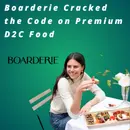
Most edible gifting businesses don't work at scale, the logistics are brutal, the margins get squeezed, and the moment quality slips, the whole experience breaks. Rachel Solomon Fascitelli built Boarderie anyway, and it worked. Rose Hamilton, CEO of Compass Rose Ventures and co-host of The Story of a Brand Show, sits down with Rachel to unpack how a finance background, a COVID pivot, and an obsession with operational precision turned a 2,000 square foot commissary kitchen into one of the most impressive D2C food businesses in America...

 Apple Podcasts
 Spotify
 Castro
 RSS Feed
 Most edible gifting businesses don't work at scale, the logistics are brutal, the margins get squeezed, and the moment quality slips, the whole experience breaks. Rachel Solomon Fascitelli built Boarderie anyway, and it worked.
Rose Hamilton, CEO of Compass Rose Ventures and co-host of The Story of a Brand Show, sits down with Rachel to unpack how a finance background, a COVID pivot, and an obsession with operational precision turned a 2,000 square foot commissary kitchen into one of the most impressive D2C food businesses in America.
* A category nobody else wanted — and exactly why she chose it. Rachel saw what others missed: a $100+ year-old edible gifting category that had never been innovated on, wide open for a founder willing to do the hard operational work to get there.
* Profitable from day one, on purpose. With a finance mind running the growth engine, Boarderie was never going to be a "grow now, profit later" story. Rachel treated the ad account like a trading account — efficient CAC, disciplined spend, and a relentless focus on the bottom line from the very beginning.
* Premium execution is an operations story, not a branding story. Shipping 35,000 handmade boards a day during peak season, with FedEx turning planes around in Memphis to keep up — the wow moment customers experience starts hours before the box ever opens.
* Bootstrap founders learn what funded founders often don't. When there's no safety net, you have no choice but to figure it out. Rachel's team did every job themselves — paid media, content, logistics, production — before hiring anyone to do it for them.
* Don't build for the coastal bubble. Build for the country. Rachel's sharpest advice for founders: stop chasing what's trendy in New York and LA, and start asking what the rest of America actually needs. That's where the real white space lives.
Join us in listening to this episode for one of the most practically useful founder conversations we've had in a while. Rachel doesn't just inspire — she gives you a framework.
From bootstrapping to Shark Tank to scaling dessert as a second category, this is a masterclass in what it really takes to build a profitable, operationally excellent consumer brand.
For more on Boarderie visit: https://boarderie.com/
If you enjoyed this episode, please leave The Story of a Brand Show a rating and review.
Plus, don’t forget to follow us on Apple and Spotify.
Your support helps us bring you more content like this!
Rose Hamilton (00:01.772)
Welcome to the story of a brand. I'm your host, Rose Hamilton, founder and CEO of Compass Rose Ventures, where I work with founder led consumer brands as they scale through pivotal moments in growth, from brand and go to market strategy to leadership, innovation, and investor readiness. And today's guest is Rachel Solomon, co-founder of Boarderie
Most edible gifting businesses do not work at scale. The product is fragile, the logistics are hard, margins can get squeezed fast, and the second quality slips, a whole experience breaks. But Borderee seems to have solved exactly that. What started during COVID as an unexpected collision between Rachel's finance background and Erin Medicoff's hospitality experience has become one of the most interesting businesses, in my opinion, in premium edible gifting.
built on operational precision, disciplined growth, and a very clear point of view about what actually makes a DTC food business work. Rachel has described a business built lean, profitable from the start.
accelerated by Shark Tank credibility, and now entering a whole new chapter with dessert expansion, larger facilities, leadership evolution, and decisions around all kinds of things, and especially around scale. So today, we're going to unpack how border rebuilt in a category most people assumed was too hard.
Why premium can actually be the strategy. What founders get wrong about brand building and what it takes to move from scrappy founder led growth into the next stage of growth. Rachel, I'm so happy you're here. Welcome to the story of a brand.
Rachel Solomon Fascitelli (01:39.228)
Thank you for having me Rose, I'm so happy to be here.
Rose Hamilton (01:42.498)
Well, take me back to the exact moment to stop feeling like an interesting idea and started feeling like a real company. I think that's a great place to start.
Rachel Solomon Fascitelli (01:51.74)
Yes, for sure. There are definitely a few pivotal moments in the brand where it started to feel like, wow, this is real. And I think every day is almost like a pinch me moment at this point, looking back where we started. And so we actually started in a 2000 square foot commissary kitchen during COVID. Really everybody was on top of each other, just starting out and trying to figure out how to ship this product.
And I think the real pivotal moment for us was when we launched our own website and we immediately saw just through early stage videos that we were taking of the product in our kitchen and launching on Facebook as ads through, you know, ads manager, which we didn't know how to work at the time, but we were learning and we saw it take off almost immediately. And we realized we really, really have something here. People want.
products with quality. They're tired of these boring antiquated gift baskets. And we knew we were onto something and it's dramatically from there.
Rose Hamilton (02:51.936)
And you know, when we look at background for you, I'm sure that this has really shaped your own leadership style as you've gone through the building, the growing, and tell us a little bit more about what it's been like for you personally.
Rachel Solomon Fascitelli (03:05.232)
Absolutely. I, I can give a little bit of the backstory here. So actually I met my partner, Aaron, during COVID and I was actually working in finance. I couldn't find where I fit in, in the finance world. It was something where I was learning a ton, but it wasn't like I had a really strong passion for it, for, banking or for lending or anything like that. And so I decided I wanted to do something innovative in the finance world. went back to Columbia to do a master's degree in blockchain.
technology because I thought that's where maybe the future of finance was going in a lot of ways.
So during that COVID hit and I went back down to Florida to be with my family. Everything went online and I met my partner Aaron and he had a gourmet special events and catering company that had done extraordinary events for 20 plus years. And he was trying to figure out how to ship his best selling catering product, which was these spectacular cheese and charcuterie boards. And so we met and it just kind of took off from there. I was a customer actually, and I had ordered a board. I loved it.
We had a mutual family friend who introduced us. And so we just kind of fell into this partnership where, you know, it was really unexpected and we started building this business together. And I had a real expertise on the e-comm that I didn't have an expertise in, should say. I kind of figured it out as we went and he had an expertise on the product side and the operation side.
And so we teamed up and we had two additional co-founders, Aaron and Julie, or sorry, Angel and Julie. And we all in a 2000 square foot facility started figuring out how to ship this product. first.
Rachel Solomon Fascitelli (04:49.438)
channel was Goldbelly and we became their best-selling vendor within about a few months after launching. Erin had got the product on Goldbelly during COVID and from there it just it took off.
Rose Hamilton (05:05.174)
And just double clicking a little bit on your background, you came from city and not hospitality. So what do you see in this particular business that maybe other people might have missed?
Rachel Solomon Fascitelli (05:10.596)
Yeah.
Rachel Solomon Fascitelli (05:16.892)
Yeah, definitely. think what I, my background gave me real insight into the business side of it. Understanding that we needed to build the business with strong margins that was profitable from the beginning. Understanding how to, you know, manage an ad account really efficiently because growth marketing is not.
marketing, right? It's not traditional marketing. It's really about efficient cax, efficient ad spend, managing, really managing an ad account, like a trading account. You you want to make sure that you're optimizing constantly, transitioning, testing. And I think that's something that a lot of founders in DTC in particular don't take seriously enough is really understanding where every single dollar that they're spending is going from the very beginning. Because if you don't understand the efficiency
of your advertising and how to maintain stable cacts over time and how to make sure that you have a really healthy advertising mix and long-term strategy for the growth of your brand. That's really what D2C is about. That's where a lot of businesses break and I think you started out by saying that a lot of margins have been compressed in the edible gifting space and I think
That's exactly what's happened. Our competitors have been around for over, some of them over a hundred years and they're selling really similar products to what they sold, you know, 50 years ago. And they now are facing a digital age where they have to be able to market and they have to be able to compete to keep their market share and their margins of business structure is not equipped for that environment. And I think that's where we're coming in with a higher quality product that's more consistent, that's more
are evolved for what people are looking for today. And then we also have the business structure behind it and the marketing engine and the brand engine to really support that.
Rose Hamilton (07:05.966)
So it sounds like you had a finance mind that saw what others might have missed. And that financial thinking serves you well when you look at the growth of the brand and how to do it profitably. And I think one of the things I find interesting here is you talk about the cost to acquire a customer, but I think you also have some interesting stats around retention. Because it sounds like you do a great job around retaining people and getting that repeat order. So how do you go about doing that?
Rachel Solomon Fascitelli (07:12.638)
stuff.
Rachel Solomon Fascitelli (07:18.675)
Definitely.
Rachel Solomon Fascitelli (07:34.918)
Absolutely. think for us, the customer experience is always number one and as it should be for any brand, right? I think.
There's nobody else that's really doing this at scale that's shipping a quality product. I mean, there's people that have tried to do it since we started and we've almost all of them have stopped because they cannot figure out how to compete with the quality, the consistency, the scale of our operation. And I think that's really what it comes down to is people can expect quality product that arrives on time. You can come to us at two o'clock in the afternoon and order a board and you can get it the next day. First thing in the morning.
We have an exceptional customer service team that's always on call, always answering the phone. And we've just built the brand around our customers, understanding what they want and consistently providing products for the occasions that they're most interested in. And I think that that really has created a lot of brand loyalty. And a lot of times people are receiving this as a gift. And so then they come back and they purchase. that's an awesome piece of it too, because we're creating this retention not only with the customers that are buying, but with the customers that are receiving it.
Rose Hamilton (08:42.262)
Yeah. And at the beginning, did Borderee feel more like a product idea, a brand idea, a business model idea? How did you think about it in the early days?
Rachel Solomon Fascitelli (08:51.514)
It's a great question. you know, a lot of people assume when they hear that, you must love cheese. And I'm like, I really do like cheese, right? I do, but.
I'm not passionate about cheese and charcuterie in the same way that, you know, my partner Aaron was when he started building these boards. He was coming from this culinary background. He's a chef. I was passionate about the business. I was passionate about the category. I was passionate about the fact that there was not anything like this and that it was almost this ignored category that hadn't been innovated on in, you know, a hundred years that I felt like there was all this space for us to really expand not only on
on cheese and charcuterie, but also on our products like dessert and what we've been doing there. So, sorry, I don't know if I'm actually answering the question. What was the question again?
Rose Hamilton (09:38.722)
The question was, at the beginning, did Borderee feel more like a product idea, brand idea, or business model?
Rachel Solomon Fascitelli (09:43.71)
So the the idea really came from necessity first, right? Aaron had this concept because his business was going to his catering business was going to go under during COVID and he needed a way to pivot and keep his business afloat when there were no in person events. And so for him, it came out of necessity. For me, it was really more
a category play. I think that was clear to me after, you know, year one of building this. We,
In the beginning, think our strategy, was, love the product. We love the concept of doing this. But then we started to look around at all the other competitors and realizing there weren't any. The category hadn't been innovated on. And I just saw this massive white space. And then it really became a business idea. It really became like a full category play of how do we build the biggest edible gifting company in America with products that people actually will love and that are impressive.
special sending.
Rose Hamilton (10:48.623)
So what made you actually take the leap after that year one? Because a lot of people will have ideas during chaotic moments. Certainly a lot of businesses were built during COVID, but very few decide to actually build around them. So what made you take the leap?
Rachel Solomon Fascitelli (11:04.539)
So for me, was, I was finishing my master's degree and once we started this and once I really started to see the potential, I actually never even thought about. I, being an entrepreneur and building something from the ground up.
felt so natural for me and I never the interesting thing was a lot of people told me like really you're going to sell cheese and charcuterie boards like they everybody thought it was a stupid idea like genuinely people were like this is okay like that's cute you know they thought I was making them in my kitchen but I really had blinders on like I genuinely had blinders on I never thought about a single thing anybody else said about it I I really saw the category play I saw like you know I live in New York the business is in Florida I'm back in Florida
Rose Hamilton (11:35.631)
You
Rachel Solomon Fascitelli (11:48.88)
I spend half the time here because our growth and advertising team is here and I spend half the time in Florida and I think that when you're in this bubble of like the the coastal elite kind of LA New York type
brands, they get really narrowly focused on what's trending and what's hot. And they actually don't look at the larger market and say, what does the rest of the country want? What do people actually need? You know, they start brands that are in incredibly saturated markets, where it's really challenging to break through and no one's looking at the things that might seem unsexy or might seem that are really tangential to that consumer behavior. I mean, everybody needs edible gifts. Everybody's hosting.
has no time. And I think that...
That was something that I saw that I think other people didn't see. And so really I didn't, I didn't, I never looked back. I thought, and we actually, the brand had the name cheese in it in the beginning in year one. And in the first six months I said, this category is going to be so much bigger than just cheese. We're taking cheese out of the name and we're naming it something that we can use for across categories. And that's where I feel really strongly about the fact that we did that. Cause now dessert I think is going to be as big of a market as cheese and charcuterie.
Rose Hamilton (13:06.531)
Was there any part of you at the time that thought this is a crazy pivot?
Rachel Solomon Fascitelli (13:12.402)
Definitely, I definitely thought it was a crazy pivot, I you know, I knew that Working in the corporate world and staying in finance if you can build an incredible career, but it wasn't for me You know, I didn't feel like I I need that Spark to try to figure things out and I think a lot of the corporate world is really structured now. You don't really have to
It takes two years to get a small idea done and for me and you know when you're building your own business it takes two days and that's something that You know from the second we started doing it it felt so incredibly natural to me and so incredibly right that I really Never even thought about going back
Rose Hamilton (13:54.701)
What did everyone tell you that would never work? I'm thinking like,
Rachel Solomon Fascitelli (13:58.458)
Every aspect of the business people were like it's crazy to ship cheese intricate. I mean when Aaron first Was pivoting from his catering company and like how do I keep this business afloat? I have this idea He I mean quite literally I think every single person told him this is not gonna work Like who's gonna order these cheese and charcuterie boards online, right? Like people didn't understand
how incredibly huge the market was just for cheese and charcuterie gift baskets. There are so many companies that just sell that publicly traded companies who have not figured out how to make their margins efficient, who have not figured out how to do it at scale in a way that is profitable for them. And I think that's where we focused so heavily on the operations, on the margins, and on making sure that we had a long term business structure that could thrive and that was scalable and sustainable.
And we spent the first year and a half almost solely focused on that before we launched fordory.com and we only sold through third parties. So Williams Sonoma, Harry and David, goldbelly.com. And I think while we quickly realized that, you you assume because it's WilliamsSonoma.com that they're going to sell. How could we ever sell more than WilliamsSonoma.com? And that's just a crazy misconception, right? If you're a founder, can
more than absolutely anybody else can because you believe in the product, you understand the product market fit, you understand who your customer is, who you're targeting and why. And I think that there's so much value in that, especially today with social media, with all the ways you can advertise on your own.
taking that back that year and a half where we weren't focused on growth. were focused on selling through third party channels, but it was a slower year and a half where our entire focus was on operations, perfecting the product, customizing ingredients so that they shipped perfectly, customizing things so that there was no food waste, customizing meats so that they arrived exactly how we wanted them. And almost half of the products in Border Ease Board now are customized just for us and you can't get them.
Rachel Solomon Fascitelli (16:08.382)
anywhere else and that was because we just we wanted a product that we knew could work at scale and these are inconsistent artisan products so we needed to work with producers to make them consistent for us so that we could have the margins that we were looking for.
Rose Hamilton (16:22.937)
So was Bordere really a food business at first or a logistics business disguised as one?
Rachel Solomon Fascitelli (16:29.118)
you
I think it was, it's, an operations business because a lot of, think if we, course we're a quality foods business and we operate with a team of sometimes up to 300 to 500 chefs that are making these boards fresh every day, but there's a consistency to it that makes it an operational feat. So it's the same products, the same consistency and quality every time. And people say, you know, I think a lot of people that have started businesses like this, they're like, well, people will want this to be custom.
people will want the boards to be able to choose their own cheeses. And I think that's where you lose the operational efficiency you need to make this type of business work, right? I think that's where you start custom, if you have 20,000 orders in a day and you start doing customizations, forget it, you're gonna lose every percentage point on your margins.
Rose Hamilton (17:22.519)
Yeah, I mean, it really sounds like a logistics business disguised as food because that heavy focus on operations in the early days seems like it was an important part of why you've been able to make this successful or perhaps some of your competitors would not have been able to do that.
Rachel Solomon Fascitelli (17:25.126)
Thank you.
Rachel Solomon Fascitelli (17:39.28)
Absolutely, yep. And I think it was every little detail of the operation. Our COO, Angel, who's also one of our co-founders, is an engineer. He's a sommelier. He sourced quality meats and cheeses for a three Michelin star restaurant in Italy for almost 10 years. And so he was this incredible combination of skill sets that were required to make the business successful from an operations standpoint.
Rose Hamilton (18:05.015)
So, yeah, that makes a lot of sense to me. And also when we were talking earlier, you mentioned that there may be thousands of cheeses, but the ones that actually survive transit still look beautiful, work in a repeatable system, are a much smaller, more narrow universe. How did you learn that in real time? Because that sounds like it's also very important part of the ingredients as well.
Rachel Solomon Fascitelli (18:27.55)
Absolutely, it was really an incredible amount of testing. So we did thousands and thousands of test shipments.
We probably tested hundreds and hundreds of cheeses and it's also, it's about things looking beautiful. It's about them being consistent and the food waste is a huge piece of it, right? So if you're ordering things, wheels in a specific size and then you actually need them in a smaller size to prevent food waste and to cut into the exact size that's gonna fit into the board, you have to work with those producers to customize things to make sure that it's, you you're gonna get that consistency every time because when you lose even 20 % in food waste,
all to the bottom line.
Rose Hamilton (19:07.597)
What was the single hardest problem you had to solve before Borderee could really scale?
Rachel Solomon Fascitelli (19:13.694)
The single hardest problem, think it was, I mean the advertising and the growth piece of it was definitely a really challenging piece of it, of course. we consist, sorry, one second. Nick, I'm doing a podcast, do you mind? My husband just came in. So jumping back in. So I think the hardest thing that we went through to get it to scale was really transitioning to being a D2C brand on our
So not using third parties sell our product because we went from being a lot of a lot of DTC brands are more of a marketing company than they are a producer. And I think that's where a lot of our competitors are right now. Right. They they don't have the margins to actually advertise, but they see themselves as advertising companies in a sense because they're not actually producing all of their own products. So we saw ourselves as a producer from the very beginning. Right. We developed the business as
producer and then we decided we're going to sell it ourselves. And so that was a difficult transition because we didn't have a growth team. We had no experience in growth or advertising and we started making ads on my
I
personally made every single piece of content. I cut every single ad. I tested through every single ad because nobody cared more than I did at the time about making sure that it performed and that we weren't wasting money on ad spend. I think optimizing that line item in the P &L, which is what a lot of DTC brands get wrong, making sure that we knew exactly how to scale efficiently from a CAC perspective was the unlock because it meant that we
Rachel Solomon Fascitelli (21:25.316)
fundamentally knew how to control the volume.
Rose Hamilton (21:30.777)
So then once you got demand going, what was the bottleneck or the hardest problem you had to solve before the rest of the business could really exist?
Rachel Solomon Fascitelli (21:41.698)
Once we sold or once we figured out the D to C piece of it, you mean what was the most challenging part after that? I'd say it was keeping the production capacity in step with the amount that we were able to sell. the, obviously the...
you know, when you're spending on paid advertising, that can scale really, really quickly. And so the operation didn't scale as quickly. So we would sell out consistently and we still do for certain things. We've sold out of dessert every month since we launched it. It's almost like we're starting over again with that product line. But the, there were for about two years and still actually last year we would sell, we sell out of cheese and charcuterie during the holidays. I mean, we sell out, we have eight major peaks. Yes, very soon we have eight major peaks. there's summer is really.
Rose Hamilton (22:23.221)
seasonal.
Rachel Solomon Fascitelli (22:27.93)
birthday heavy. have our evergreen products that sell really well year-round, but on those eight major peaks we're like,
40,000 people wanna board the day before Mother's Day, we do sell out on those peaks. And I think we're still trying to work through that operations, because it's a math problem, right? It's the overhead to sustain the nine days of the year where we really need those additional production capacity. Is it worth it for the additional sales we can do? And a lot of times it is, just like those massive days where you're shipping $7 million in product in a day, it is supported by, we do have overhead that we support
just for about, I'd say maybe it's like 14, 15 days of the year.
Rose Hamilton (23:10.703)
So what does premium execution actually look like and what is required that happens behind the scenes that consumers actually never see?
Rachel Solomon Fascitelli (23:21.092)
It's a lot about quality control. So as you can imagine, right, there are, when there's 500 people and then operation where.
You have about 125 full-time people. But then when you bring on a lot of temporary culinary staff members to help support an operation where we're scaling from shipping, you know, 50,000 boards in a month to shipping 450,000 boards in a month, which happens during Q4. That shift is really dramatic and it requires simplifying the production process.
us into very, very clear and manageable steps. So for someone coming in a month before that and they're training theoretically, it needs to be simplified for them in a way where they have.
one job and they actually prefer it this way, And that they become perfect and perfectly precise at that one job. And that ensures that the consistency across the board is there, the quality is there, and that level of precision and control over the production process is I think where we've really succeeded. Because if you have people running around in all different directions, you don't get an efficient production line.
Rose Hamilton (24:37.849)
So what has to be true operationally then for the customer to have that wow moment the second the box opens?
Rachel Solomon Fascitelli (24:44.764)
So operationally, it's the precision, it's the precision at speed and at scale. again, like simplifying someone's job to, you know, they're responsible for this specific cheese and making sure that this gets into this part of the board. And then it's really an operation on the shipping side, right? We did a TV commercial with FedEx last year because it, or an episode, I think it was an episode on the Today Show and we also did a...
separate commercial with them where the, it just went through the insane logistics behind what happens when you ship a Borgary. And for the holidays, FedEx is turning planes back around from Memphis, back and forth to pick up.
border products and bring them to their hub in Memphis where they then are distributed across the country. when you want and during the holidays, you can order actually until 4pm and get it the next day. And so in a lot of times it's delivered by 10am. So if you really think about that, if you are placing an order at 4pm and then our team is receiving that order, it's going into the queue in real time on screens in our production kitchen. Someone it's going onto a production line. It's being handmade. The cheese are being hand sliced. The meats are being hand cut.
and then it's moving from there into a packaging line where it's wrapped, it's put in a cold box, and it goes immediately onto a shipping truck to the airport. I mean, that's an incredible operation when you're doing it for 35,000 boards a day.
Rose Hamilton (26:14.039)
That's what premium execution actually requires. And I would imagine most people have no idea about what goes on behind those scenes.
Rachel Solomon Fascitelli (26:21.822)
I'd say that's the hardest part of the business. If you really had to pinpoint it, it's those days where we're doing that type of volume and doing that even two weeks, the two weeks of Christmas where we're doing that every single day is really an incredible feat.
Rose Hamilton (26:39.759)
You know, you've talked a lot about being scrappy in the early days. What's the detail that would best capture how founder led and scrappy this really was?
Rachel Solomon Fascitelli (26:51.39)
I think it's that we had until, you know, we scaled to really an incredible number of shipments per year with a leadership team of about five people and almost nobody supporting us. So our growth team was two to three people for until late 2025. And then our logistics and operations team is still around like, you know,
seven people. It's really an incredibly small team and for years it was only three people. And so it, we did everything ourselves and I think it really benefited us from a, just from a, I think a lot of founders hire a lot of people too early and there's, while you're spread really thin in the beginning, the importance of understanding every single aspect of your business and being able to say, did that. You know, when you hire someone and you can say, I did that for years and I
I know what you're doing and I understand how it works. It's a totally different ball game than when you hire somebody to do something you've never done. And I think that that is where we have this incredible advantage now because we scaled the business to, know, most people would have a 40 person growth team at this point. We scaled the business to that level and we did every single aspect of it. We did retention, we did email, we did paid media across all these different channels. We produced the content, we've done all the photo shoots.
You we never hired a CMO to come in and do that. I actually built that side of the business with my chief growth officer who I hired at a really low level. I mean, she was, I think, a director when I hired her and she quickly, I we built this entire growth engine together side by side, basically on a couch, sitting next to each other for three or four years. And now she's our chief growth officer. we, every time we hire someone, we're like, we've done that, right? We know exactly what they're doing. And I think that there's just a
real benefit to that, to understanding where every dollar is being spent, knowing how every aspect of the business works. And I think that's how our operations and logistics teams feels as well. So our COO has been in the kitchen, he's cut all the cheeses, he's been making the boards hands on. And in the beginning, I was making the board. We were, year one, we were all making the boards during Q4, because we didn't have enough staff. And then we were all packaging the boards. We have all worked in every single aspect of this business.
Rose Hamilton (29:16.559)
So give me the blunt version. What would you say bootstrap founders learn that heavily funded founders often don't? I bet there's a lesson to be learned in there.
Rachel Solomon Fascitelli (29:26.47)
I think the lesson is like you have no choice but to figure it out. When there's an unlimited amount of funding or you have, you know, spare money to spend.
you don't have to figure out how to make it efficient. There's not that like financial pressure to do so. And I think for us, we were so focused on the bottom line always. And in my mind, there was no point in doing this if we weren't gonna make money. I think a lot of people think long-term, we'll build a business and then we'll make money. The business is making money. If you're not making money from the beginning, you're running a hobby. And I was not gonna run a hobby. And I also think that I had like a little bit of a chip on my shoulder. Like people think this is cute.
I'm gonna prove to them, this is not cute. Like this is a real business where we're actually going to make a really strong, profitable business out of this in a market where people aren't paying attention. And that's exactly what we did. I think from day one, it was how do we make this business as profitable as possible? And that came down to an amazing customer experience.
Rose Hamilton (30:28.217)
You you've said there's no book that teaches you how to build a business. You just have to do it. What did you learn by doing that planning never could have taught you? I think that's a very interesting angle.
Rachel Solomon Fascitelli (30:40.786)
Yeah, absolutely. think what you learn by doing is so many people will try to give you advice. So many people will wanna give you advice on how to run a business. And I think 80 % of it is total bullshit. Your business is unique to your situation, right? There's no one way to make money. There's no one way to run a business. There's no one way to run an ad account. There's no one way to build strategy. And I think that if you...
have too much outsider information, you ask too many questions, and you listen to too many things, and you read too many things, you're like, I'm doing this wrong. I genuinely never thought to myself, what is someone else doing? Never look around. I think that's part of it too. Of course, if you have competitors that you didn't compare yourself to when you're competing against, of course, there are areas where you should definitely look around. But I think...
Rose Hamilton (31:15.082)
voices.
Rachel Solomon Fascitelli (31:33.754)
your judgment and your instinct and like with if you have the mentality from day one we're focused on the bottom line this is a business this is not a purpose driven business it's not a charity this is a business that's built for EBITDA and if we're not producing revenue then we're doing something wrong and we gotta cut it and i think or if we're not producing EBITDA then we're doing something wrong and we've got to cut it and so i think if you go into it that mentality and you just make
really sound logical decisions from the beginning and you don't let yourself get caught up in well making excuses. Like I think excuses are something that you don't have the privilege to make when you don't have
excess investor capital. So you can't say to yourself, well, know, CAC is too high right now, but we're acquiring these customers and the LTV is going to be good long-term. I think it's no, we need to be first order profitable and whatever that takes is what we're going to do. And we have to need to test, you know, 10,000 angles of ads to make that work. Then we're going to do that. There's no, there's no excuses, you know.
Rose Hamilton (32:30.329)
So thinking back to the early days and knowing Shark Tank played a role, was Shark Tank the reason the business worked or did it simply amplify something that was already moving and working well?
Rachel Solomon Fascitelli (32:43.336)
You know what I think it did? I think it gave incredible credibility to what we were doing. And I think that was really, really important. So I think...
COVID propelled people to feel more comfortable shipping food online. It was something where I think before that, it would have been like, is this going to arrive like a salad? Is it safe to eat this? I think COVID gave people a lot of comfort in that. then Shark Tank gave the businesses incredible credibility of this is a really quality product that's shipped really fresh and having that endorsement and that partnership from them and being able to use that in our own advertising and in our own marketing was really valuable.
But I think to anybody that believes that Shark Tank, no one's gonna make your business. There's no person or celebrity or PR moment that will ever make your business. It is getting out there every single day for years and years and continuously going after it because there can be a blip on the radar, but it's not gonna change anything long term.
Rose Hamilton (33:45.711)
So let's just take a quick pause. If you're enjoying this conversation, share this episode with a founder, an operator, or an investor who's building in a very hard category. The goal of the story of a brand is not just to tell good stories. It's to surface useful thinking that you can actually apply. So if something in this episode is already resonating with you, send it to someone who should really hear it too. Now back to Rachel. So you've been very clear that most DTC food businesses don't work.
because the economics are structurally wrong. What belief about DTC food do you think is flat out wrong?
Rachel Solomon Fascitelli (34:26.354)
belief about DTC food that is thought out wrong, think that a lot of times, well, I guess from an investor or from a brand perspective or from a consumer perspective.
Rose Hamilton (34:39.363)
I'd say from an investor perspective.
Rachel Solomon Fascitelli (34:42.406)
I think something that's flat out wrong that everybody believes is that you're gonna be able to scale it with quality and consistency. think that's something where a lot of people start out early on it. It depends on the food, right? We're in a really unique category. But I think people don't focus enough on the operation of what it requires to scale something with quality and consistency. A lot of people can produce a product and
make it great on a limited run. But when you actually have to do it at scale, that's when it gets challenging and that's when people start to, I think, see the cracks.
Rose Hamilton (35:22.945)
If someone tried to build Borderee at a lower price point, would the business break? And if so, what would break first?
Rachel Solomon Fascitelli (35:31.462)
I think if somebody had an incredible ability to acquire customers without spending any advertising dollars and they had some incredible organic reach, they could obviously have strong margins because they're not spending on growth. But I think that...
There are so many costs associated with producing it fresh every day. The shipping is the biggest one of them. If you don't have a really incredible partnership with...
FedEx or UPS or now Amazon, I guess, is doing their own thing. You cannot build this business. And that is something that we knew from the very beginning. And we focus heavily on building that partnership because it's an incredibly important piece of it. And I think that customers don't always recognize how expensive overnight shipping is. We've offered it free to our customers for years and we've baked it into our price point. So a lot of our competitors, you'll notice on a fresh product that they ship, they will
offer it for a much lower price and then charge you $30 to $40 for shipping. And that's not something that I ever wanted to do. So I think...
That's the big component of it, the freshness, the quality, the consistency. And then if you really think about how many ingredients are in this board and considering the artisan nature of so many of them and the product quality behind that, if you tried to go produce our largest board yourself, we've done it before, it costs like $400 at the grocery store to buy even something comparable. And then that's before you even have the knife in hand to cut it yourself and put it together, which takes hours. So we always have felt really justified
Rachel Solomon Fascitelli (37:18.438)
in our price point, we actually feel like customers are getting a strong value because they, to do it yourself would take two hours of shopping, two hours of work, and then you would have to get 38 different ingredients is not even available in most parts of the country. So I think back to the point of could,
someone do it for less, yes, but I do think the model would break. I think it would definitely break and they just wouldn't be able to scale. They wouldn't have the margin to have the facilities or the teams that are needed to scale.
Rose Hamilton (37:53.017)
Well, given the importance of the margins and the scale and the premium customer experience, it really seems like in this category luxury has to come before scale.
Rachel Solomon Fascitelli (38:02.846)
Definitely. People want a quality product and nothing, you can't compromise anything for that.
Rose Hamilton (38:09.921)
When customers say this seems expensive, what do they not see? Is it all that goes into it from behind the scenes?
Rachel Solomon Fascitelli (38:16.604)
Definitely. I think it's they really don't see the shipping costs. I think that's one of the biggest things they don't see the price to ship it they don't see The fact that you know, you're ordering at 2 p.m. And it's getting to you the next day think about the logistics that go into that and I think you know a lot of people understand that but
With 38 different ingredients, there are thousands of individual little things that have to go into that, right? The cheeses have to be cut. They all have to be placed in this board. Every board has to be wrapped. There's ice packs, there's insulated liners, there's packaging. It's not just the food itself. So anybody that says, you know, I could go to the grocery store and buy this food myself.
you probably end up spending more money on the food in and of itself, but all the other aspects that go into that quality and convenience are, you know, they're not taking that into account. But I think most of our customers really understand the value.
Rose Hamilton (39:12.001)
You seem to have a really good strong handle on exactly how to think about innovation too. And I'm thinking back to our earlier conversations. Why was dessert the right next move for you as you looked at expansion and thinking everything that you've learned from the first part of the business.
Rachel Solomon Fascitelli (39:30.014)
Yeah, think for us dessert was the next right category because it is the second I mean it arguably isn't even bigger market than cheese and charcuterie. Cheese and charcuterie happened, you know, we weren't
necessarily looking around, it was a trendy thing, but it was really because of Aaron's catering business. then dessert was the next logical thing. We never even did market research on it. It was so obvious to us just from understanding our competitors, understanding the edible gifting space, understanding hosting, that dessert could be an even bigger market than cheese and charcuterie, but we wanted to make it something really special. It wasn't like we're just going to sell cookies or cupcakes or brownies. We wanted it to be an experience that no one had ever had before.
And so the largest one, we actually went a little overboard.
We, took us two years to develop because we were doing it in our free time at night. And we have 47 different ingredients. I think 80 % of the board has to be, had to be custom developed. And we thought, oh, we're going to just work with these great producers. We're going to come up with recipes. We had to custom develop almost all the recipes for all the brownies, a lot of the chocolates. And it just became this massive effort to make it perfect, to make it fit together right. And it ended in 47 different ingredients.
on the large, is, it's, I'm gonna send you one, but it's as big as, it's like the entire top half of my body could take up the large. So the large is obviously not the one that everyone orders. It's the most impressive, it's the most spectacular. If you're having a party, there's genuinely nothing better, but the small and the medium do really well for gifting.
Rose Hamilton (41:09.731)
That's amazing. And so now that you've expanded into the dessert space, is Borderee ultimately a Chituteree brand, a gifting brand, a platform from premium edibles and gifting? How do you describe it? Write it in the comments for Headline.
Rachel Solomon Fascitelli (41:23.226)
I'd say a platform for premium edibles and gifting is a really good way to describe it. we, we always have seen ourselves as a premium edible gifting and hosting brand. And I think that's where,
I'm feeling really grateful that we made the decision to make it bordery and not have cheese in the name because we have so many more categories to expand to. for the first three years since launching the website, we were so narrowly focused on how do we just keep up with the production? We were growing 100 % year over year. How do we keep up with the production scale of cheese and charcuterie? And now I think we're in a place where we've got the operations really down and we feel confident that we can launch new categories faster. We see the vision for the
long term and our customers reception to dessert has been so incredible. We could never have expected how well it would do so quickly and so that's giving us a lot of momentum and energy to keep developing new stuff. we're working on candy and cookies and amazing products for dogs which is really fun and exciting so a lot to come in the near future.
Rose Hamilton (42:27.065)
So in light of that, how much of edible gifting do you think is actually up for grabs now? How big is the real opportunity here?
Rachel Solomon Fascitelli (42:34.962)
I mean, it's a incredibly massive market. One thing we have not focused on is corporate gifting. So we're definitely going to go after that. And I think...
No one's competing in the space in the way that we are. No one is. There's our competitors don't even have the capacity to produce in the way that we do. And I think that's where we really win is on the operations and logistics side. There's nothing more challenging than what we've already done. cheese and charcuterie is the most challenging product to do at scale. And especially because it has to be really, really fresh. So even looking at dessert, right. It's, it's got more stability and it's got something.
where it doesn't need to be produced the second that it's ordered. It can be produced in the morning. can be produced. So even though we're still producing it fresh, there's nothing more challenging than cheese and charcuterie. And I think that's where we see the sky as the limit for all these more complicated products that our competitors just can't keep up with.
Rose Hamilton (43:32.087)
Yeah, that makes a ton of sense. There's a lot of opportunity. And when you think about brand awareness, given that there's so much opportunity, what do marketers call brand building that you think is mostly theater? Like how do you think about the separation between performance marketing growth versus brand building?
Rachel Solomon Fascitelli (43:53.072)
I think.
Now is really the time for us to focus on brand building. We, a lot of brands start out and they focus on brand because they're in a really, really competitive space for us. Our product was our brand. was such a unique visual. It's such a unique product in and of itself. And it was one of its kind. Nobody else is doing it. So we really were able to brand for so long, on the uniqueness and quality of the product. And now I think we are, as we pivot into new product categories, we
to be seen as the go-to gift, gifting and hosting brand. And so that's really where we're leaning. And I think now is the right time to lean more heavily into brand building as opposed to just putting our product out there.
Rose Hamilton (44:41.603)
Well, and when paid is still working, how do you know it's actually time to invest beyond it?
Rachel Solomon Fascitelli (44:47.292)
I think it's just a long-term strategic play. We've been able to keep consistent CACs year over year for four years now. And I think that's something that I've really taken pride in in the business. And I think it's really, really important. But I think it's just a strategic play knowing that we're, this three months ago, we launched our second product category. We've seen so much success in it. I think we just, we know that to get to that next phase of growth takes a lot more effort on the brand building side.
Rose Hamilton (45:15.681)
It does. And how do you think about channel diversification without abandoning what works and what channels are interesting to you now?
Rachel Solomon Fascitelli (45:23.464)
We've had a lot of conversations about that. So we've tested into a lot of different things because we've never wanted to be single channel reliant. But Meta is always the workhorse. I think a lot of brands feel that way. If you can maintain consistent tax on Meta at scale and it's working incredibly well for new products as well, I don't see any reason to abandon it. I think that you just want to protect the downside and you want to have tested into other channels. We're scaling a ton on Google. We're doing stuff on Applovin.
Testing into tik-tok our market is not as much tik-tok as it is
Meta, but I think that there are still massive pods of our customer based on TikTok. just requires targeting a little bit of a different audience, which has really worked well for us, especially during specific occasions. then CTV, we've done linear TV, which works really well for us in Q4. So just making sure that we're diversified. We're what we're doing right now is actually transitioning a lot of spend from Meta to Google because we're seeing really strong efficiency there, especially for our evergreen business, which is.
like non-holiday specific, so birthdays, anniversaries, hosting, all those types of things. so, yeah, I think we've definitely been focused on channel diversity, but still leaning in where it works, because that's what's, I think that's the smart thing to do for the business, is to lean in where it works, but be protected on the downside, so you make sure you're not just spending on one channel.
Rose Hamilton (46:49.615)
And for founders who are listening, how should they balance immediate ROI channels with that longer term brand investment? I mean, you've been at it for many years now and you've seen what works and what doesn't. So what would be your words of wisdom to founders who are thinking about immediate ROI versus brand building? How do you think about that?
Rachel Solomon Fascitelli (46:58.695)
Is it?
Rachel Solomon Fascitelli (47:08.496)
I think it's a great question. the beginning, we were really focused on immediate ROI.
But I think as you grow, you have to really understand the data of who your customer is. Because if you start focusing on brand building too early and spending on brand building before you actually know who that brand building should target and where those dollars are going to be efficiently spent. I think you're kind of lighting money on fire sometimes to be honest, you're spending on these brand campaigns and you have no idea what the impact is or the ROI when really you need to build revenue. You need to build a business. mean, at the end of the day,
sales cures all. So if you don't have the sales and you haven't officially spent that money on an ROI producing, you know, in a really efficient way, then you're not setting yourself up for success long-term. But once you have the data on who those customers are,
you have the opportunity to look back and say, this is our demo. This is our persona. These are the strategic, more brand related plays that we're gonna make and that we're gonna spend on to actually speak to that demo, build community, or potentially expand to a new demo if you feel that that requires more brand reach in other areas, but at least you have the data and the insight.
to really efficiently control that brand spend. Because I think you can get really out of control for lot of brands with no real direction on what the ROI is.
Rose Hamilton (48:34.337)
Yeah, that makes a ton of sense. And then you also have to think about when you're considering overall contribution margin hiring. So we're on through scrappy to now scaling. So at this stage, what makes a dangerous senior hire versus one that would be a successful one as you think about where you are at scale?
Rachel Solomon Fascitelli (48:42.788)
Mm-hmm.
Absolutely.
Rachel Solomon Fascitelli (48:54.546)
Definitely. think that's a question I still have to figure out the answer to. We haven't hired a really high level person on the brand side yet. It's something that we're considering and I think we're in a place to do. But I think what would make a really unsuccessful hire for us would be somebody that would come in and say, I need a team of five other people to make this happen. I think that the person that will be a success here is the person that's going to figure it out. They're going to be scrappy. And then once they've proven the impact they can have, even at a smaller scale, they can justify
bringing on a larger team in order to accomplish their goals. But I think when you throw a ton of money at something that isn't really a problem, but is almost like a, you know, it's, if you throw a ton of money at brand with, with really no clear direction in what's going to work. Again, you're blowing up the, you're blowing up the bottom line.
Rose Hamilton (49:47.959)
Yeah, and personally what has changed most in you as a founder between the scrappy early years and now?
Rachel Solomon Fascitelli (49:54.942)
That's a great question. For me, it was really hard to let go. I definitely waited too long to let go of certain things. And I definitely don't regret it because I don't think there are any mistakes. I think they're just lessons that you learn. And every moment that I spent doing something that maybe I could have hired somebody else to do, I definitely learned something about the business or had the insight to help guide people that we hired later on. But I think that for me, it's been hard to take a step up and say, like, I'm not going to be involved in every single
element of growth. I'm not going to be in the, you know, in every account all the time monitoring, you know, every aspect of our attribution and triple whale or, know, and I have an incredible chief growth officer who's doing all of that, but I've been, I cut every single ad until December of 2025. And I brought someone on who's been fabulous in Q4 of 2025 to support me, but I still think I had a hard time letting go. And now I really have let go of producing the paid content. And that has been
a huge transition for me, but I think it's really necessary. I mean, I have to focus on product development and there I can admit when there's people who are better than me at things that I always say my goal is to hire people now who are better than I am, who have been doing this for 15 years, who know can learn from everything that I've built over the past four years and who can focus solely on it and do it better than I can because when you're spread too thin, you can't do everything. You can't do everything to the degree that you want to.
Rose Hamilton (51:23.939)
Well, as we come to our final moments together, if a listener takes one lesson from your story, what do you hope it would be?
Rachel Solomon Fascitelli (51:25.054)
Thank you.
Rachel Solomon Fascitelli (51:33.82)
I think it would be...
Don't try to be like the cool trendy brand unless it works for you, unless that's what it's required to make your business successful. Focus on profit, focus on building a stable business that's gonna make sense long-term because I see way too many founders in this space caring way too much about being kind of the it thing and it's almost like an ego play. And a business shouldn't be an ego play. It should really be about the fundamentals of building a really solid profitable business.
And I think that's where I've seen a lot of people fail is they want it to be trendy for the people that for themselves, for the people that they see in their coastal elite bubble. But I think it's important to focus on how to build a business that's scalable for the entire country.
Rose Hamilton (52:26.051)
That's amazing. know, Rachel, this was such a strong conversation. And what I love about your story is that it gives founders something much more useful than just inspiration. It gives them a framework.
So let me close by pulling out a few very clear, practical takeaways from what you shared today. I think first and foremost, hard categories create real opportunity, and don't be afraid. Bordery did not win by choosing the easy category. It won by solving a category most people thought was too operationally hard to scale.
And second, premium is not always a branding decision. Sometimes it's an economic necessity, as we heard today. And one of the sharpest ideas in this episode is that in DTC food, luxury often has to come before scale. Because if the economics do not work and you don't make money, the business never earns the right to grow.
I'd say third, founder instinct can build the engine, but scale eventually demands translation. At some point, judgment, taste, and intensity have to become systems, leadership, and repeatable decision making. That transition is where many brands either evolve or they stall. And fourth, do not confuse brand building with brand theater.
If the work does not connect back to how your customer buys, it may be more performance art than real strategy. And finally, proving one product works is good, but proving the system can extend, as we've seen with Dessert, is even better. And Dessert matters because it shifts the story from a single product success to a platform potential. And maybe the biggest takeaway, my favorite, of all of it is the best brands are not just well marketed. They are well...
Rose Hamilton (54:08.919)
Constructed it's about the people the process and the systems Rachel. Thank you for being here with us and thank you for sharing not just the story of bordery But the thinking behind it because I think that's what matters Really appreciate you being here. Yes
Rachel Solomon Fascitelli (54:22.664)
Thank you so much for having me. It's been great.
