
Apothékary - She Left Wall Street to Redefine Wellness
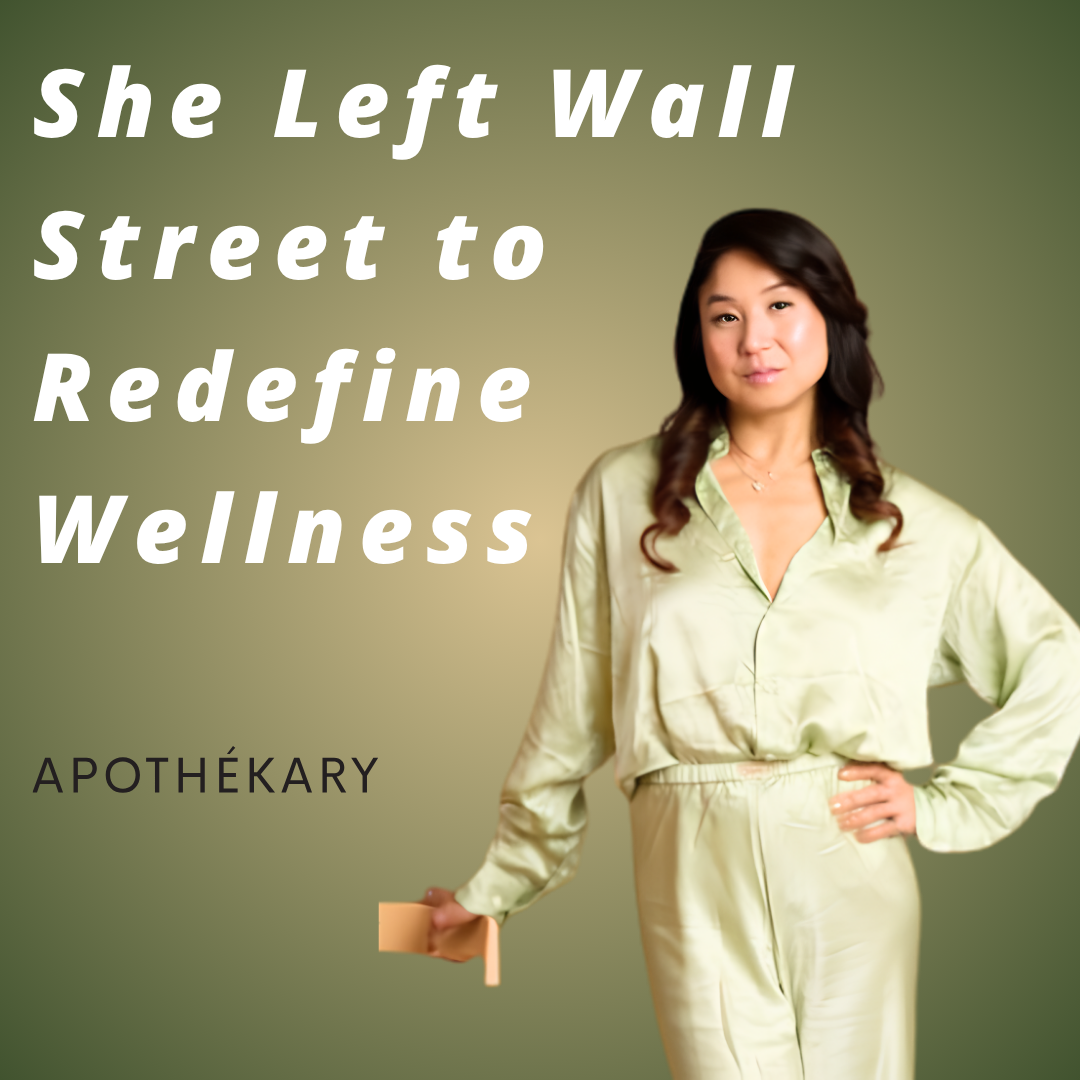
She left Goldman Sachs, moved to Mozambique for a year, and came back to build one of the most distinct wellness brands in America. Rose Hamilton, CEO of Compass Rose Ventures and co-host of The Story of a Brand Show, sits down with Shizu Okusa, Founder & CEO of Apothékary, for a masterclass in what it really means to build a brand system not just a product line. ...

 Apple Podcasts
 Spotify
 Castro
 RSS Feed
 She left Goldman Sachs, moved to Mozambique for a year, and came back to build one of the most distinct wellness brands in America.
Rose Hamilton, CEO of Compass Rose Ventures and co-host of The Story of a Brand Show, sits down with Shizu Okusa, Founder & CEO of Apothékary, for a masterclass in what it really means to build a brand system not just a product line. From a New York City billboard to a Series A close, Apothékary is proof that deep roots and radical clarity can outpace any amount of paid media spend.
* Three iterations before liftoff. Apothékary started as a pop-up store rooted in Ayurveda, evolved into powders, and eventually landed on liquid supplements, a format Shizu now considers a near-monopoly position. The lesson: your first product is almost never your final one.
* Heritage as an operating system, not a mood board. Shizu's Japanese roots show up in how the company hires, iterates, and moves; guided by the principle of Kaizen, continuous improvement. It's not packaging. It's how the business runs.
* TikTok crossed a million dollars a month and here's why. Apothékary's TikTok success isn't about chasing the algorithm. It's built on 20,000+ affiliates creating education-first content around a visually distinctive blue liquid dropper that stops the scroll and earns the click.
* Retail forced brutal clarity. Entering Whole Foods, Sprouts, and The Vitamin Shoppe forced Apothékary to put ingredient benefits bigger than the brand name on packaging. The consumer doesn't have time for your founder story in the aisle and that discipline makes the brand stronger everywhere.
* Distribution is the moat. In a category where products get copied, Shizu's sharpest insight is that the real defensibility is distribution, the ability to play in grocery, health care, and beauty simultaneously, backed by proprietary formulas and Shiseido as a strategic investor.
Join us in listening to this episode for one of the most intellectually rigorous and practically useful brand conversations we've had on the show. Rose and Shizu cover signal, thesis, behavior, and proof, the four pillars of a brand that becomes easier to understand and harder to copy over time.
Whether you're a founder, an operator, or an investor, this one will sharpen how you think.
For more on Apothékary visit: https://www.apothekary.com/
If you enjoyed this episode, please leave The Story of a Brand Show a rating and review.
Plus, don’t forget to follow us on Apple and Spotify.
Your support helps us bring you more content like this!
Rose Hamilton (00:00)
Most people do not wake up wanting another wellness product. They wake up tired, overstimulated, bloated, anxious, under-slept, over-caffeinated, trying to get through the day and still feel like themselves. And that is where so many wellness brands, I think, miss the mark. They sell the ingredient, they sell the claim, they sell the promise. Better sleep, more energy, less stress, balanced hormones, a longer life. But the consumer is not really buying
a tincture, a powder, a pill, or a gummy. She's trying to build a day that actually feels better. That is why this conversation matters, because the best brands do not just sell products. They actually help people create a repeatable behavior. A product gets tired, a system gets repeated. Today's guest on the Story of a Brand show is Shizu Okusa, founder and CEO of Apothecary. Welcome to the Story of a Brand.
Today is going to be a great, great listen. And be sure to, as you listen to it, think about your own story and your own brand you're working on and how we might apply some of what we talked through today. So for anyone who's wanting to understand what the topic of the brand is, it's Apothecary. Apothecary is a liquid supplement platform that bridges Eastern medicine and Western science and modern consumer needs. But this is not just another founder story about leaving Wall Street after burnout.
It is a Japanese heritage, but not as a mood board. It's about liquid supplements, not just as a format. It's about ritual, education, trust, retail clarity, TikTok, clinical credibility, AI tongue reading. Yes, you heard me right. You've got to stay tuned in to listen to that part. And the future of wellness. And most importantly, it's about the difference between launching a product and building a system because the customer does not live in skews. She lives in days.
She has a morning, a midday slump, a workout window. She has a commute. She has a stressful meeting. She has a wind down routine. She has a nightstand, a vanity, a kitchen counter, a purse, a life that does not organize itself around your product roadmap. And the brands that understand that are the brands that become part of the behavior. So today I want you to listen to this episode as a masterclass. I'm going to use Apothecary as a live study today. And I want everyone listening to audit your own brand as we go.
I'm going to look at four things. Signal, thesis, behavior, and proof. Signal is what the founder sees before the market has language for it. Thesis is what the brand believes that gives it permission to exist. And behavior is the repeat action the brand is trying to own and proof.
is what makes the customer, the buyer, and the investor believe. If those four pieces are disconnected, the brand gets expensive before it gets clear. If they're connected, the brand becomes easier to understand, to repeat, and actually harder to copy. That is the masterclass. Shizu, welcome to the story of a brand. I am so excited that you're here.
Shizu Okusa (03:06)
Thank you, Rose. Oh my gosh. I hope I'm going to learn. I mean, I will learn so much from you. So thank you so much for having me. I'm so excited.
Rose Hamilton (03:14)
Well, I have admired your brand and I am so excited for you that you're actually in New York City on a billboard. That's a pretty huge milestone. And it gets to be the day after I saw some news on that. yeah.
Shizu Okusa (03:27)
Yeah, yeah, it's
a really exciting momentous thing for us. And most people, know, when people see it, of course, it's like, it's a huge moment. But it's also, you know, it was 14 years to kind of get to that moment. And I'm sure we'll kind of get to that. But yeah, was was a true celebration within our team for sure.
Rose Hamilton (03:45)
So exciting. And so for everyone listening, we all know Shisue is the CEO of Apothecary. But before starting the company, she worked on Wall Street. And that included Goldman Sachs before even leaving, even thinking about the path to building a wellness company. And now she's got one that's rooted in Eastern medicine, Japanese heritage, liquid supplements, modern science, and daily ritual. That's a lot. But what makes this conversation especially relevant for the story of a brand audience
is that it's not just a personal pivot. We do a lot of stories on personal pivots. It is what Shisoo has built since that I've got the chance to learn about. Apothecary is now playing across direct to consumer, TikTok, Whole Foods, Sprouts, The Vitamin Shop, and Alta. A dream for most founders in this space. In our pre-interview, she shared with me that TikTok had crossed a million dollars a month and could become a very meaningful growth engine for the business. She also talked about a very intentional positioning evolution.
As Apothecary entered thousands of retail doors, the company began leading more clearly with liquid form factor and ingredients benefits first, then layered on Japanese heritage and the deeper brand story second. This is not just messaging. This is sequencing. It's a business strategy. It's a sequencing strategy. So Shih Tzu, I want to begin with where most people may think they already know your story. I want to go deeper. Tell me more.
Help me understand what do people not know in your story that's from Wall Street burnout to wellness brand.
Shizu Okusa (05:18)
Yeah, you know, and it's funny, like 14 years later, we say Wall Street to Wall Street. At the time, of course, it was just all fear and I was petrified. know, of course it was like, not, people talk about leaving corporate to start your own company, but I often think if you're not willing to take that big enough risk from the very beginning, you're most likely not gonna be able to like operate the company. So in every time that I said that I wanted to start,
because Apothecary is my second business. My first company was a cold press juice companies, but it's always been in health and wellness. And the more that I had talked about wanting to start my own business, I think everybody, including my family was like, don't do it, don't do it. You have a stable job. You could go to business school and then go to private equity and kind of check, check, check. But I think most founders know that that check, check, check and that linear path is not for them.
You know, and more than ever, I think career paths have gone out the window. I think more than ever, there's such an opportunity to start your own thing, but it's also pretty crippling to kind of, you know, make that step. And at least for me, that was also the case, but I always believed in like just taking that one next step. Don't think a hundred steps forward, just take that one next step. And for me, that was just to leave Wall Street.
Leaving was the hardest thing because now that you have time and opportunity and energy, you can really get closer to what I call in Japanese is Ikigai, which is a Japanese term that's like life purpose. It's essentially like where your work intersects with purpose and then supports community and also makes you money. So it kind of checks like this three kind of circle Venn diagram. And for me, that was to bridge my heritage of Japanese and how I was grown up in a very immigrant family.
and then connecting that with a very confusing, know, rate like culture that I wrote, was raised in, which was a very non-Japanese culture in Vancouver, Canada on a farm. And then eventually got, you know, my way to Goldman Sachs in New York City. And so all of that now makes sense. At the time, it will not make sense. And I think that's the advice I often tell founders is at the moment things might not make sense, but looking back, it will.
Rose Hamilton (07:33)
Yep, yep. What was the hardest part of leaving? Did it have anything to do with letting go of an identity that no longer fit? Tell us a little bit more about that.
Shizu Okusa (07:46)
yeah, I think it was actually more that I didn't want to let my parents down. You know, there's a huge culture in Japan at least where, you know,
people don't really leave their homes until they get married. And then the women leave their homes and then go to the husband. So it's almost like this grand pass off. Nowadays, of course, that's different. But, you my parents just, you know, they immigrated from Japan after World War II. They had nothing. My dad was a cow farmer, brought Japanese gardens to Canada. My mom was a photographer. So they essentially both had nothing. So me to kind of get a career in finance in New York was kind of a goal for them. And they're like, OK, done, you know.
like, nope, I'm gonna go move to Mozambique and live there for a year and then start my own company after that. And fortunately, now we are here. But you know, it took more than a decade.
Rose Hamilton (08:36)
Yep. And so I think that's a great transitional point to talk about the brand thesis. I want to talk about the moment this became more than your own personal wellness journey, because I think a lot of founders confuse their personal story with the actual market opportunity. They are related. Yeah, but they're not the same. And your story explains why you care. Your thesis also explains why the market should care. You seem to have the balance.
Shizu Okusa (08:52)
Hmm. That's a great point.
Rose Hamilton (09:03)
When did you realize this is not just something I need, this is actually a company?
Shizu Okusa (09:08)
Yeah, you know, so the first iteration of a pod. So we've had like three iterations of apothecary. I'm not actually totally sure the public really knows that. But when we first started the business, we started with pop ups, not digital. And we started in D.C. after I sold my first company. I wasn't able to sell two of the stores. And so we had two locations that I was like, you know what? I'm going to just test these into my next business and see what happens. And so that was an apothecary store.
And so it kind of allowed us to test, do people like URSS? What is the user experience? What do they ask when they come in? And then we were also rooted more in Ayurveda. Ayurveda is an Indian sort of Eastern medicine kind of Bible, I would call it. It's kind of like the yin to yoga. It's the nutrition, it's the food element of yoga. But most people don't know what doshas are or Ayurveda itself. And so to your point, I knew there were signals of people
interested in preventative health and eastern herbs and natural remedies, but the delivery has always been very woo-woo.
It's always been very like witchcrafty or, you know, crystals and like things that not the modern consumer that's busy that comes from Wall Street or BCG or these consulting or accountants, they don't have time to learn about all the woo woo things. And so I needed to make sure that the product was there and the history and the rituals of the herbs, but it was packaged in a way that the modern consumer would want to take it and will take it. And hence we went.
through another iteration of them going into powders and then powders as a form factor we realized as the consumer got busier after COVID and they weren't doing home lattes anymore we had to then transition again from powders to liquid formats and liquid ultimately is kind of where we now play and have permission to play because we're kind of like the monopoly in liquid delivery at this point and so
Yeah, but it was not an easy, it took six years to kind of get to this multiple iterations of the business. And I think every entrepreneur knows this, the first product you come up with is most likely not the final product.
Rose Hamilton (11:25)
So true. You know, this is a major founder takeaway in my mind. A product answers, what do you sell? But a brand thesis answers, why should this exist now, which we just heard about? And those, think, are very different questions. And if the thesis is weak, the company probably starts to compensate. More products, more claims, more paid media, spend more, more discounts, more influencer spend, more noise. Pile it on. But if the thesis is strong, it gives every decision a spot.
And for apothecary, the thesis wasn't simply we sell tinctures or anything of the sort. It feels more like a modern consumer who's needing a more relational, preventative, ritualized way to understand wellness. And really one that bridges old wisdom with the modern science and then the daily ritual, the daily behavior. And that thesis creates room for liquid supplements, for retail, for TikTok, education.
and AI tongue reading and clinical studies and future innovation, which we'll talk about the AI. We'll talk about the AI piece here in a minute, but there is really a distinct difference between a product idea and a platform idea, which is one of the many reasons why I'm so enamored by this brand. And I do want to take a quick pause here because this is exactly why we do the show. If you're a founder, an operator, an investor,
or a brand builder listening to this, do not just hear the inspirational part of the story. Listen for the translation. How does founder insight become positioning? Listen to the sequencing. How does positioning become product architecture? How does product architecture become consumer behavior? And then how does behavior become retention? That is where brands are built. So here's my challenge. Send this episode to one person on your team and ask them this question. Are we building a product people try?
or a system people repeat? Are we doing acquisition or are we retention-ready acquisition? And if this episode is useful, follow the story of a brand and leave a review because it really helps us bring sharper, more useful conversations to the people building real companies. Now let's get deeper into one of the most important parts of apothecary, heritage. Your Japanese heritage is clearly part of the apothecary story, but I want to be precise here because heritage can become lazy in branding.
I see it all over. A lot of brands use heritage as mood. They use it maybe as packaging, as a color palette, some borrowed credibility. They use it as language. But the stronger version is when the heritage becomes a part of the operating system in the company. So here's my question. How does your Japanese heritage change how Apothecary behaves as a company? Not just how it looks or sounds.
Shizu Okusa (14:11)
Yeah, yeah, you know, I think it's rooted in our philosophy as a company. And, when I talked about the three iterations that we've done even over the brand, there's a word in Japan called Kaizen, which is often used in Toyota as well. Toyota kind of created this term of Kaizen, which was this idea of continuous innovation and improvement.
I think you'll, know, Rose, I know that a lot of people are interested in Japan right now and have been to Japan. I think you've been to Japan, if I'm not mistaken. There is this real infatuation, I think, with the culture and like how clean it is, how people are obsessed with bringing their garbage home, how people are just obsessed with the meticulousness of their individual craft. And they could be a garbage cleaner for their entire life, but they're dedicated to their craft.
So I think about that when I think about when we build Apothecary and when we hire the team, every team member has to play a huge role in everything that we do, because I can't do everything anymore. And so when we hire, we look out for people that are very open to feedback and kaizen, i.e. they're open to that feedback to then continuously improve and iterate. And they're OK with getting feedback in real time, not in just your six month review or your annual review.
because the only advantage that startups truly has is speed. And so if you're not moving quick enough, you're gonna lose your market share. The only advantage I think we have is speed, which kind of goes into, again, like it goes into the Kaizen piece, but it also goes into this idea of Ikigai and purpose. And I think when you have purpose, burnout is not really an option in my mind. I think when, obviously when things are going wrong and not well, you start to feel those effects of burnout.
But when you're on momentum and you're riding on this vision, there is not really such a thing as burnout. Because it's like you're fueling your own passion and your own day and your own itinerary and your own path. And so those are kind of the traits that we really look at for people is like, are you an entrepreneur yourself? Are you open to feedback and continuous improvement? The integrity of you have with your craft and the reputation that we carry as a brand.
These are things that I think innately I've learned at least of being Japanese and how to apply that within the operating principles of the company. For the consumer though, I am actually right now really trying not to always be the face of the brand. And I say that from a place of how do we get the company to rely not on one person, but the ideology around the heritage and the story of course of how it was bred.
but I'd like to think of myself more as an editor of the script versus the main character. And I think that's also a Japanese kind of heritage, is no one really wants to be the main character. We all wanna just have a place in the world.
Rose Hamilton (17:08)
so beautifully said. So I want founders to hear the distinction here. Heritage is not automatically a moat. An aesthetic heritage can be copied, but the language can also be copied. So packaging can be copied too, and a mood board can be copied. But what we just heard is about an operating heritage, which is very different and allows
the face of the brand to step back and not have to be the front. It's built into the operating system, which I think is fascinating. And when heritage shapes how you formulate, how you educate, how you spend, how you innovate, how you show restraint, how you choose what not to do, how you define quality, it then becomes a much harder place to copy. And I think that is the lesson. If you're building from culture, heritage, place, family traditions, or even lived experience, ask yourself, is this just part of the story?
Or does it change how the company behaves? Does it change the DNA? Because if it does not actually change behavior inside the company, it probably is not going to create durable meaning outside the company. And in your case, what stood out to me is in our pre-interview, was that Japanese influence is not just visual. You talked about minimalism, the simplicity, the restraint, doing more with less, avoiding the big flashy things and activations that just don't fit with you.
And I think that is where heritage becomes strategy. So shifting gears just a tad bit and leaning into the innovation side, let's talk about liquid supplements. Because I think this is where the business gets really interesting as well. So most consumers don't wake up saying, I need a new supplement format. So when a brand chooses a less familiar format, there can be friction. And friction can kill conversation unless you know how to educate through it. I see this with our clients over and over again.
So my question that I'm dying to know is, why was liquid the right format for apothecary?
Shizu Okusa (19:02)
Yeah, so for us, because we had played in the world of powders for a long time, we kind of really got to see firsthand what the retention problems were, which you alluded to. Retention is the ultimate goal and lifetime value. And candidly, we started to see people not consume products, like powders as fast enough and more. And that was a function, I think, of COVID and then going into summertime, people don't really do warmer drinks, which you kind of need for powders. So we took a step back and we said,
Rose Hamilton (19:11)
Perfect.
Shizu Okusa (19:32)
okay that was also a D to C kind of product. If we are going to go into retail and go to bring Eastern medicine into retail, we need to think of a form factor that is truly differentiated in the market but also is unique to apothecary. And for a long time Eastern medicine is typically
you know, herbs and mushrooms, brewed and clay pots for hours and hours and hours and into liquid. Of course, we don't have time for that nowadays. Like, I'm not going to sell bags of herbs to people to go brew on their own. So we wanted to do the extraction and the quote unquote brewing for them. And so that's kind of why the liquid kind of made sense for us. From a permission perspective, because my first company was also in beverage and liquid, it made sense from a perspective of, OK, can I raise capital behind this and do I have permission to
be an operator behind this kind of form factor itself. Liquid is very difficult. From a supplement perspective, you require so much more capital upfront because the MOQs. So if you're about to create a beverage company or a shot company or anything liquid, just know the MOQs are significantly higher than if you were to go into pills, powders, or even gummies, because those are more white labeled and there's existing formulations you can make. But for us,
Again, around Japanese principles as longevity, we wanted to create a company that not only served consumers with products that served longevity, but ultimately a company that could be also with a focus on longevity itself. We wanted to build something longer term. And so it was, okay, where do we have permission? Where is there a market opportunity and large enough TAM? Is there distribution opportunities also within that? Because we knew that if we want to exit this company one day, we do need to be omni-channel.
And so if we're going to be on those retail shelves, how do we differentiate from other brands? So form factor is really important in supplements. And I think we see that with Groons and that big acquisition that just happened. Of course, we saw that with even NutriFold before that. So you're seeing strategics also interested in form factor, but they also want to see defensibility. And that defensibility is where I think about brand.
Rose Hamilton (21:44)
Amazing. I think this is also where I see a lot of brands under thinking the business form factor is not just a happen stats choice form factor is actually strategy. Really it is and it's not just how the product is delivered. It affects the education burden the retail shelf read just as you described the content strategy the habit loop. It's even repeat.
purchase logic, like you said a little earlier, the consumer's perception of seriousness and sometimes even margin structure. And I think a lot of brands lose sight of that when they're in their innovation mode and they're making different formats for different reasons. mean, a pill is familiar, but easy to commoditize. A powder may have a routine potential to it. And to your point, you need a warmer drink to put it in, but can be messy. And a gummy is accessible, but may carry sugar.
dosage or credibility issues. But I think a liquid tincture requires education, but it can become more ritualistic, which is one of the other reasons why I love this brand. It's more ownable, more flexible across the day. And in my intro, I talked a lot about all the parts of a person's life and you fit in it. And I think the better question is what behavior does this format make possible? That is really what founders should take away. The format is not just how the product gets delivered.
It's how the behavior gets designed. And what I heard you talk a lot about was how you study the consumer. And I'm so glad you shed light to the store that you had that you couldn't sell and how you made something out of it that then gave you wonderful insight. And I also hear you're balancing that with the Wall Street mindset around investment. And you think about it, everything as a strategy as opposed to just making haphazard decisions.
So I really feel like the next conversation leads itself well into behavior. And this may actually be the heart of the episode because I think a lot of wellness brands are still thinking in products. I see it, I hear it every day. A sleep product, a stress product, a hormone product, a gut product, an energy product. But consumers don't live in skews. They live in days. They live, they wake up, they work, they drink coffee, they crash, they work out, they take meetings, they parent, they commute.
They wind down, they take off makeup and they try to sleep. That's a lot. And what I think is powerful about apothecary is that you're not only asking what product does she need, you're asking where do we belong in her day? What behavior, here's my question for you. What behavior is apothecary trying to own?
Shizu Okusa (24:22)
Yes, it's a great question. mean, we...
So when we think about supplements and you kind of alluded to this, supplements is form factor, but it's also the blend of beauty with wellness nowadays has made it even more ritualistic in nature. So if I think about the beauty consumer, they have their morning beauty routine and they're like, get ready with me, maybe a midday skincare routine after workout. And then at nighttime, a wind down, kind of take off the makeup and go to bed routine. We try to slot ourselves within that.
routine.
So if you're grabbing your moisturizer at the same time, you would take our drops of like the Honest Youth, for example, which is our collagen product. Or if you're about to go to a workout, before you take the workout, you take Blueburn, which is our metabolic health and weight support product. And then at nighttime, you would take Wine Down to help you get ready and go to bed at night. So when we think about our products, we think about Mindshare. We don't actually think about, okay, that product for when you're tired. We think about, okay, when you're
hired, how do we slot as many moments as possible within that moment in time? So that's how we think about innovation is within her ritual, because our customers are mostly women, how do we slot in these products? So for us, we're thinking about 24 hour system is mostly our main top three products. It's Blueburn and then it's power trip in the afternoon and then it's wind down closer to night. And those are the products that we continuously kind of hone in on because that's
the gateway for consumers to try the product because we don't want to overwhelm them from the very beginning with so many products. We try to meet you exactly where your ritual and your day looks like and then once you've tried the product we can say okay now that we know you a little bit more how do we show up in different parts of your day and support you in other areas of your life which kind of goes into the tongue-greeting and that's why we had kind of developed it for that reason.
Rose Hamilton (26:22)
Yeah, tell us a little bit more about that.
Shizu Okusa (26:24)
Yeah, so the tongue reading was really interesting. That project took us about three years. Essentially, we wanted to create not a quiz. A quiz nowadays on an e-commerce website is so DTC 1.0, and everyone knows a quiz is not really a quiz. At this point, it's a very generic Q &A. And so we wanted to take that to the next level of say, OK, from the beginning, how do we meet the consumer where they actually are?
The tongue is the only organ in our bodies that is not covered by skin. It's also the way that people would diagnose herbs back in, even in today, in China, Eastern medicine practices, you show your tongue like, and the tongue is the only part where it shows texture, it shows color.
So if it's very red, it tends to be you're very inflamed and you need some more cooling herbs. So in the summertime, you probably will notice with alcohol, more sugar, more heat, you're gonna be more inflamed in general and your tongue will be more red. Or if you have a lot of coating on the top or like phlegm and mucus, that usually means you some gut problems.
And so all of that is also there's clinical studies within that, but AI allows us to move a lot faster to get that data on the LLMs that we built on the backend with a simple photo. can then use our reviews, our customer data, our doctors that we have in house to prescribe an instant sort of annotation of your tongue and what's happening in your body within 10 seconds. And so we debuted that technology at the WWD CEO summit just about two weeks ago, and it was such a hit.
It was so fun to just see people like that and showing their tongues left and all these CEOs in the room. But it was great fun and we'll be launching the actual product in August or so and coupling that with our products.
Rose Hamilton (28:13)
Amazing. Again, reinforcement of a system. You're not thinking in terms of just products. So just want to double click on something that came right before talking about the tongue and the AI piece. They go a bit hand in hand, but I think this is really the unlock is that the mindset that the customer does not live in skews. I love how you shared with us how you think about innovation. You're very keen on understanding. She lives in days. If your brand does not know where it
in his or her, I'll say either because if you're a supplements company, it could be male or female, you do not yet have a behavior strategy. And if you don't have a behavior strategy, you're going to over-relay on acquisition, or over-rely, I should say. You're going to really double down on that if you're not thinking about retention-ready acquisition. It's really, important. And that is why ritual matters commercially. Ritual is not soft. Ritual is retention architecture in my mind. And it creates that repeat usage.
that we just heard about. And it creates more occasions, reasons to cross-sell. I love the story you told about how you start here. You're not expecting everybody to start where the customer is. And it creates educational moments. So that's retention right along the way. And it creates content, identity. It makes the customer feel like she's participating in something, not just consuming. So the founder question is really not what product should I launch next, which is usually the question that I hear.
The better question is, what behavior are we trying to own? Behavior. It's not product. And this is such a stronger business question. And if you write down one thing from this episode, write this down. The customer does not live in your product roadmap. She lives in her day. Your job is to understand where your brand earns the right to play in that day. And I really want to stop and pause one more time and say,
I am starting to see a brand system test for you, for all listeners. So if you want to know whether you're building a product or a system, which is what this podcast is all about, I've got four questions for you. Number one, does the brand own a moment in a customer's day? Number two, does the product create repeat behavior? Number three, does the education make the customer more confident or more confused? Really think about that one. And then fourth,
Does each channel have a specific job to do? If the answer is yes, you may be building a system. And that's fantastic. If the answer is no, you may still be selling a product and hoping the customer remembers to come back. And that is a real difference between trial and repeat. So send this episode to your team and ask them to score your brand on four things, signal, thesis, behavior, and proof. And if you cannot answer those clearly, do not launch another SKU.
Do not spend more money unpaid yet. Please do not. And do not chase another channel yet. You're not ready if you can't answer them. Sharpen your system. And we heard about a six-year adventure of building this and the evolution behind it all. That's sharpening of a system first. So now let's talk about proof. Because in wellness, trust is the whole game. Wellness isn't noisy. Everyone is using similar words. I should say that differently. Wellness actually is noisy, because everyone's using similar words.
Calm, balance, energy, growth, hormones, nervous system, sleep, longevity, stress, you name it. And at some point, that language starts to collapse on itself. And then you start to see products where you don't even understand what they do because they're just shoving every single one of those pieces of language in there. So the question becomes, how does a brand become relevant? So here's my primary question for you. What have you learned about educating consumers in a category where skepticism could be high and language is very crowded?
Shizu Okusa (31:38)
Yes.
Yeah, it's such a good question. So we look at our customers in three ways. We look at them as the curious, informed, and skeptical.
Rose Hamilton (32:05)
I'm dying to know.
Shizu Okusa (32:15)
So when we first launched the company, the curious consumer was like, you know, well, the informed customer is obviously one of the easiest, but with the informed customer, you need to double down on the science and the tracing and the sourcing because they know already the herbs and what they should take. They just want to know though, that if I'm going to buy from you, these herbs that I already know about that they're the best and that they're delivered the best. we go then into the liquid format, why tinctures are more higher, higher absorption and higher efficacy.
see
higher dosage, and then we go into like our sourcing of GMP manufacturing and all of that good stuff. For the curious customer, we try not to share all of the information upfront. You just have to meet them exactly where they are. What are they curious about? Look at your reviews. Look at the comments in your ads. Those are one of the best places to get curious customer inquiries. Look at the ads and look what people are saying in those ads. Does this work?
Why should I take this? Is Ashwagandha bad for me? All those questions have given us so much insight into what to lead with in our meta and our acquisition campaigns. And then on the email nurture campaigns and educational flows that we might have. And then doubling down on the social content that hits on all those points as well. The skeptical customer, to your point, is the biggest customer percentage that we have, especially in supplements. So that's kind of where we actually lean a little bit more into saying,
authority. The authority, and we kind of actually remove a little bit of the story piece because the story becomes a little less like the Eastern medicine is what gives skepticality if I'm being totally honest.
People are like, I don't know if Eastern medicine works. This is not pharmaceutical. This is not a drug. This is not a pill that my doctor's given me. So if they're going to lead with that, then we have to meet them where they're at with clinical studies. Blueburn has been shown with 12 weeks of clinical study in a double placebo test to show that 86 % of customers have lost weight within x period of time. Like you use numbers, you use claims that you can validate. So you're approached those three different demographics.
graphics are going to be really different. So the big insight that I could give here is just know your customer and know where they fit. Because not everyone is skeptical, not everyone is curious, and not everyone is informed. So you just need to have those personifications and different flows to meet them exactly where they're at.
Rose Hamilton (34:47)
This is another major takeaway. So in complex categories, education is really not content. Education is really conversion infrastructure. That's how I would sum up what you just said. It reduces friction, it builds trust where they need it, and it gives the customer language. It answers objections before they become that drop-off spot. I love the idea of taking a good hard look at even comments on ads. I was just having that conversation the other day with a client of mine, and I got kind of a strange look, and I said, but
But anywhere you want more comments, because we want to hear about what people are asking about. And it really, makes the unfamiliar feel usable. And I think that's really the key. It makes the product feel a lot less risky. And this is where a lot of founders get the sequencing wrong, I think. They want the customers to buy before the customer understands. And they want the return on ad spend on that very first time someone sees a static ad that's pushed by the brand. They want the customer to...
They're wanting the customer to do something they're probably not going to do, but in categories like wellness, supplements, functional food, beauty, beauty tech, women's health, longevity, even pet health. I see a lot of parallels here. In anything that requires behavior change, education is oftentimes the very first transaction. Education is transaction. Even if you didn't ring the register, you're ringing the credibility register, which comes oftentimes before you're going to actually get the money. The customer pays attention before she actually
pays money. And I think many founders lose sight of that when you're in the midst of the day-to-day grind in the business looking at the KPIs. And I really think that is why Apothecary's TikTok traction that you're seeing is not just a channel story. Like what I'm hearing out of what you shared with me, we'll talk about that here in a second, is in the pre-interview, you talked about how it's really a place where the brand can educate. And that is the purpose of the channel in contrast to more transactional environments like Amazon. So
Shizu Okusa (36:23)
Mm.
Rose Hamilton (36:41)
each channel has a role to play. That is strategic distinction. Some channels close demand, some channels create demand, and some channels educate demand. I know that sounds crazy, but it's the thing. And you need to know which is which. So I just, love the way you framed it up. So TikTok, I want to stay on TikTok for a minute because it's such a powerful channel. Everyone's talking about it in beauty. We've done a bunch of writing about this space.
Shizu Okusa (37:07)
Yeah.
Rose Hamilton (37:09)
And we do a lot of work directly within ByteDance and within TikTok. But it is also dangerous if a brand does not know who it is. TikTok can create enormous velocity. But it can also train brands to chase what performs instead of what actually strengthens the brand. So here's my question. How do you use TikTok aggressively without letting the algorithm become the brand strategist, so to speak?
Shizu Okusa (37:34)
Yeah, so we are...
So we get very close with our affiliates. That's number one. you know, what's interesting about TikTok versus say Amazon or retail, you know, TikTok has a huge halo into all of these other channels. But one of the things that we've learned with TikTok is you can do GMV spend, which is one of the larger sort of paid places, but that would be similar to just meta ads or Google ads, right? The affiliates is actually where we put a lot more time in. TikTok is so unique that it provides a community kind of lens.
educational sort of commerce platform versus Amazon is more static PDPs, right? It's more in my mind, it's a quick buy retention kind of channel too. And same with DTC. DTC is much more education forward. You can kind of control your destiny and the curve of how customers convert.
TikTok, you rely on 20,000, 30,000 affiliates. So we get really close with affiliates. I'm going to Miami next week to accept, we got awarded the Rising Seller Award through TikTok. It's a huge honor. But to be in those rooms though, the reason is to also be and meet the affiliates and the creators. Because if we don't firsthand as the founder meet the creators, and if you have an agency,
Rose Hamilton (38:36)
Connor.
Shizu Okusa (38:49)
kind of slotting themselves in the middle, that creator is going to say whatever they want. And most times TikTok, and now that the acquisition is closed with ByteDance, we're seeing that more violations are getting flagged and TikTok will take your PDPs or your account down. And so it's becoming more more like meta. And so you just need to make sure you are very close with your creators. And ultimately those creators are creating almost 600, 800, 900 videos a week.
Just think about the amount of sheer content they are creating. I can't imagine our team creating 600 to 900 videos a week. There's no way. So that education though about the form factor is ultimately why TikTok has been, think, the most successful for us is that you just don't see other products like the dropper. That's blue in color. There's no other product like it. And so when you see that blue color of something going into your mouth, you're immediately like, what is that? What are those droppers? And then you go into the education.
education. And so now you have that that first initial layer of education done. Then you go into herbs, why it works, why this product, and then they're sold. And so that's why that education first creator first content has been, I think the most successful approach we've had in the last six years. We're very grateful for TikTok. Yeah.
Rose Hamilton (40:10)
Yeah. And I think this is the modern discipline that brands really need to understand, especially those who maybe aren't as modern as Pothcare and might be more iconic brands. It's to use that algorithm really for learning, but not to outsource your brand to it. you strike me as being very rooted in your heritage, the history, the DNA, because it's in your operating system. When something new comes along, your roots are so deep in terms of how you're operating that
You don't let something else come and take you by the side and take you off track. And can teach you what people are curious about.
Shizu Okusa (40:45)
Yeah, I'm in
those ads. I am looking at our ad account every day. And so there is a piece of like knowing exactly how these systems work too, as the founder.
Rose Hamilton (40:56)
Well, and I also think it'll show you the language that resonates, but it can expose objections. It can really, back to what you're talking about with ratings and reviews, it can really reveal those emerging behaviors and create demand very fast. But it definitely can't decide your brand thesis, and it cannot decide what you should say no to, and definitely not how to protect the enterprise value over time, which I think is so important. And that really, to me, is the founder's job. That is the brand's job, and it's where strategy really matters.
And so on the retail front, I know we're getting close on time, but I do want to make sure I ask this question. You're now in Whole Foods Sprouts, the vitamin shop. You're everywhere from a distribution point of view. And that matters because retail is unforgiving. And the consumer does not have time for your full founder story in the aisle. You get seconds, just very quick seconds. So what did entering retail force you to stop saying, if anything?
Shizu Okusa (41:51)
Hmm. Yeah. Uh, I mean so much, so much. So first and foremost, we changed our all of our packaging in retail, unlike DTC where you can kind of show things on your PDP that the customer exactly wants to see in retail. You look to your point, you have five, like not even a five second. You need to create packaging that pops.
that shows what's inside and what's good for them. And so we've iterated so that the front facing of the packaging shows a key ingredient. One thing about supplements that is unique is that usually how people find the product they want to buy is through their doctor or someone telling them of a specific ingredient that then they search for. So NMN is a good example. Creatine is a good example.
You know, Berberine with GLP is a good example. They start searching for that and then they find, okay, this is the good product and this is how I slotted in throughout my day. So when we think about our packaging now, it's like on the front panel, the key benefits are larger than the brand name. And I know that sounds a little weird for some founders, but I think we overthink how much people know about your brand. They actually want to know what's in it for them. They actually don't care as much that this is from Apothecary until
after. They want to know the stress thing, they want to know, okay, what form factor is in, what ingredients are inside, and then they're like, okay, it's from apothecary. And so we've got to reverse the script almost to say instead of brand first, it's the customer first.
Rose Hamilton (43:24)
Yeah, really, really and truly is. And because retail can be so brutal, I think it's where so many brands just don't necessarily understand how to choose where to sequence retail. And when you start there, that's a very different mindset and DNA. because retail to me is like the brutality and the clarity, brutal clarity, honesty test.
And on your website, you can explain. a podcast, you can tell the whole story. On TikTok, you can teach over time, but on Shelf, you get seconds. So retail asks, what are you? Why are you different? Who's this for? What problem do I solve? Where do you belong in my life? And if the answer requires a five minute founder story, retail will expose that. And that is why I liked what you said in the pre-interview about leading with form factor and ingredient clarity first.
Then you layered on the heritage, the brand story. So there's a very important sequencing lesson there. And this is not making the story less important. It's putting the story in the right order. And I really feel like from a channel point of view, DTC can deepen that story. can teach the story, but retail will compress the story. Same brand, different entry point, which is why I really believe the channel strategy has to be well sequenced and thought about and really thought all the way through. And you know,
Shizu Okusa (44:44)
Yeah, great point.
Rose Hamilton (44:46)
I know we're coming up here on time, I just want to ask, every brand is slightly different, slightly different in its own way in terms of how it looks at things. But I want to ask you the harder moat question. A lot of brands think their product is the moat, but in wellness, products will get copied.
Yours are not. You are in a unique position and you've done a great job of staying focused on that form factor. But ingredients can get copied, claims can get copied, anything can get copied. So when you think about the business you're building, I want to ask very simply, what part of apothecary is hardest to
Shizu Okusa (45:26)
I mean, I think it's our heritage for sure. do think that, I mean, it's the...
Look, there's not a lot of Japanese people left, I think, in the US that, A, you know, just by nature of a declining population, and then B, that marriage is the Wall Street and the business side coupled then with also the passionate purpose of the ethos that we bring. And so I do think that's the heritage, but it can't be just that. But it is probably the hardest part to copy, but also our formulas. You know, we own all of the IP in our formulas, and I always tell that to brand founders, do not white-label
your products. That is the easiest way, well, A, you'll never be acquired, B, you know, it's just a matter of time that someone will copy the brand, use the AI, and then all of a sudden you have nothing. So really take the time to understand your purpose and your permission to play. And for us, it has been rooted in the Japanese traditions and the heritage. We obviously have Shiseido as one of our investors as well that like kind of iterates sort of the brand mode and distribution mode that we also have.
So I do think that once you nail the brand down your bigger moat becomes also distribution and I like to tell you know We just closed our series a and we were telling investors about you know Apothecary is unique that we can be in food like grocery But we can also be in health care like CVS or Walgreens or a vitamin shop and then we can also be in beauty and so think about your moat not just as the product but your distribution
Rose Hamilton (46:56)
Such brilliant wisdom, wonderful words of wisdom. And I think the lesson of Pothecary is not that every founder needs a dramatic origin story per se, but it's the lesson is that story only powerful when it gets translated into a system. So I go back to the four, the signal, the thesis, the behavior, and then the proof. And we talked about all four of them. That's really how brand becomes easier to understand and harder to copy.
and more valuable over time. Harder to stay true to? You have to say no to a lot more, but I think a product gets tired and a system gets repeated. That's what I'm hearing out of the story. So before you launch another SKU, spend another dollar on acquisition or chase another crazy trend that you see. What signal are we building from? What thesis are we proving?
And really, what behavior are we trying to own? We talked a lot about the behavior. What proof are we creating? If those answers are not clear, do not scale the confusion. You don't want it. Your investors won't want it. Your pocketbook won't want it. Sharpen that system. That is where the real work begins. She's to thank you for joining me on the story of a brand. And to everyone listening, if this episode gave you a sharper way to think about branding, follow the show. Share it with another founder or investor or even your team.
These are the important questions to be asking. I'll see you next time on the story of a brand. Thank you for joining me.
Shizu Okusa (48:25)
Thank you.